China announced today that it is extending by one year the suspension of part of the tariffs it imposed on U.S. goods amid a trade war, keeping them at 10 percent in a new sign of easing tensions between the world’s two biggest economic powers.
China will also “stop applying additional customs tariffs” imposed since March on soybeans and a number of other U.S. agricultural products, measures that hit hard in circles supporting President Donald Trump.
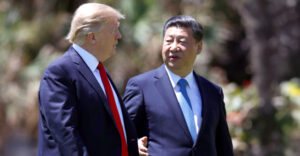
China is thereby implementing commitments made by Chinese President Xi Jinping and his US counterpart Donald Trump on October 30 in South Korea during a summit aimed at easing months of tensions that have weighed on the global economy.
China’s move comes on the heels of Trump signing an executive order reducing from 20% to 10% an additional customs duty imposed on a number of Chinese products as a sanction for what the US has denounced as China’s inaction to combat fentanyl smuggling.
The review takes effect on November 10, as do the measures announced today by China, which had clearly stated after the October 30 summit that it would act in line with what the US would do.
“Customs duties of 24% on US goods remain suspended, and customs duties of 10% on US goods remain in force,” a statement posted on the Chinese Ministry of Finance’s website said.
China had announced in April additional 34% customs duties on US goods in April in retaliation for US new customs duties on Chinese exports. These had been reduced to 10% in May.
China had also decided in March to impose 10% customs duties on US products such as soybeans, pork or beef and additional 15% duties on poultry, wheat, corn or cotton.
This was Beijing’s reaction to customs duties imposed by Trump’s decree a few days earlier because of fentanyl. China is the main source of the precursor chemicals used to produce this extremely powerful opioid that causes serious health conditions in the US.
Fragile Truce
After returning to the White House in January, Trump added fuel to the trade dispute that had already begun during his first presidential term, citing the trade deficit, intellectual property theft or even national security risks. U.S. customs tariffs on Chinese goods reached an average rate as high as 164 percent in mid-April, according to a congressional report.
China responded immediately with its own tariffs, but also with restrictions on rare earths. China is the world’s largest exporter of rare earths, which are essential for digital technology products, cars, energy or even armaments, and this gives it a huge advantage.
Trump has fanned or dampened the fire of trade tensions through a number of rounds of talks between American and Chinese negotiators.
The measures announced today in Beijing follow “the consensus reached during the economic and trade consultations between China and the US,” the Chinese finance ministry noted.
These consultations paved the way for the October 30 summit, which marked an at least temporary easing of tensions.
Beijing also announced on the same day the suspension for one year of the enhanced restrictions it had imposed on rare earths shortly before. These restrictions had caused Trump’s lawsuit, but also upset the EU or even Japan, and had exacerbated pressures on supply chains.
Economists warn, however, that the trade truce reached on October 30 is fragile.
Ask me anything
Explore related questions