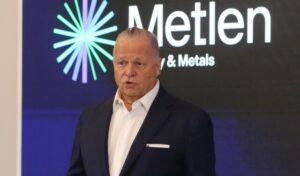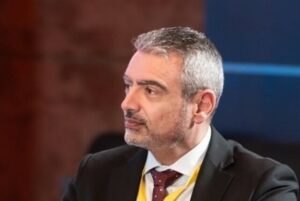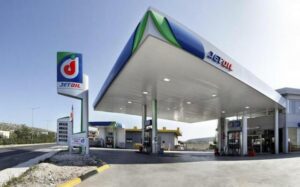


Hello, I start today from the good news that finally after quite a long period of introversion and nonsense we saw on the front stage. The presence of 30 American and European ministers in Athens and the commercial agreements for energy, with the corresponding geopolitical significance for Greece, are indeed good news. If one considers that two months ago… we were crying our fate – if not all of us, at least the opposition – about the “international isolation of the country” because of Mitsotakis, the rejection we got from Erdogan, the snubbing by Trump etc. Well, between us, that didn’t show much yesterday from the presence of two top ministers who are Trump’s “tablemates”, and 25 Ministers of Energy of Europe and the Balkans. Now all this was happening in Zappeion and at the same time a few dozen meters down pupils were demonstrating for Palestine (the needle got stuck again…) but what can we do, this is Greece.
The 3+1 is stabilizing
I wrote yesterday about the first meeting after a long time of the 3+1 scheme at energy minister level Greece–Cyprus–Israel, with the participation of the American, which took place on the sidelines of the Conference. Let me tell you that among other things the GSI cable was discussed, while the Cypriot minister Papapastasiou put on the table the destabilizing role of Turkey, without however appearing like he is “complaining”. The most interesting thing I learn is that the scheme becomes permanent and apparently in the first half of 2026 Papastavrou will pack his suitcases for Washington, for the repeat session.
The VIP lunch at Aigli
I stay on P-TEC, because my guy “caught” an interesting mobility at noon, during the lunch break, at the restaurant “Aigli Zappeiou”. Four major companies, ACEBA, BECHTEL, Westinghouse and the Nuclear Energy Institute made an invite with main face the American Energy Secretary Chris Wright and the very heavy names of the forum and of course most of the American officials who flooded the Athens center. From Greece present was Stavros Papastavrou, who in general was receiving kudos as host.
End to suspensions
From Zappeion I go to Crete and to the measures on gun possession being announced. This morning Chrysochoidis from Heraklion will describe the installation of the FBI on the island, but also in general the police security plan that must be readjusted in light of the new data. He will also describe the interventions on gun possession, I understand the central idea is to cut suspensions for sentences related to gun possession, as well as the suspensive effect in first instance sentences up to the appeal. In other words, someone facing serious prosecution for illegal gun possession to go to jail. Not of course for a knife or a pocketknife, but for heavy weapons. K.M will also refer to the issue on Sunday in his post. Of course, how far this solves the problem I honestly doubt, because we are talking about a “misery” of centuries.
The fight of the day
Always the fights of politicians in Parliament or on TV have fun but yesterday’s between Giannoulis (SYRIZA) and Petros Pappas (SYRIZA–Kasselakis–PASOK) was top. What acrobat the one called the other, what illiterate, what errand boy and it ended with the old time classic of Panos Kammenos where Pappas accused Giannoulis that “he’s begging on all fours” to Tsipras to take him into his party. Don’t tell me left wing fights are not always the best? I am trying to predict the next one, at the level of party change, I feel something that Theodora Tzakri might be it, but I’m not betting.
Announcements about Motor Oil strategy
We wrote a few days ago that Motor Oil has started a process for selling 49% of ANEMOS and is close to agreement with a big foreign energy player that has Greek presence. In the stock exchange announcement that Motor Oil issued on 4/11/25 and informs that its financial results will be announced 19/11 and a teleconference will follow 20/11 and after the typical and usual are mentioned in the announcement, there is the following phrase: “Additionally in the context of the above teleconference the management of the company will proceed to inform regarding the group’s strategy”.
Don’t speak, it is not necessary
National Bank as recorded in the 9 month results “is bursting” with capital. And this was the main observation and concern of analysts: how the bank management will utilize these capital, apart of course from the high distributions. CET1 stood at 19.0%, marking an increase of about 10 basis points relative to the previous quarter and about 70 basis points from the beginning of the year, despite the fact there was provision also in the 9 months for dividend distribution in the 2025 year of 60% from the bank’s profits. Yesterday the bank CEO Pavlos Mylonas in the teleconference received persistent questions from analysts about what he intends to do with the capital buffer. For his part he refused equally persistently to answer and anyway he could not do otherwise. He was specifically asked about bancassurance and he stated he cannot comment – as the column predicted yesterday – because the negotiation with CVC for the sale of 10% of National Insurance has not yet closed, which is also heading to Piraeus Bank. Until the completion of the negotiation NBG management cannot speak publicly about its plans in the sector which however will not take long to be revealed. A small hint Mylonas gave was that there are not many opportunities in the domestic market and that he does not intend to make any investment without it producing economic result and synergies for the bank. He also received a question about plans regarding Cyprus where he answered curtly with the known “no comment”, which made some think because as an answer it also accepts the interpretation “I have, but I cannot refer to it”. Sources from Cyprus anyway mention that their radars have not detected any movement and I do not have difficulty sharing this view, as in the Cypriot market Cyprus, Alpha, Eurobank already dominate and there is no “room”.
The National plunge and the climate in the ASE
The National share however did not welcome well the results and closed with losses of 4.40%. If you wonder why, the column lists two data points: Q1 had EPS 0.42 euro, Q2 EPS fell to 0.35 euro and Q3 EPS to 0.30 euro. Also Q1 had ROTE 19.1%, Q2 ROTE fell to 15.7% and Q3 ROTE was 13.5%. The general conclusion is that Greek banks are affected by the reduction in interest rates and they do not have strong revenues from other sources to offset and overcover whatever losses from rates. That is why all this battle for insurance, asset management, subsidiaries etc. Their performances move within the range of analyst estimates, but there is not yet a noticeable beat of estimates like happens with foreign banks, something that would show the dynamism of the sector. This weakness they try to cover, combined with the fear of an earlier upgrade of ASE because of Euronext (the probabilities are that HEX next Friday will belong to Euronext) are the reasons the market lately does not feel well.
The “dust storm” over DELTA and the bar set high
And since the discussion came to CVC, let me note on this occasion that again a “dust cloud” was raised in the market regarding the case of DELTA and CVC’s intention to sell it within the framework of the investment exit that it must stage manage. However, as a significant player in food with active interest told the column, the bar remains high. The same seems to apply to the frozen dough segment (Elliniki Zymi – Chrysi Zymi) as well as for the restaurants (Goody’s – Everest) which are under the Vivartia umbrella. In the frozen dough market however it seems we will have new developments since Ideal appears ready to make a move via Barba Stathis, but in something more… small, cheap and compact. Note that under the umbrella of the Barba Stathis Group, before the acquisition by Ideal, was the entire “related” frozen dough segment of Vivartia.
HHG merges Ygeia and Mitera
The plan of HHG (Hellenic Healthcare Group) which concerns the evolution of the hospitals YGEIA and MITERA into a single health complex is kicking off. In mid July the Group had prepped the market for the plan of creating a single complex, the largest in the country, with capacity over 800 beds. Now the merger of the two companies proceeds. Based on the merger plan Ygeia absorbs Mitera, with the net position of the latter amounting to 57.6m euros, according to the valuation report. The process includes the issuance of new shares, while the final decision for the merger will be taken by the GMs of the two companies. Operationally of course many Ygeia cases and hospitalizations already take place in the Mitera building. The plan which is carried out at the 50 years of operation of Ygeia includes among others the renovation of the exterior facades of the two hospitals, their functional unification, the shaping of the common exterior areas into a green park etc.
TITAN at the port of Le Havre
These days mark three years from the appointment of Marcel Cobuz to the position of President of the Executive Committee of the TITAN Group. The two families who traditionally ran TITAN chose the former head of Lafarge Holcim in Europe, with 20 years experience in the construction materials industry and were vindicated for their decision. Yesterday’s announcement of the Group that it is in exclusive talks for the acquisition of Vracs de l’Estuaire, which has state-of-the-art facilities, at the port of Le Havre, in northern France, came only one day after the announcement of the excellent 9 month results and the jump of the market cap above 3.1bn euros. In the last year, Cobuz’s moves raised the total value of the Group. In February, the Group completed the listing of Titan America on the New York Stock Exchange, raising capital of 393m euros. At the same time, the Adocim unit in Turkey was sold, resulting in Net Debt falling dramatically to 302m euros from 622m euros. Cobuz promoted the renaming to Titan S.A., creating the TITAN Edge product family (low carbon solutions) and the expansion of TITAN Premier services, while at the same time investing in alternative cementitious materials and in digitization of the production process.
The “NATO” of shipping (The Koreans build, the Greeks invest, the US guarantees)
Another episode in the saga of “shipping diplomacy” between Washington and Seoul was written this week, with the announcement that Nikos Notias’ SteelShips will build two MR2 product tankers at the K Shipbuilding yard in South Korea – and indeed to US specifications. For the initiated on Wall Street, the news has depth exceeding the displacement of 50,000 dwt of each vessel: it is the clearest indication of the revival of American ambitions for the shipbuilding industry, with Korean know-how and Greek entrepreneurial initiative as catalyst. Notias’ ships are expected to enter the US Tanker Security Program (TSP), a program that, with the help of tax incentives and government contracts, secures available fleet for military needs. In other words, the Greek shipowner powers up engines to cover not just commercial, but geopolitical needs. From an investment perspective, the move shows smart arbitrage: Notias exploits the Korean cost efficiency, while keeping the advantage of the US registry, a rare mix that offers stable returns in an environment of elevated geopolitical risks and energy transition. This cooperation is not isolated. After President Trump’s visit to South Korea and the announcement of bilateral agreements for modernization of the American shipbuilding base, Washington seems to seek a new “shipbuilding NATO”, where Koreans build, Greeks invest and Americans insure their strategic presence at sea. In the Piraeus scene of course they comment that Notias is not simply the man who builds ships – but who bridges worlds: between an American fleet that is searching for a reason to exist and a shipping that remains global even when it bears national flag. On the Wall Street board such moves are not read only as investments in hardware, but as bets in geoeconomics. And for the moment, SteelShips seems to have set course in the right direction.
The buying low, positioning high strategy of Thenamaris
Thenamaris of Nikolaos Martinos seems to pick up the thread of shipbuilding again, ten years after its last suezmax order. This time though, instead of the Korean yards, the Greek shipowner turned to China and specifically to the state Shanghai Waigaoqiao Shipbuilding (SWS), for two new suezmax tankers, 158,000 dwt each, at a price close to 81m dollars per vessel. The choice of Chinese and not Koreans, was not random. Information says the Chinese yards offered earlier delivery (early 2028) and more competitive price, as Koreans were asking above 84m dollars per vessel. Thenamaris knows well the “field” of SWS, since only this year it received six LR2 tankers from the same yard, which it had ordered in 2023. Then the cost ranged around 63.5m dollars per vessel – a move which had already shown the company’s turn to China. Not few see this order as a “signal of return” of Thenamaris to the game of big investments, especially after the rumors that the company was discussing, ultimately without result, the acquisition of the LR2 fleet of Frontline of John Fredriksen, worth 1bn dollars. Wall Street would say it simply: Thenamaris is buying low, positioning high.
The iron lady from Chios and the entrance of P.L. into tankers
On the other side of the Atlantic the Chios born Angeliki Frangou remains the stable reference point of Greek shipping for New York analysts. The head of Navios Maritime Partners, with the “iron nerves”, closed a deal worth 133m dollars in tanker resales, while most peers struggle to secure financing. Markets see in her the “female Warren Buffett” of shipping – less shine, more resilience. At the same time, Panos Laskaridis, who made a name in reefers and bulkers, invests in tankers. Laskaridis Shipping acquires yet another MR tanker from Chinese Pro Tanker Investment, having already received two vessels from the same yard, wanting to build a modern, methanol-ready force in energy products. The fact that he pays above the average market price (about 48.5m dollars) does not go unnoticed in Wall Street circles: American investors see a Greek who buys not cheap, but smart. In an era where green transition upends shipping data, Laskaridis seems to “read” the momentum. So, while Athens appears indifferent to the backstage of shipping moves, in New York and Hong Kong analysts whisper about a “Greek axis” being rebuilt. And as a trader from Houston commented: “When the Greeks start buying ships above market price, they know something that we still have not seen in the charts.”
The tourism company of Papamantellos
Everyone involved in energy, and not only, knows Kostas Papamantellos as a key executive of the German giant RWE and as one of the “architects” of the major deal with PPC Renewables for the joint development of an RES portfolio in Greece. K. Papamantellos is the head (President and CEO) of RWE Renewables Hellas, as well as Vice President and CEO of the (joint with PPC) METON Energiaki. Beyond energy, he is opening his horizons toward tourism as well. Thus, he proceeded to set up the company Echinousa Estate Single-Member IKE, with main activity “vacation accommodation services” etc., with the name obviously pointing to the beautiful island of Kimolos. The initial share capital of the company, which is based in Pallini, is 250,000 euros, which has been paid in by Kostas Papamantellos. For the record: Kostas Papamantellos is the son of Dimitris Papamantellos, who after graduating from NTUA completed a PhD at RWTH-Aachen (from which the son is also a graduate) on metallurgical processes in steelmaking. Dimitris Papamantellos, who passed away in 2015, stood out for his scientific formation, his honesty and his integrity. He had served, among others, as governor of PPC during 1981-1986, Chairman of the Board of LARCO (1986-1989), Special Secretary of the Ministry of Education for European issues and CSF in 1995 etc. But the grandfather of Kostas Papamantellos also left his mark — he was a military officer and served as aide-de-camp of Nikolaos Plastiras. In fact, during the junta he was imprisoned in the infamous building on Bouboulina street for his participation and the salute he addressed at the funeral of Georgios Papandreou.
Attention: Scam (Phishing)
There is no end to the attempts of various fraudsters to intercept through the internet the data of unsuspecting citizens. In one of the most recent such phishing operations a govgr logo is used on a blue background and the email is titled “application progress update”. In the… essence, i.e. in the text that follows, the fraudsters are in the… pleasant position to inform us that “after the completed examination of the documents and the tax data that you submitted, the pending reinstatement of your tax minimums has been pre-approved. In order for your application to be completed and to maintain the timely processing of your reversal, you must submit additional control data through our secure online portal within three days from receiving the official notification. This pre-approval means that your tax refund request meets the initial entitlement requirements and can now proceed to the final stage of processing.” Of course, from the linguistic / orthographic errors alone, even the minimally suspicious person understands that this is a scam. Further, there is the access point to the… secure portal with the footnote: “Please ensure that all information you provide is accurate and complete in order to avoid possible delays.” At the end they report that “after you successfully submit all the required data, please wait 14 working days, so that our department can carry out the final check, verification and approval process. During this period your application will be submitted to final compliance checks and approval processes. If you face technical difficulties accessing the secure portal, have questions about the required documents or need help with the submission process, please do not hesitate to contact us.” The brazen text is signed… respectfully by the “Tax Refund Department”… Of course if one notices the fine print, an address is written that refers to Denmark (brescia | Industrivej 13, Viborg, 8800 Denmark), while the email seems to come from Italy. In any case, special attention is needed…
Sudden wave of sales at the close of the session
A sudden massive attack by sellers at the close of the session pushed the General Index from the “safe haven” of 2,005 into the depressing level of 1,998.38 points (-0.8%). Indicative of the “battle” that was given around the fort of 2,000 units is the value of transactions that exceeded 283.9 million euros with blocks exceeding 25.8 million euros. National Bank (-4.4% at 12.6€) starred in the downward movement of the market with transactions worth 55.1 million euros. The drop in National dragged down the entire banking sector, but AlphaBank reacted first and turned -1.98% into a positive +1.4% at 3.48 euros. Eurobank even without the dividend (0.04681€) rose to 3.24€ (+0.75%), while Piraeus held at 6.79€. VIOHALCO, proud of its subsidiaries, climbed +5.09% to 9.29 euros, while Cenergy (+3.24% at 15.28€) now included in the MSCI index, wrote a new historic high. TITAN (+3.69% at 40.75€) and the energy stocks gave critical support to the General Index. HelleniQ Energy (+1.62% at 7.83 euros) and PPC at 15.95€ showed that they are protagonists of the newsflow, while Intralot exceeded again 1€ (+0.92% at 1.1 euros) helping Intracom (+1.06% at 3.35€) as well.
The shipowners, the American ministers and the proposals
I return to what happened at P-TEC, this time with the “shipping”, because the positions of the Greek shipowners who met with Minister Bergam at Zappeion are very interesting. Prokopiou’s proposal in the framework of the Transatlantic Energy Cooperation (P-TEC) was not just an intervention in favor of Greece–US cooperation. The Greek shipowner proposed not to waste time in American plans that will take years to produce results – such as the recreation of a shipbuilding “cluster” in the US. He called on the Americans to utilize the existing Greek shipping know-how and fleet through “preemptive commercial arrangements”, a scheme that combines geopolitical loyalty and economic efficiency. Particularly interesting was his point about shipbuilding orders being placed in Korea, Japan and mainly China. In an era where global trade competition is hardening, Prokopiou reminded that “the floating pipelines” –the ships– do not know borders of production, as long as the interests of the free market and allies are respected.
Nikolas Tsakos and the “de-guiltification” of shipping
Nikolas Tsakos referred to the need to “de-guiltify” shipping. “It is one of the few times we spoke about our industry without feeling guilty” he said, noting that shipowners have often been presented as a necessary but… unpleasant link of the global economy. This observation was not only communicational. It was a political position with economic substance: the head of Tsakos Energy Navigation reminded that 60%-80% of the goods and energy that drive the global economy pass through tankers and bulk carriers. And that shipping, despite the disproportionate weight it carries, remains “the most economical, efficient and environmentally friendly way of transporting large quantities of products.” Recognizing the fragmentation of the sector –“shipowners are not voters anywhere,” he said humorously– Tsakos supported Prokopiou’s logic of realistic approach. He explained that a large part of the Greek fleet is already active in the United States, transporting cargoes for American oil companies, and that “instead of ships going empty all the way to China for maintenance, it would be preferable if they headed to American shipyards, if the right investment framework exists.”
Maria Angelikousi and the 10% of US energy exports
Maria Angelikousi captured how Greek shipping has become a cornerstone of American energy extroversion. “We transport 10% of the energy exports of the United States,” she stressed, putting on the table a statistic that Washington can hardly ignore. Her reference to the 700 safe loadings from American terminals was not just statistics. It was a reminder that Greek shipowners are already a critical arm of the American energy strategy. Angelikousi spoke of a “strategic moment” in Greek-American relations and the need to build “deep and lasting bonds in shipping and energy”. She supported the American effort to revive the shipbuilding industry, recognizing however, like Prokopiou and Tsakos, that this process requires time. “We do not expect to go back to the times of Liberty ships,” she said pointedly, reminding that the Greek side is ready to support the US in this transitional stage with ships, know-how and human capital. Angelikousi described in detail a fully integrated model of training and advancement of 9,000 seafarers, with 800 cadets joining the Group’s ships annually.
Record number of Wall Street “zombies”
The indices on the American Stock Exchange are soaring to unprecedented heights. One would think that this rise in stock values reflects the overall economic activity. The truth, however, is that the number of listed “zombie” companies has also reached record levels. “Zombies” are companies that cannot generate enough profit to cover their interest payments and survive only through continuous borrowing. In October, zombie companies in the Russell 3000 index increased by 83, reaching 639—the highest number since December 2021. Many of the companies that entered the “zombie” category in October come from the health and biotech sectors. These are industries currently hit by rising operating costs and reduced government funding. The pandemic brought a lot of money to these sectors. The post-pandemic era, however, lacks both government support and investment. The previous peak in the number of Wall Street zombies was recorded in March 2021, with 749 zombie companies. Back then, interest rates were near zero, and easy borrowing sustained weak companies. Since then, interest rates have risen significantly and remained high for a long period, making loans more expensive and repayment more difficult. While large companies maintain access to cheaper financing and broader credit lines, smaller companies in the Russell 3000 index are drowning in debt.
Deutsche Bank hedges against Artificial Intelligence
Bloomberg revealed that Deutsche Bank is planning a new investment risk-hedging strategy against Data Center financing. According to the agency, the German bank is creating a basket that “shorts” stocks related to artificial intelligence. It is establishing investment instruments with synthetic risk transfer as well as default protection. In simple terms, Deutsche Bank is paying substantial amounts to limit potential losses from a possible “burst” of the data center bubble. With synthetic risk transfers, the bank’s credit risk is passed on to third-party investors who are willing to take investment risks, without actually selling the bank’s assets. “Data centers are the new Gold,” say market insiders, as demand for AI infrastructure is currently exploding. Valuations of companies related to Artificial Intelligence and Data Centers have skyrocketed to unprecedented levels, and DB is taking precautions.
Ask me anything
Explore related questions