





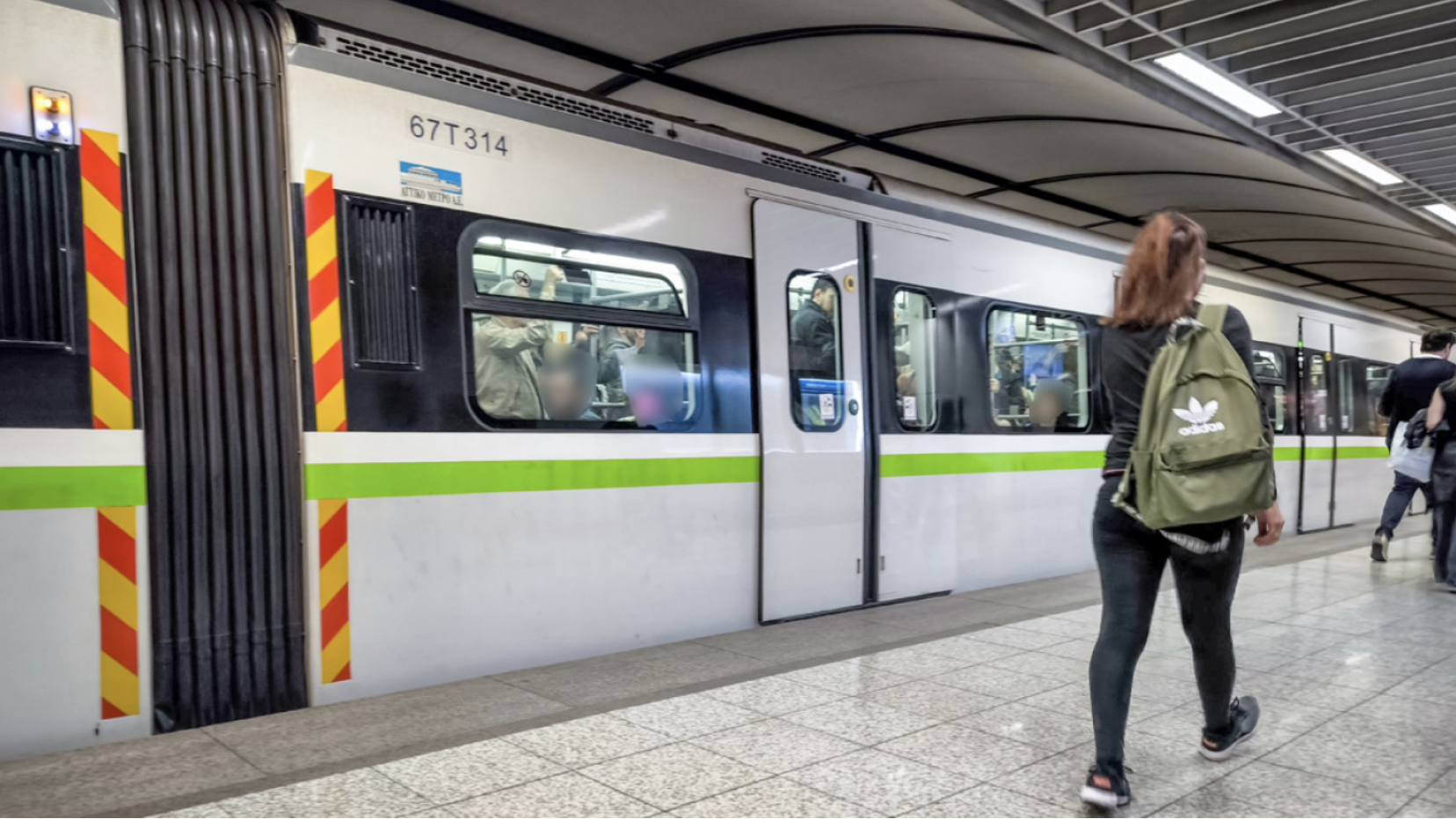
Athens’s public transport system often feels stuck in another era, or even moving —literally— at a slow pace. Social media has recently been flooded with videos showing extreme overcrowding in metro stations. That’s not the only issue: in summer months, many trains run without air-conditioning, while repeated breakdowns are also frequent.
The situation has set off alarm bells within the government. A closed-door meeting was held at the Maximos Mansion with the participation of the Prime Minister, Deputy PM Kostis Hatzidakis, Deputy Transport Minister Konstantinos Kyranakis, Deputy Finance Minister Nikos Papathanasis, Deputy Finance Minister Thanos Petralias, and the leadership of the Hellenic Corporation of Assets and Participations (HCAP), OASA, OSY, and STASY.
To Vima presents the full plan for the “total overhaul” of public transport in Attica, with major developments expected from 2026 onward. According to officials, this will be the first large-scale investment since the 2004 Olympic Games, including new environmentally friendly buses, new trains, digital services, and an emphasis on cleanliness in stations and rolling stock.
More frequent services
According to the presentation by Deputy Transport Minister Kyranakis, OASA’s performance indicators show steady recovery after years of decline. Completed routes increased significantly, surpassing 4.73 million. Even more notable is the rise in ticket and card validations: 91.6 million in 2025 compared to 74 million in 2024.
The new fleet
Behind the numbers lies a new organizational philosophy. The ministry aims to strengthen the “core line” model for bus routes—main routes with high frequency and stable schedules. The goal is to reduce peak-hour intervals to 8 minutes by 2027, down from today’s 15.5 minutes.
The key factor is renewing the bus fleet. In 2019, the newest bus in Athens dated from 2011, with most dating from 1999. By the end of 2025, 1,076 new buses will already be in circulation, with a target of 1,600 by 2027. Officials say the investment also focuses on quality: all buses in operation during summer 2026 will have air-conditioning, while old vehicles lacking accessibility for people with disabilities will be withdrawn. At the same time, a unified branding design will be used across the entire fleet for the first time.
Metro and suburban rail
The introduction of 24-hour metro service on Saturdays was the first taste of the upcoming changes, and Kyranakis announced it will be expanded during Christmas and also to Thessaloniki.
Meanwhile, the Athens metro is entering a new era after 25 years. Rail tracks will be replaced along 32 km of the network in a project worth €7.3 million, expected to be completed by the end of 2026. The works are carried out at night. Lines 2 and 3 will gradually receive 15 new trains by 2029, aiming to reduce peak-hour intervals.
On Line 1 (ISAP), upgrades begin for air-conditioning in trains, cleaning programs, and anti-graffiti actions. Station repainting and the installation of defibrillators across the entire metro network will be completed by 2026.
Digital upgrades are also advancing rapidly. The Ath.Ena Card is being integrated into Apple and Google Wallet, while “Tap n’ Ride” allows contactless payments at all entry gates. OASA is taking over responsibility for bus stop maintenance, starting with the refurbishment of 9,000 stop poles by 2026. The first 100 accessible stops for people with disabilities will be installed by January.
Driver recruitment
OSY currently has 2,550 drivers, while the goal is 4,200. To close the gap, 700 new drivers will be hired, along with cooperation with private operators for an additional 440 (with an annual cost of €45 million). A new Drivers’ School will cover training costs (€1,500) on the condition of a five-year service commitment.
Challenges will remain, however. Extensive bus lanes and strict enforcement of violations are crucial, since the new service frequencies rely on a 10% improvement in travel times through dedicated lanes.
Officials believe that 2026 will be the year Athens sees, for the first time in decades, a transport system operating with greater reliability, cleanliness, and predictability for passengers.
Konstantinos Kyranakis – Deputy Minister of Transport
“In 2026 we will see the major change”
Kyranakis tells To Vima about the modernization program and highlights the new philosophy behind it:
“Athens’s public transport system has for years been operating at its limits. We began working intensively to rebuild the foundations, with real investments and a clear plan.
2026 will be the year citizens truly feel the difference — buses with air-conditioning, maintained stations, digital services that make daily life easier.
We are not just managing the system; we are redesigning how transport in Attica functions, aiming for a network that is modern, clean, sustainable, and human-centered.”
Photo: EUROKINISSI
Ask me anything
Explore related questions




