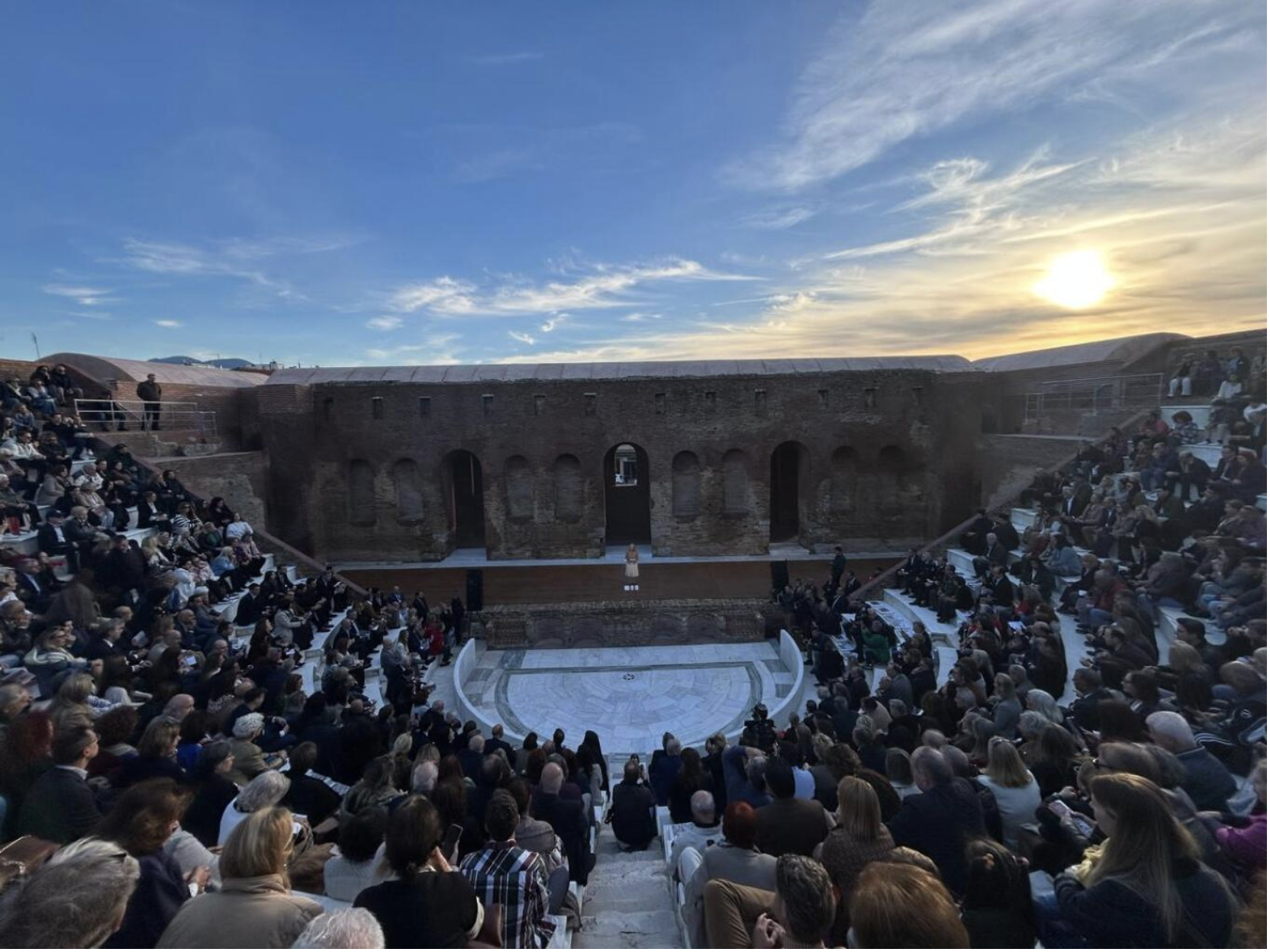
The Roman Odeon of Patras has now been delivered restored and safe for the public, once again becoming the monumental site where the heart of culture will beat strongly. After decades of problems, the iconic 2nd-century AD monument has been morphologically restored inside and out, illuminated, and made accessible to people with disabilities and those with mobility difficulties, as part of a major Ministry of Culture project with a budget of €1,410,000.
During the project, carried out by the Ephorate of Antiquities of Achaia, the structural issues from the 1960–61 interventions were corrected, and the stage and backstage areas were fully reconstructed—making it the only such building in Greece with a restored and reconstructed stage. The north wall of the proscenium (pulpitum) was also restored. For accessibility, a wooden floor was installed on the proscenium and a wooden ramp in the western passage. A lifting platform was placed at the west door of the western backstage. Bilingual informational signs (standard and braille) and a bilingual publication about the project were also created. Excavations around the monument revealed mosaic floors with geometric decoration, as well as previously unknown evidence of funerary use of the stage building during the Early Byzantine period. The surrounding area was landscaped and enhanced with architectural lighting.
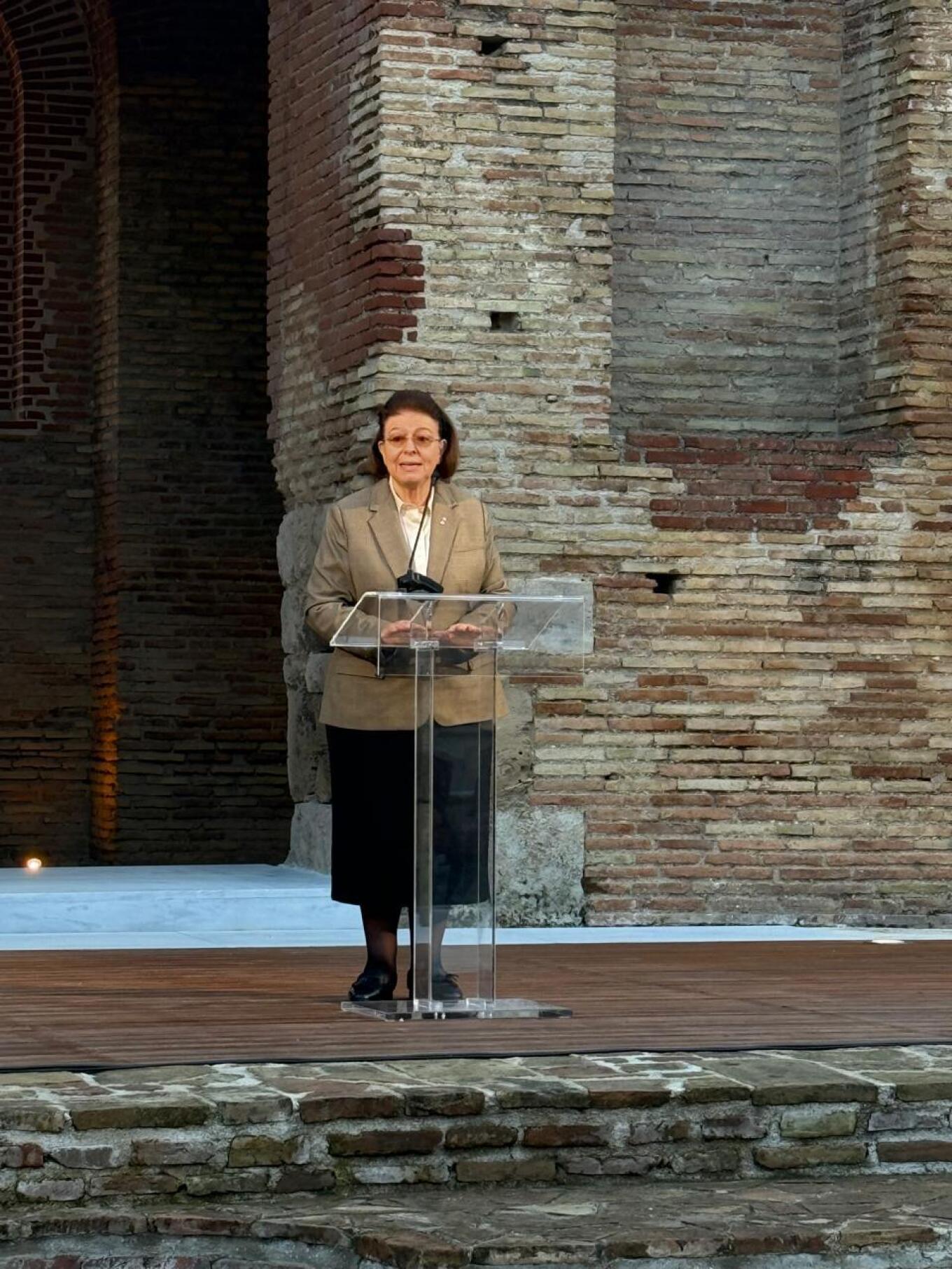
Culture Minister Lina Mendoni at the inauguration of the restored Odeon
“Two and a half years ago, when we visited with the Prime Minister Kyriakos Mitsotakis, we discussed how this monument, this archaeological site, could once again become the historical heart of the city of Patras. I am particularly pleased today that the Ministry of Culture is returning this monument to the city, to its residents, to its neighbourhood,” said Culture Minister Lina Mendoni at the inauguration.
She added: “In 2010, as every year, a request would arrive from the Ephorate of Antiquities of Achaia to hold cultural events at this monument. And every time, at the Central Archaeological Council—which I had the honour to chair as Secretary General of the Ministry of Culture from 2010 to 2015—there was intense concern: how could the Odeon be made available for performances when safety standards were not met? The years 2015–2019 were years of stagnation for the Ministry of Culture. There are not many projects or initiatives we can recall from that period.”
The minister also stressed that it is the only structure of its kind in Greece with a completely restored stage. “We also have the Roman Odeon of Nikopolis, another colonia augusta, which has been restored and also functions as a venue for events and performances. We also have the Odeon of Herodes Atticus, which will soon close for restoration. Here in Patras you have the third major comparable monument—and the distinction of being the first with a reconstructed stage and the first fully restored,” she noted. “Today we are not simply delivering a restored monument. We are delivering an entire archaeological site, which is extremely important.”
The Roman Odeon of Patras was built in the first half of the 2nd century AD and ceased to be used at the end of the 3rd century AD after a destructive fire, possibly linked to the Heruli raid. It stands in an elevated position in the Upper Town, west of the ancient acropolis and the medieval castle. The tall exterior wall of the stage formed the southern façade of the Odeon and had five entrances to the stage and two to the backstage. The proscenium was accessible via two built side staircases. The orchestra was paved and separated from the cavea by a semicircular parapet, opening to the south. The stage floor was decorated with mosaics.
Ask me anything
Explore related questions