

The two companies in question, U.S. agribusiness giants Bunge and Cargill, reported a combined turnover of $200 billion in 2024.
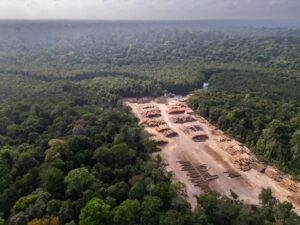
The NGOs compared the locations of deforested areas in the Amazon—mapped by the satellite-monitoring network MapBiomas—with the locations of Bunge and Cargill storage facilities listed in Brazilian land registries.
They reported 273 cases where storage units were less than 50 kilometers from farms operating on formerly forested, now-deforested land, implying that both companies may be sourcing soy from these areas.
Between January 2024 and August 2025, the four French banking groups reportedly took part in three financing deals (loans or bond issuances) with Bunge, totaling $4.3 billion, according to Reclaim Finance.
BNP Paribas also granted a $1.5 billion loan to Cargill in October 2024, while Société Générale joined a $3.2 billion financing package for Bunge in March 2024.
BNP Paribas told AFP that its clients must implement a “zero-deforestation” policy by the end of 2025. Compliance will be assessed throughout 2026.
Bunge and Cargill have themselves pledged to eliminate deforestation from their supply chains by the end of 2025.
Société Générale stated that its anti-deforestation policy includes “specific exclusion criteria” for clients operating within South American value chains. Crédit Agricole also said it has committed to achieving “zero deforestation” and is monitoring client compliance.
The BPCE group criticized the NGOs, calling their figures “non-verifiable,” lacking “clear methodology” and “evidence.” The bank said it will publish the results of its anti-deforestation policy at the end of 2025.
The Amazon rainforest plays a crucial role in preventing global warming by absorbing carbon dioxide. Protecting tropical forests is a key theme at COP30 in Belém, Brazil, which concludes tomorrow.
A 2006 moratorium had prohibited the commercial sale of soy grown in deforested former forest lands in the Amazon after 2008.
Ask me anything
Explore related questions