





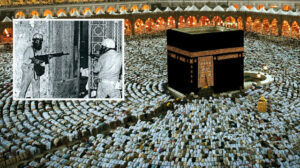
It was still dawn, the sun barely up on Monday, November 20, 1979, when Yuhayman al-Otaibi, accompanied by 500 determined men, stormed the Great Mosque of Mecca.
Around and inside the Mosque, there were between 50,000 and 100,000 worshippers who were celebrating the Muslim New Year of the year 1400 and wanted to pray.
The mosque guards were immediately overpowered by Al-Otaibi’s men, who, after placing closed coffins in the center of the courtyard – a traditional act of seeking blessings for those who had recently died – pushed the imam and took his microphone.
The belligerency of Mecca was just beginning, would last 15 days, and would end in a bloodbath and an as-yet-undetermined number of dead.
The Shock of the Saud
The worshippers at first do not understand what is happening, while Otaibi’s men open the closed coffins containing automatic weapons, pistols, and rifles, which are quickly given to his men. These were pointed at every corner of the courtyard and the minarets of the holy mosque, while Al-Otaibi tells them to shoot anyone who wants to open the gates.
When he begins to speak, the thousands of Muslims hear him say that his brother-in-law, Muhammad Abdullah Al Qahtani, is God’s emissary – the “Mahdi,” as the Quran refers to him – who descended to earth before the day of judgment to suppress evil.
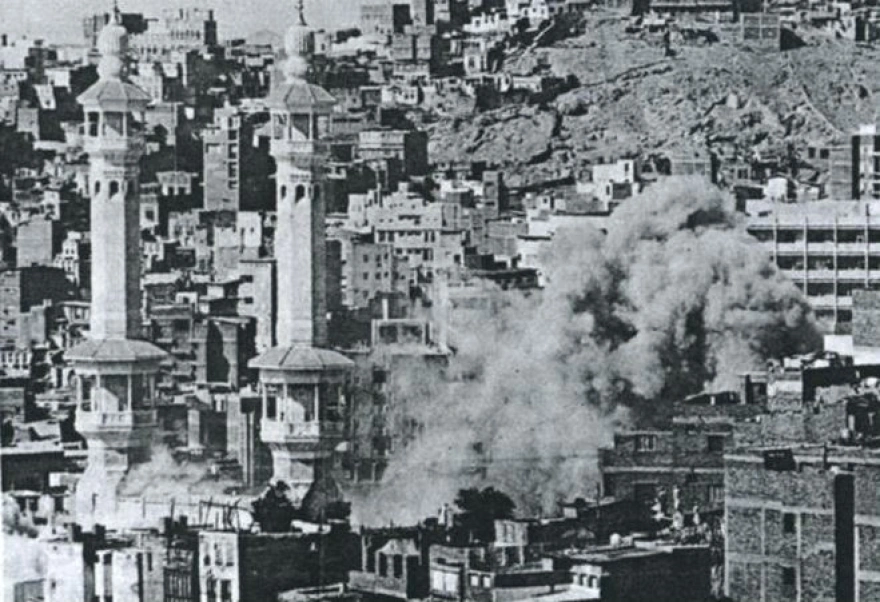
Where the preacher sees evil is in the royal house of Saud, which he describes as corrupt and responsible for the Westernization of Saudi Arabia. It doesn’t take long for the news to reach Riyadh and the royal family, who are literally caught sleeping by the raid on the Muslims’ holiest site.
At first, there is confusion as the information is confusing, and only after a few hours do the kingdom’s intelligence services give a more accurate picture. The slap in the face for the Saudis is strong, as they see their authority challenged and blame Iran for the strike in the heart of Mecca, but it has nothing to do with them.
The invaders hail from Saudi Arabia, Egypt, Canada, and the US and appear ready and determined for anything, at the same time as Saudi Arabia prepares to take over the Holy Mosque.
Two weeks have passed
Only there was a serious problem, since, according to Muslim tradition, no one could carry weapons in the Holy Mosque. It took a special fatwa issued by the country’s religious leader to carry out the armed operation by Saudi forces, who found it… difficult.
The invaders managed to repel all three attacks on the three ladies’ gates of the mosque, while the snipers in the minarets had an easy job for anyone who lifted their heads. What the Saud thought would be over in a few hours began to drag on for days, while Otaibi and his men were always fully prepared.
It took the assistance of French commandos and combatants from Pakistan to be able to break the resistance of the invaders on 4 December, who had 117 dead and an unspecified number of wounded. Saudi security forces had 127 dead and 451 wounded, and the worst was avoided because the raiders chose to release the thousands of worshippers inside the mosque.
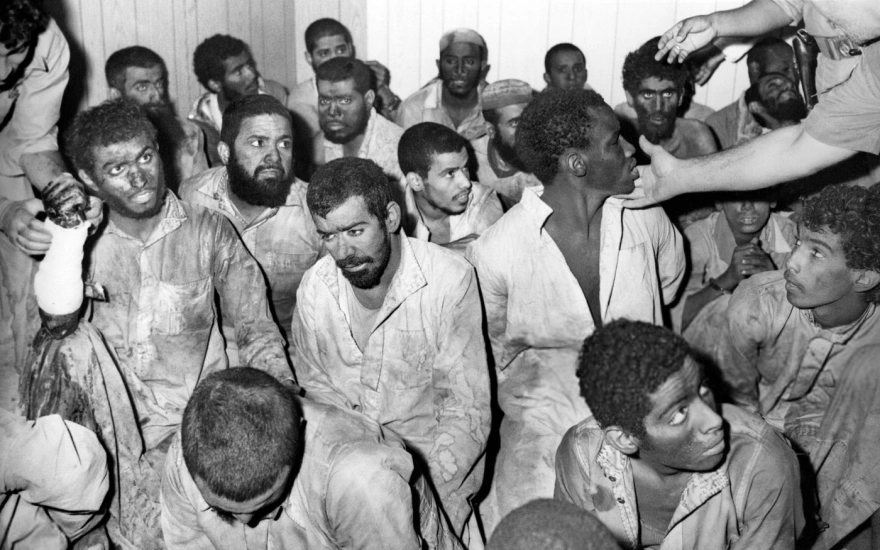
The 63 captured – among whom was Al-Otaibi – were tried summarily, all declared guilty and hanged on 9 January 1980 in nine different cities in Saudi Arabia.
Western intelligence sources insisted that the number of dead was much higher but was kept secret, a common occurrence in a kingdom accustomed to secrecy about its own affairs.
Ask me anything
Explore related questions




