





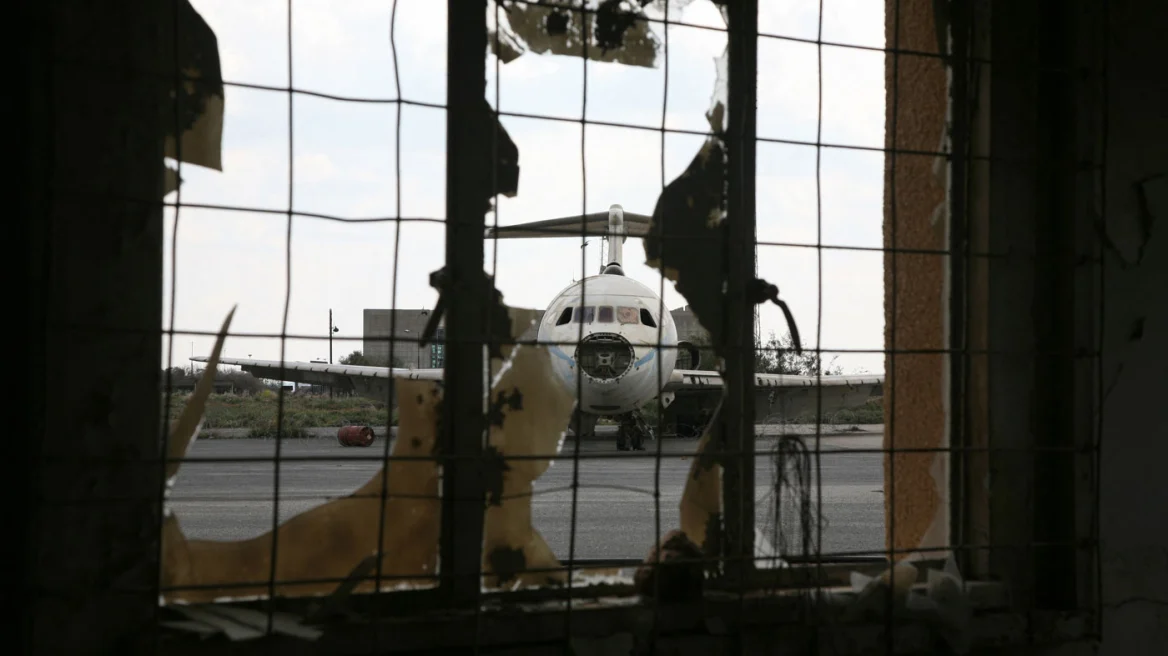
Fifty-one years after the Turkish invasion, Nicosia Airport remains a silent monument to the island’s division. The once-bustling airport of the Cypriot capital stands abandoned within the UN buffer zone, with buildings collapsing and planes rusting, as if time stopped in 1974.
Built in 1968, west of Nicosia, on the same site used by the British RAF during World War II, the airport was the main gateway to the Republic of Cyprus. Until July 1974, it served as a central hub for passengers, trade, and tourism, connecting the island with major European and regional destinations.
As the Daily Mail writes, the Turkish invasion on 20 July 1974, turned the airport into a battlefield for its control. On its destroyed runway, Noratlas transport planes, as part of the suicide mission “Victory,” carried soldiers from the 1st Commando Squadron from Maleme, Crete. The battles around the runway and facilities were so intense that the Turks were prevented from seizing the airport. After the ceasefire, the UN took control, and little changed thereafter.
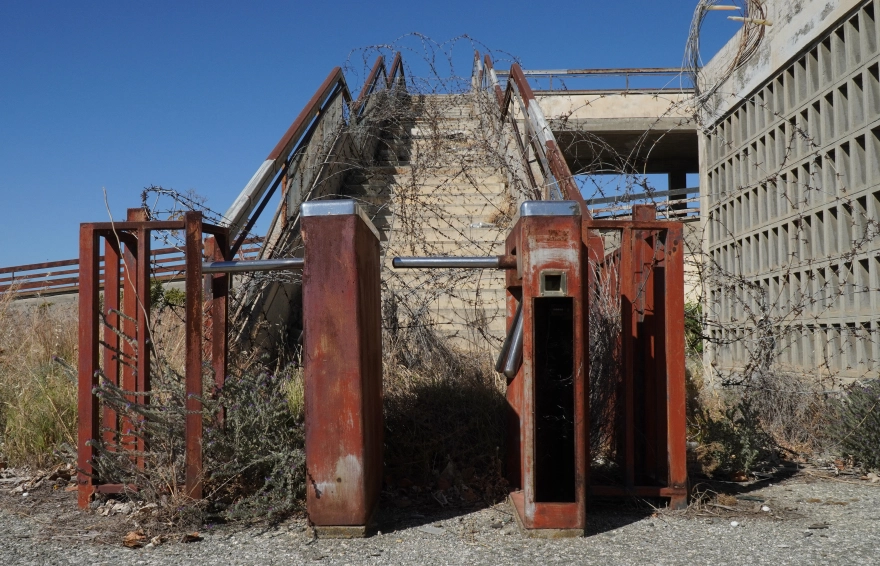
Nicosia Airport lies within the neutral zone under UNFICYP (United Nations Peacekeeping Force in Cyprus) control, designated as a protected UN area, and remains inaccessible to the public. Access is also restricted for safety reasons, as the facilities have suffered serious deterioration and many buildings are considered structurally unsafe.
The loss of Nicosia Airport necessitated the creation of a new airport after the invasion. Since then, Cyprus’s aviation connections with the world have been handled by Larnaca Airport and, later, supplemented by Paphos Airport, built several years afterward.
Abandoned to the ravages of time
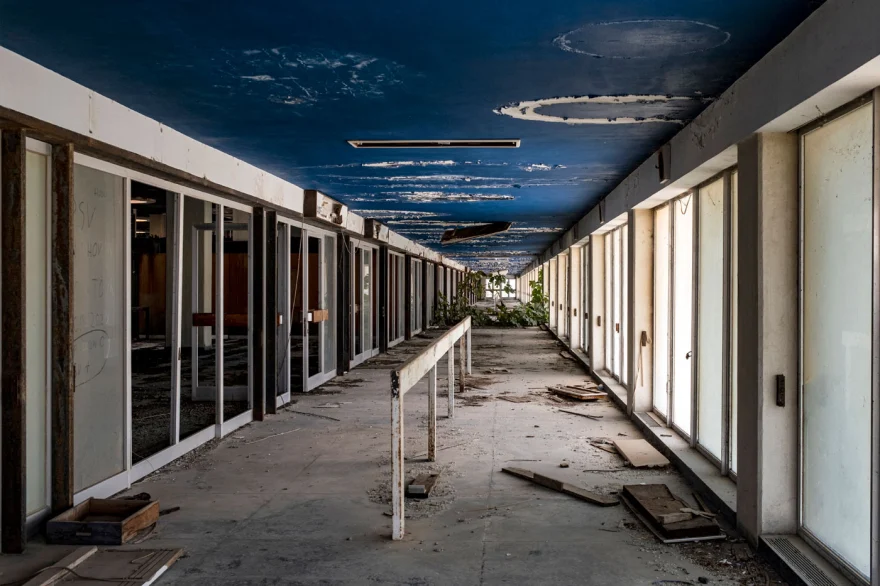
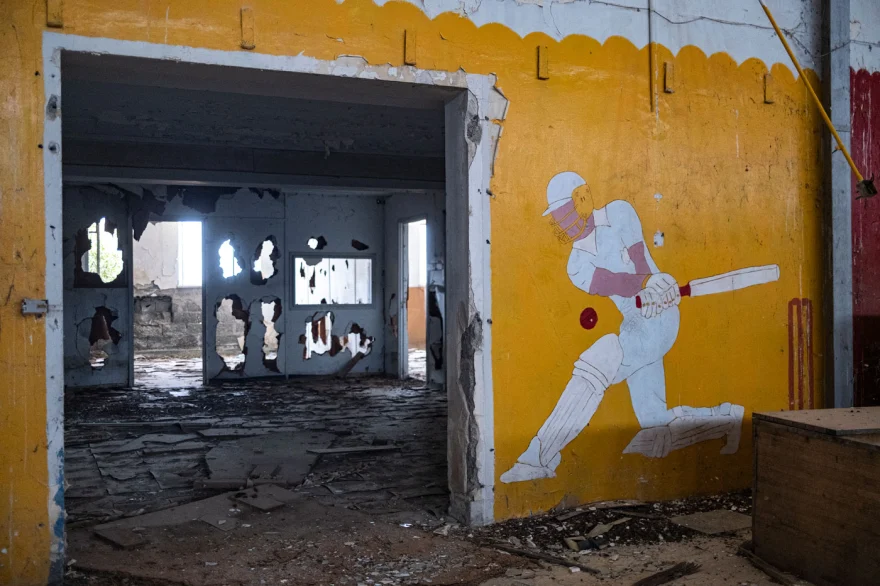
Inside the deserted terminal, the scene resembles an unfinished movie set. The airport’s large sign still stands on the facade, some letters missing, while the only sign of life comes from pigeons nesting in the decayed ceiling beams and the wind whistling through broken windows.
The arrivals hall feels like a time capsule, preserving images of the late 1960s and early 1970s.
Faded signs advertising shoes and travel promised passengers a journey “to the ends of the earth.” On walls and columns, the aesthetic of the era remains, hidden under layers of dust and moisture.
Upstairs, the departures hall is empty, but the seats remain in place. Their design evokes a science-fiction movie set of that time. Everything is covered in dust and bird droppings — a stark reminder of how long it has been since humans passed through.
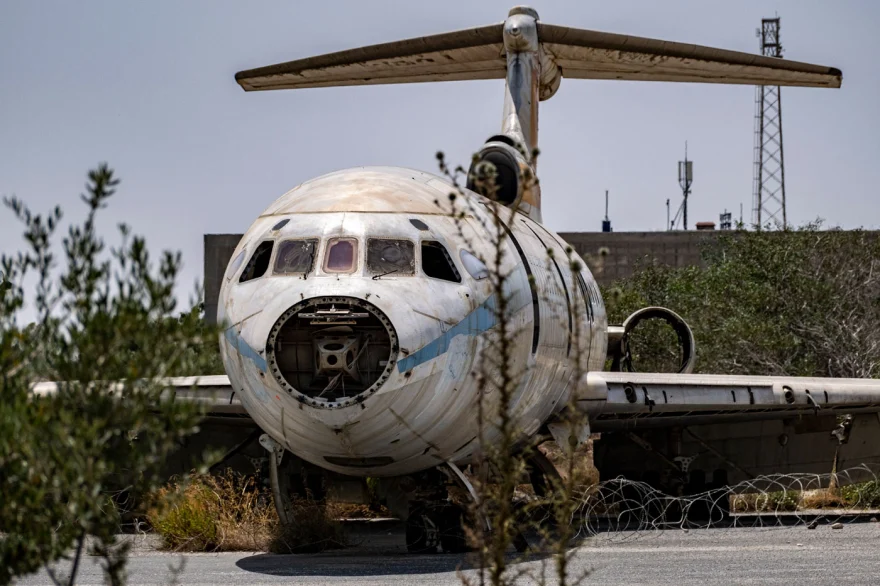
Outside, on the aircraft parking area, dominates the husk of a lone Trident passenger plane of Cyprus Airways, riddled with bullet holes — a testimony to the battle at the airport in 1974. A real monument to the violent history that divided Cyprus.

Trapped in the stalemate of negotiations
A UN peacekeeping representative in Cyprus describes the airport as a place where “time has truly frozen.” They note that from time to time, efforts were made to reach an agreement for the airport’s reopening or redevelopment in a mutually acceptable way, but none of these initiatives produced tangible results, allowing decay to progress steadily to its current state.
According to available records, no aircraft has taken off or landed at Nicosia Airport since 1974. The exception was in 1977, when, under a special UN authorization, three trapped Cyprus Airways planes were flown to London with the assistance of British Airways engineers.
The airport is not just an abandoned site; it also serves as a symbol of the political deadlock that continues to keep 37% of Cyprus under Turkish occupation for half a century.
As the Daily Mail reports, the island remains divided since the Turkish invasion. Greek Cypriots live in the south, Turkish Cypriots in the north, with a UN ceasefire line running east to west across Cyprus. Talks to resolve the Cyprus issue, started and interrupted many times over the decades, have failed to change this reality.
Nicosia Airport sits directly on this crack in time. Guarded by blue helmets, fenced off with warning signs, it stands as a reminder of where normalcy once existed on the island and how difficult its restoration has proven.
A monument of memory and inertia
The British newspaper’s report, based on Reuters photographic and journalistic material, does not limit itself to recording images of abandonment. It emphasizes that Nicosia Airport is linked to a broader political stagnation that has kept Cyprus divided half a century after the 1974 events.
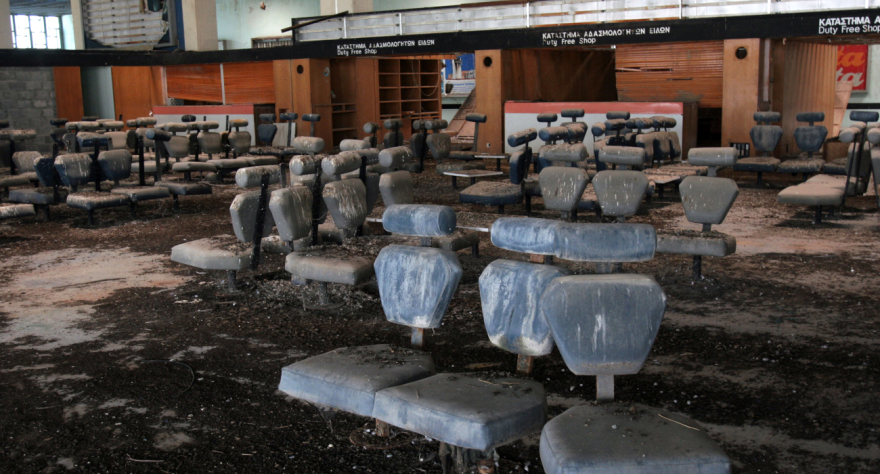
At a time when most airports are continuously evolving, expanding, renovated, or replaced, Nicosia retains an airport frozen from the day the Turkish forces invaded. The runways, escalators, baggage belts, and check-in counters were not destroyed by bombing; they were simply left to be eroded by time, humidity, and dust.
The combination of images — the interior of the terminal, the lone bullet-riddled aircraft on the tarmac, and the political reality surrounding the buffer zone — makes the airport one of the most powerful symbols of the Cyprus issue’s unresolved status. A place that was once a gateway to the outside world is now primarily a reminder of a wound that remains open.
Ask me anything
Explore related questions




