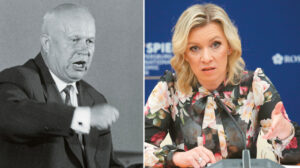
Nothing unexpected, original, or new. Russia—once again, and in line with its usual tactics—has repeated its threat against Greece, warning that it will “respond appropriately” to what it calls Athens’ “hostile actions.” The spokesperson of the Russian Foreign Ministry launched yet another round of insolent intimidation, in a tone more fitting for a street brawl than for diplomacy. How else can one interpret her menacing outburst—“there will be an appropriate response”—other than as veiled retaliation, the diplomatic equivalent of “you don’t know what’s coming”? Unsurprisingly, Greek diplomatic sources responded immediately and firmly, stressing that “threats against sovereign states are automatically rejected.”
This time, Maria Zakharova seized on Greece’s decision to develop and use maritime drones in cooperation with Ukraine. She had, of course, remained silent at far more critical stages of Russia’s invasion. She certainly wasn’t “troubled” when Turkey supplied Ukrainian defenders with its Bayraktar drones. In fact, her biased alignment with Ankara’s narrative was exposed publicly just a month ago, when she shamelessly refused to utter a word about Turkey’s invasion of Cyprus and its illegal occupation of 36% of the island. Instead, she limited herself to describing the 1974 coup against Makarios—ordered by the Greek junta—as a violation of international law. One might assume, then, that Russia’s own immoral, pretextual, and brutal invasion of Ukraine counts—at least in her eyes—as the pinnacle of upholding that very law.
Her hypocrisy becomes even more absurd when she accuses Greece of participating in an “anti-Russian campaign” by sending weapons and ammunition to Kyiv. She goes so far as to claim—through acrobatic logic—that these weapons are being used by Ukrainian forces to kill Greek civilians who have lived for centuries in Zaporizhzhia, Kherson, Mariupol, Donbas, and Donetsk. Yet all these areas are Ukrainian territories that Russia invaded with extreme aggression and indiscriminate bombardment of civilians. This is a blatant propagandistic inversion of reality, aimed at shaping misleading impressions within the international community.
Putin’s discomfort
In truth, Moscow’s intimidation—its “we’ll settle accounts later” message directed at Athens—reflects the deep irritation of Putin’s corrupt inner circle. The Kremlin seems unable to tolerate that an Orthodox, supposedly Russia-friendly country refuses to bow to its dictates. Ideally, Russia would prefer at least neutrality—or better yet, enthusiastic cooperation, North-Korea-style. When this does not materialize, Moscow “turns sour” and targets Greece for choosing to align with its EU and NATO partners, supporting sanctions against Russia and sending military equipment to Ukraine.
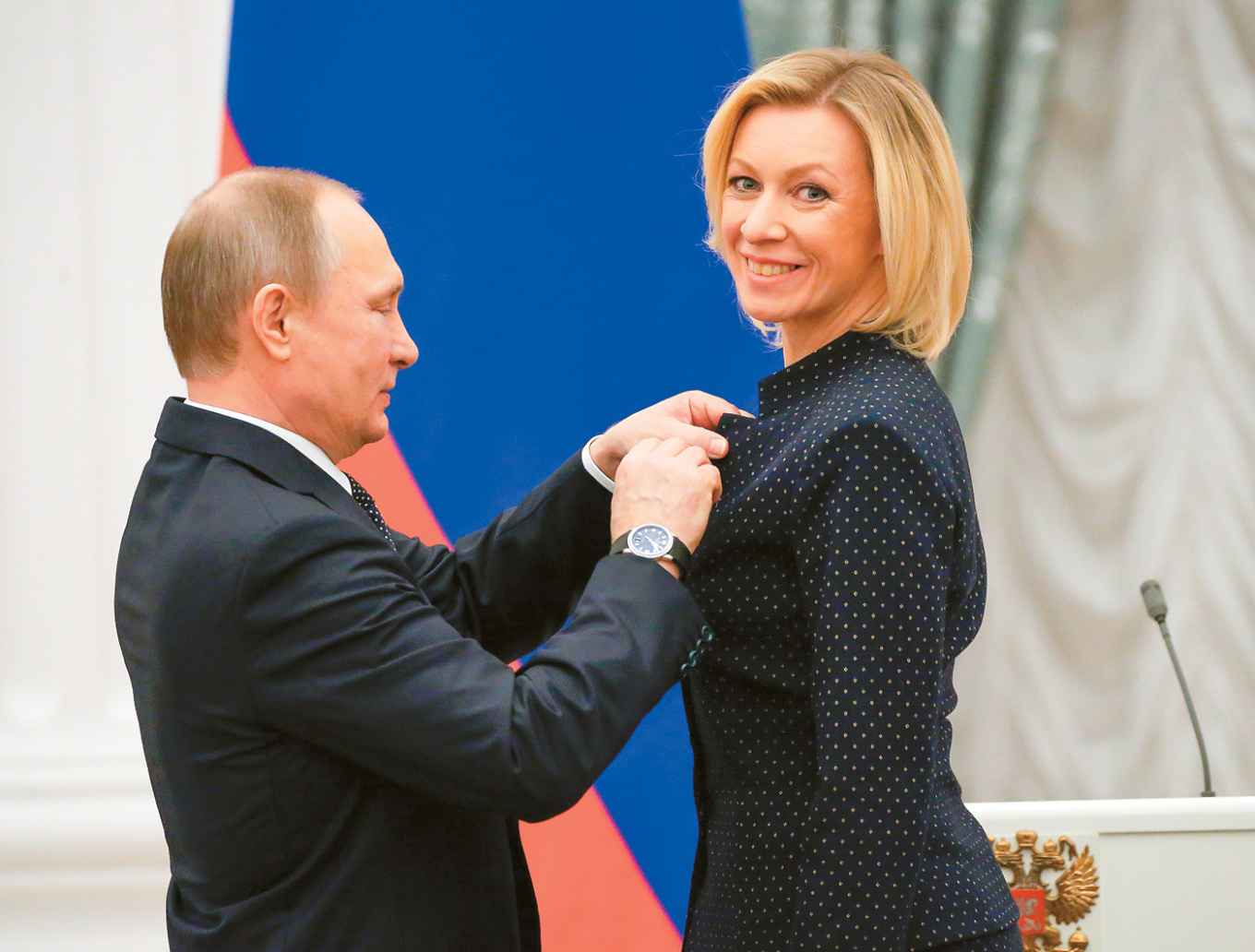
But above all, Russia—no matter how cleverly it tries to hide it—is struggling with Greece’s role in the EU’s strategy for complete energy independence from Russian hydrocarbons. It is well known that Russian energy companies do not operate internationally as competitive businesses, but as instruments of geopolitical control—and even coercion. Inevitably, when the Kremlin’s oligarchic circle feels its interests threatened, it does not simply complain: it roars like a wounded bear. In doing so, it confirms that its verbal threats are the clearest proof of its strategic weakness.
Sixty-five years back…
Greek–Russian relations have always unfolded on a complex, multilayered historical canvas—woven with myths and realism, moderation and tension, religious sentiment and unfulfilled expectations. Yet this inherited tapestry nearly went up in flames in the past, due to a terrifying moment of Russian extremism—one that makes Zakharova’s current outbursts look like lukewarm lines from a comedy sketch.
Sixty-five years ago, nothing was humorous. The Cold War was at its peak, and memories of Hiroshima and Nagasaki were still vivid. The possibility of nuclear weapons being used by either NATO or the Warsaw Pact was frighteningly real. On top of that, fears of a catastrophic technical or human error lingered in the air.
In those early 1960s years of nuclear anxiety, Nikita Khrushchev—General Secretary of the Communist Party of the Soviet Union and premier of the USSR—felt more powerful than ever. Having consolidated his control over the party and the state, the Donbas-born son of a miner and grandson of a serf, a hardened Bolshevik, repeatedly declared his unwavering belief in the inevitable triumph of socialism over capitalism. At the same time, as a cunning Soviet bureaucrat, whenever he found himself cornered, he resorted to roaring threats.
Threats from Albania
In late May 1959, during his official visit to Enver Hoxha’s “unyielding” Albania, the rude and impulsive Khrushchev seized the opportunity to unleash his terrorizing threats. He visited the Soviet naval base in Vlora and toured cities such as Gjirokastër, Sarandë, and Korçë, delivering speeches at large open-air gatherings. In Korçë—then a predominantly Greek-speaking city—he openly and provocatively threatened Greece with nuclear retaliation. From the podium, he emphasized that the establishment of NATO missile bases on Greek soil would trigger Soviet reprisal strikes with tragic consequences.
All his previous pacifist rhetoric about peaceful coexistence, framed within the Soviet proposal for a missile-free Balkan peninsula, was instantly thrown into the trash. His statements caused political turmoil in the Kingdom of Greece. Washington, however, reassured the Greek government and parliamentary parties. The U.S. State Department believed that Khrushchev’s provocatively hostile remarks were a fabricated Kremlin bluff designed to gauge Western intentions and reactions. It assessed that his ominous threats were meant to pressure Greece to withdraw from NATO.
The most severe impact of Khrushchev’s hostile declarations, however, was felt by Greece’s weary post–civil war Left. While its members were still being exiled to barren islands or imprisoned, the Left sank into stunned embarrassment. Its efforts to rally public figures around the campaign for nuclear disarmament suddenly collapsed. As early as 1957, the United Democratic Left (EDA) had warned: “Whatever is most precious in the word ‘GREECE’ risks being erased beneath radioactive ashes.”
Yet that warning turned to ashes itself because of Khrushchev’s arrogance—maliciously manipulative and perpetually suspicious. The era’s domestic ultranationalists seized the opportunity to accuse the Soviet diplomatic corps of orchestrating all peace activists. At the same time, they fiercely condemned the banned Communist Party of Greece (KKE) for supposedly being complicit in the nuclear threat that the Soviets were imposing on Greece. This was despite the fact that KKE’s leadership was still reeling in Bucharest, following internal purges and reshufflings caused by de-Stalinization.
The episode with Bulgaria
The already tense Cold War climate soon became even more warped. In early summer 1961, three individuals were arrested by the Greek Gendarmerie in northern Greece on charges of spying for Bulgaria. The People’s Republic of Bulgaria retaliated with its own arrests, including a low-ranking employee of the Greek embassy and several others. Diplomatic talks on Bulgarian war reparations were immediately suspended. A month later, in July 1961, during a reception at the Polish Embassy in Sofia, Bulgarian Prime Minister Anton Yugov accused the Greek government of not representing the Greek people, triggering a heated diplomatic incident. Tempers flared. Anxiety and insecurity about a northern threat resurfaced dramatically. Rumors spread about the possibility of a general conflict with Bulgaria, the Soviet Union’s main ally in the Balkans. After all, Greek defense policy at the time was entirely focused on countering any aggression from the Eastern Bloc—the so-called Iron Curtain. And although newly elected U.S. President John F. Kennedy had called for global cooperation for peace in his inaugural address in January 1961, a dangerous confrontation was simmering in Southeast Europe. Khrushchev—the former WWII demolition engineer—found in these circumstances the perfect pretext to activate a geopolitical explosive device.
Meanwhile, that same summer, agricultural and livestock production figures in the Soviet Union were disappointing. Before domestic discontent could grow, the Soviet leader staged a display of nationalist pride and anti-imperialist fervor to soothe public anxiety. He broadcast, both within and beyond the USSR, the message of socialism’s superiority over the capitalist West. He did not hesitate to intimidate his international rivals by boasting of the destructive power of the Soviet nuclear arsenal—something akin to Dmitry Medvedev’s provocative mutterings today, though with even greater shamelessness. Khrushchev’s course of action fueled an escalating strategy of global tension that would peak about a year later with the deployment of Soviet ballistic missiles in Cuba. Humanity avoided nuclear annihilation by a hair’s breadth.
Missiles over the Acropolis
On August 11, 1961, an event was held in the Kremlin celebrating Soviet–Romanian friendship. The crossed flags of the two nations symbolized their brotherhood: the red Soviet flag with the golden hammer and sickle nearly embraced the Romanian tricolor, bearing wheat, a red star, and a radiant sun above an oil-drilling tower. The atmosphere, however, foreshadowed more than symbolic gestures.
As host, Khrushchev welcomed the guests with visible energy. At his side stood Foreign Minister Andrei Gromyko—known internationally as “Mr. Nyet” during his nearly 30-year tenure. Khrushchev first embraced and kissed three times the ruthless Gheorghe Gheorghiu-Dej, Romania’s communist leader. He then shook hands with delegations from the Soviet satellite states. Finally, he approached the ambassadors of the Western nations—and there he activated his diplomatic time bomb. With a blast loud enough to drown out the Russian balalaikas and Romanian violins, he turned to the Greek ambassador in Moscow, Georgios Christopoulos.
With a token disclaimer about non-interference in Greece’s internal affairs, he complained about the imprisonment of Manolis Glezos, the hero of the Acropolis. “One would think,” he continued, “that those who bravely fought against Hitler’s Germany would be treated with honor and respect.” That remark served as the sharp prelude to a full-frontal attack. Khrushchev boldly proclaimed—before the stunned audience in formal attire—that Greece’s participation in NATO would bring it great suffering if war broke out between the USSR and the Atlantic Alliance.
With diplomatic finesse, the Greek ambassador replied: “I do not believe that the Soviet premier would ever order atomic bombs to be dropped on the Acropolis.”
“You are gravely mistaken…,” Khrushchev responded loudly enough for all present to hear. He clarified that he would not personally order the bombing of the Acropolis. Yet he would not hesitate to command his military to strike NATO bases located in Greece. “And naturally, they will not take into account the olive groves, the Acropolis, or any other historical monuments of Greece. Bombs do not discriminate,” he warned before leaving the Soviet–Romanian celebration.
Khrushchev, carried away by his own momentum, had pushed the Cold War to the brink of thermonuclear catastrophe. Yet nothing he said was accidental. Everything was methodically preplanned. At dawn the next morning, thousands of soldiers and militia members of communist East Germany began constructing the Berlin Wall.
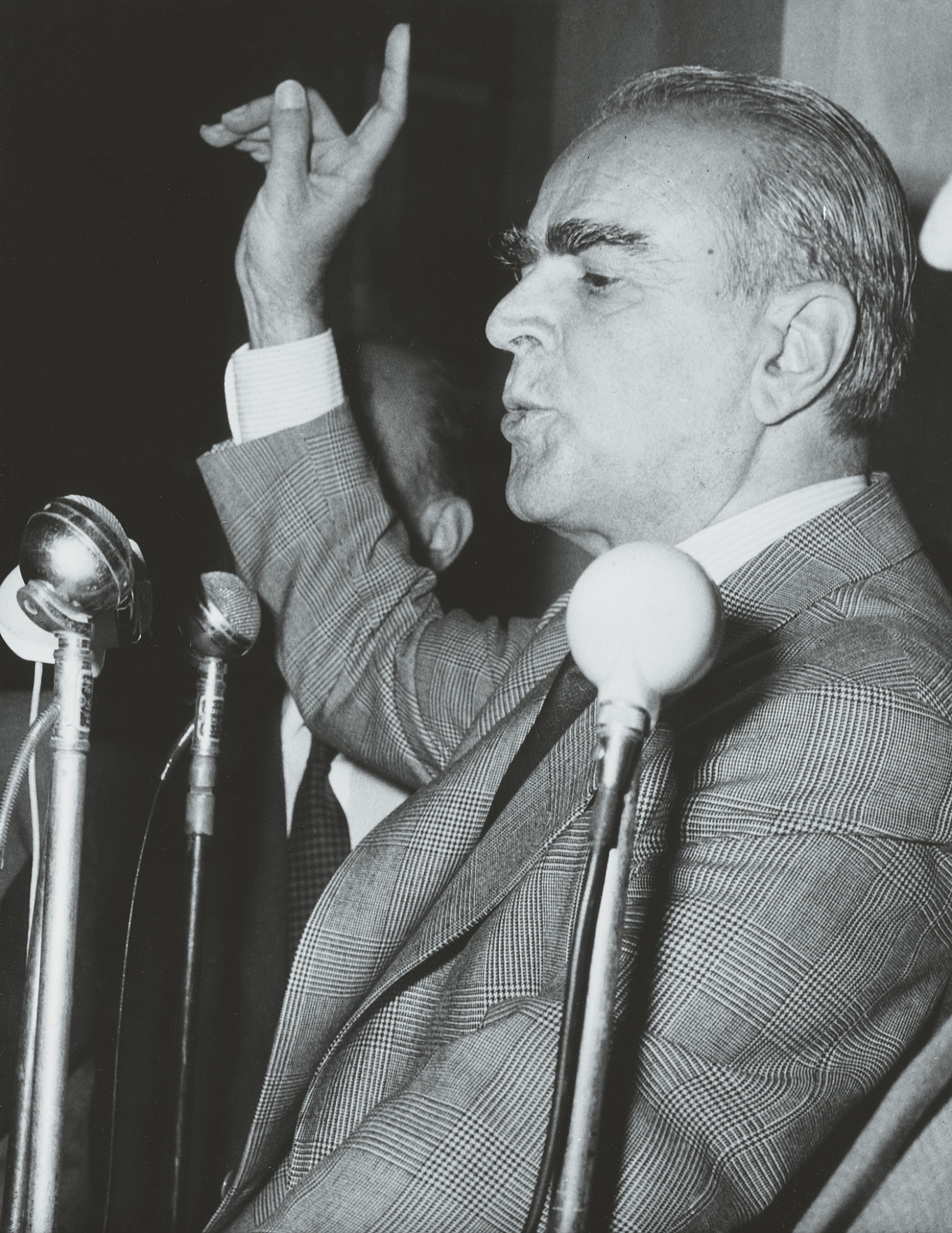
In Athens, faced with Khrushchev’s provocative bullying and his attempt to turn the country into a gruesomely ruined Hiroshima of the Mediterranean, the government of the time—as well as the main opposition—responded firmly, with national dignity, stability, and composure. Without cowardice, ambiguity, or appeasement, they upheld Greece’s defense commitments honorably and responsibly.
The first Greek response came from Prime Minister Konstantinos Karamanlis, leader of the National Radical Union (ERE). He stated:
“Prime Minister Khrushchev of the USSR often issues threats against Greece. Through this unjustified crusade, he seeks to intimidate the Greek people and encourage the extreme Left. In any case, he may, as he has threatened, destroy the Acropolis. But he cannot destroy the ideals symbolized by the Sacred Rock—ideals far holier than missiles.”
In a similar tone, the then–Leader of the Opposition and head of the Centre Union party, Georgios Papandreou, declared:
“The nation is rightly experiencing profound shock at the unjustified attack by the leaders of the Soviet Union. When, however, the historic moment comes to impose a choice, Hellenism throughout its long history has demonstrated that it sacrifices peace for freedom—but never freedom for peace. And that is its radiance in history.”
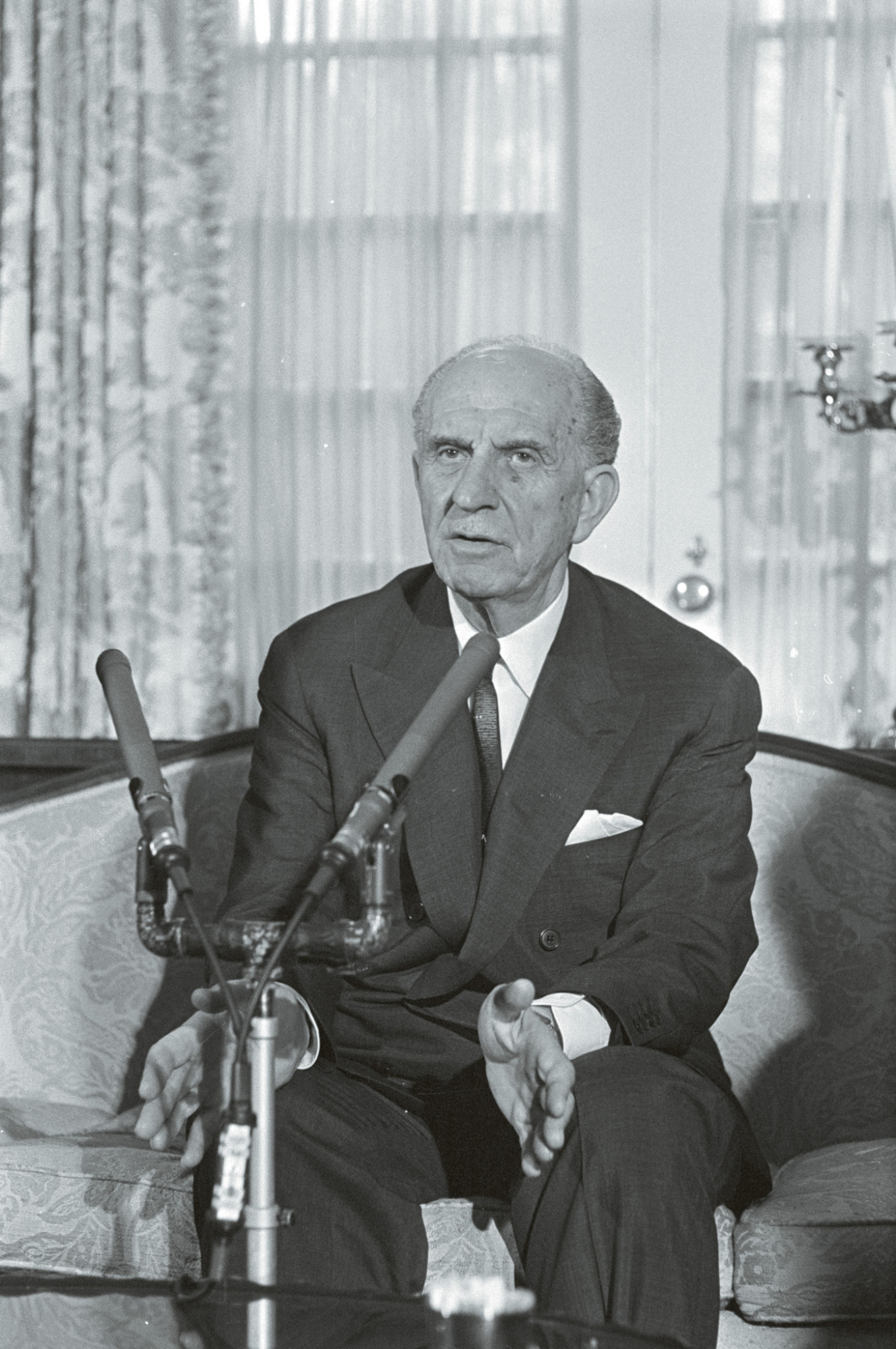
Georgios Papandreou: “The nation is rightly experiencing profound shock at the unjustified attack by the leaders of the Soviet Union. But when the moment of decision comes, Hellenism has proven through millennia that it may sacrifice peace for freedom—but never freedom for peace. And this is its shining legacy in history.”
Gagarin in Athens
Gradually, as the tension between the two countries eased over time, the opportunistic Soviet leader sought flexible diplomatic openings with Greece. Without budging an inch from his monotonous Cold War refrain, he allowed certain channels of communication to open. Six months after his bullying incident at the Kremlin, in February 1962, he sent to Greece—essentially as a diplomatic gift to ease bilateral relations—the legendary cosmonaut Yuri Gagarin, the first human to travel into space and orbit the Earth in April 1961.
Upon his arrival at Athens’ Ellinikon Airport, he was received as a hero. The open car that carried him into the city was decorated with red roses, and the crowds that gathered—mesmerized by his uniformed presence—chanted rhythmically:
“Gagarin, save Greece! Save us!”
The frenzy resembled a scene in which the crowds awaited the Orlov brothers to liberate Greece from the Ottoman yoke. At the time, it was believed that these enthusiastic cries came from the many varieties of Greek Russophiles: admirers of the Orthodox tsars of “all the Russias,” fervent supporters of the Bolshevik revolutionaries, incurable worshippers of the Red Army, and even the old-calendarist zealots of the “blond race.”
The mutation of the “conspiracy-minded”
All these groups—who, over time, are now considered to have mutated domestically into the “Russia-sprayed” or perhaps “ruble-funded”—persistently resist any rupture in Greece–Russia relations due to the supposed eternal friendship between the two peoples. They now span the entire political spectrum, from the far right to the far left, united by a shared anti-Western populism and a label of Putin-admiration.
At the same time, in that politically “off-key” era, the oppressed supporters of the still-persecuted Left—both by state and parastate mechanisms—lay low. They adopted rhetoric about neutrality and a non-aligned policy, proclaiming the doctrine of “peaceful coexistence” while shouting, at the top of their lungs, “Gagarin – Peace!”
Meanwhile, the extreme anti-communist Right of that era was horrified by the reception held in honor of the short Soviet lieutenant at the Hotel Grande Bretagne, attended by 3,000 guests. It was shocked by Gagarin’s meeting at the political (not prime-ministerial) office of Prime Minister Konstantinos Karamanlis and stunned by his proclamation as an honorary citizen of Athens. Its only consolation against this hysterical indignation was that the palace did not allow Gagarin’s face to appear even on a postage stamp. Ultimately, his visit concluded with a celebration in Liopesi—today’s Paiania—organized by the Greek-Soviet Association, the group that had officially invited him.
Behind the red brick fortification walls of the Kremlin, Khrushchev rubbed his hands with satisfaction at the reception Soviet—essentially Russian—grandeur enjoyed in Greece within the then-bipolar world. But even he, unknowingly, was counting down his own final days. In 1964, he would be gently dethroned by the Politburo of the CPSU and forced to resign—for supposedly “health and old age” reasons—from all his Soviet posts. The grim party dinosaurs who succeeded him maintained their hellish nuclear threats against Greece for another 25 years, until the rotten edifice they had built over 70 years collapsed entirely in 1989.
“Threats frighten the foolish”
That Russia, entering the second quarter of the 21st century, once again brandishes its crocodile-sharp nuclear teeth reveals that it is unbearably cornered. How else can one interpret the fact that just last year the arrogant Russian government drafted a list of countries whose “destructive behaviors are contrary to Russian spiritual and moral values”? Among them: Greece and Cyprus.
Perhaps Russia hoped they would share its supposed profound spirituality and moral virtues—traits it supposedly shares with, for example, North Korea, which sends soldiers to be cannon fodder on the Russo-Ukrainian front. Perhaps, invoking so-called traditional religious bonds, Moscow hoped the two fellow-Orthodox nations would obediently fulfill their “moral duty”: to align with Russia in the inhumane bombings of civilians, widespread atrocities, and the mass abduction of children in occupied Ukrainian territories.
The message, implicitly, was that any refusal to participate would face consequences—just as the vengeful Khrushchev once threatened.
But times have changed dramatically. Zakharova may howl in vain today, but in the contemporary multipolar world, it seems truer than ever that “thunder frightens children, and threats frighten fools”—a saying attributed to Socrates and preserved, supposedly, by Plato.
Ask me anything
Explore related questions