





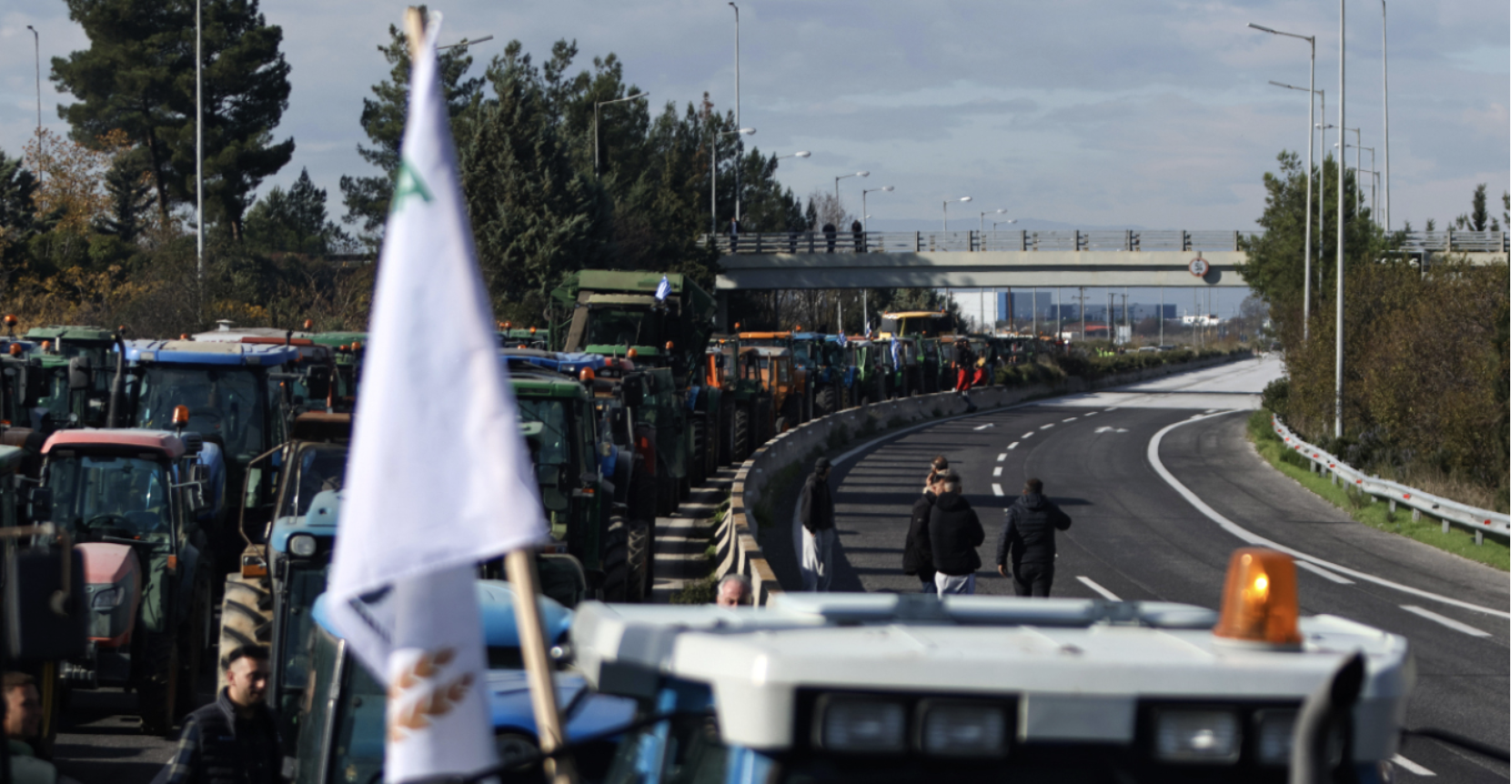
Yesterday was a pivotal day for the mobilizations, as Thessalian livestock farmers joined the protest. They marched with their farm vehicles through the center of Larissa and, in the city’s main square, threw milk and animal feed, protesting the fact that many of them have lost their herds due to the recent outbreak of sheep pox and have yet to be compensated for the total destruction suffered.
Meanwhile, the blockades — especially those in Nikaia and along the E65 — grew significantly stronger from yesterday, now exceeding a combined total of 3,500 tractors. At the same time, new blockades such as the one at Malgara have begun forming at other points of the national road network, reinforcing the farmers’ presence across the country.
Today, farmers are expected to block the Promachonas border crossing, while their counterparts in Trikala will set up a blockade at the Megalochori junction — all the while keeping an eye on the adjacent E65, where they may expand. In the coming days, symbolic blockades of major ports, including the port of Volos, are also anticipated.
When the First Phase of Mobilizations Ends
The “strategists” of the plain, during closed-door meetings, are trying to map out the next steps in what has become the largest farmer mobilization in twenty years.
Their first question: When will the initial phase of protests conclude? In practical terms, until when will the escalation plan they are following remain in force? According to information obtained by protothema.gr, this first cycle is expected to wrap up by the end of the week, once all blockades nationwide have been fully established.
The strategy is to reinforce each point with additional tractors, giving even greater force to their collective effort.
The Next Phase and Pressure Tactics
Next week will serve as an assessment period for farmers, who will evaluate the situation on the ground. As they have already stated, their intention is to remain at the blockades even through Christmas, pressuring the government to address their demands.
Decisions regarding the second cycle of mobilizations will be made at the nationwide assembly, expected to take place in Nikaia next week. Depending on the government’s stance, farmers will decide whether to further escalate or to pause the intensification of their actions.
Among the escalation scenarios on the table — though not yet finalized — is the possibility of blocking bypass roads as an additional pressure lever before the holiday season. Other forms of blockade have also been discussed but remain undecided.
What Could Lead Farmers to Stand Down?
Although no meeting between government officials and farmers is yet on the horizon, both sides are clearly preparing for the moment they sit at the table to negotiate solutions and achieve de-escalation.
What, then, would persuade farmers to end their mobilizations?
Their primary concern is production costs. They will demand:
- Tax-free diesel
- Electricity prices capped at no more than €0.07 per kWh
- Minimum guaranteed prices for agricultural products
- A reform of the ELGA compensation system, so more products qualify for state compensation
Ask me anything
Explore related questions




