





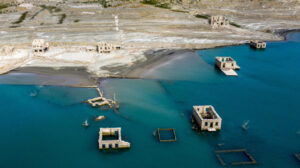
The debate surrounding the state of alert in which Attica has been placed due to the increasing freezing temperatures was the focus of today’s statement by Professor Euthymis Lekka on SKAI. The president of the OASP detailed how the region may be receiving heavy rainfall at the same time that the available water reserves continue to decrease.
The professor explained that the amount of water that falls is not immediately utilised, stressing that much of it is not being channelled into the reservoirs. “Right now the rain is falling rapidly and as long as it falls where it should fall, it is good, but the rest of the water that falls outside the reservoirs takes quite a long time to enrich the underground aquifers, and we need quite a long time to pump those aquifers as well,” he explained.
He particularly focused on the value of groundwater, which he described as a “stable reserve,” noting that these are large quantities of water that usually do not require special treatment and can be exploited over a long period. At the same time, he noted that the reservoirs are filled mainly by melting snow, which can be a valuable source of stock boosting in the coming months. “Snow is our ally,” he noted.
The role of small dams and runoff retardation
He also mentioned the need for technical interventions to hold back water to prevent it from seeping into the ground. He said, “we can make so-called dams or small reservoirs” in areas where the topography allows, to delay the flow to the sea and enrich the aquifers.
He also commented that desalination is a complementary solution, but needs caution due to its high cost, energy consumption and environmental footprint. He also reminded that water supply networks need extensive interventions, which cannot be done quickly.
“Actions must also be taken in the agricultural sector, where we can make great water savings.”
The professor also emphasized the importance of reducing water wastage in both cities and the countryside, highlighting that agricultural production is a sector where significant water-saving measures can be implemented. At the same time, he spoke about changing attitudes and cultivating a consciousness of rational use.
Finally, asked about the inclusion of Attica in an emergency status, Mr. Lekkas explained that this procedure is mainly of a bureaucratic nature and does not entail immediate changes in the daily life of citizens, but allows for faster measures to be taken at the stage that will be required.
Ask me anything
Explore related questions




