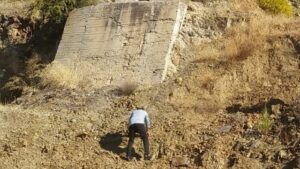
In the hunt for European self-sufficiency in critical raw materials, the deposit at Molaos in Laconia is making a dynamic entry. The area is emerging as a potential source of germanium and gallium – two metals of strategic importance to European high-tech industry, from microchips and photovoltaics to advanced electronics and defence systems.
Following the new capital raise completed by RockFire Resources to continue the drilling program, the project is entering a critical phase as developing at the mining level will require investments of a magnitude that only large industrial groups can support.
Contacts are reportedly underway with Metlen and Hellenic Gold, who are said to be considering participation in the next phase of financing with a strong interest in the critical metals sector. The aim is, following the completion of exploratory drilling in 2026, to make an investment decision in 2027, if resources are confirmed.
Essentially, RockFire has “opened the road” — but the mining and development of the deposit belong to a next, far more demanding phase, in which major industrial groups will be called to play a role.
RockFire, listed on London’s AIM market and holding a 30-year exploitation concession from the Greek state, has already identified a zinc deposit 2.2 km long and 140 meters deep. The confirmed deposit amounts to 15 million tonnes of ore, with a content of 7.26% zinc, 1.75% lead, and 39.5 g/t silver, while the real added value lies in the germanium and gallium.
Geological estimates speak of 4.5–6 million tonnes of germanium-bearing ore, with a concentration of 17–25 g/t — values considered high by international standards. At the same time, analyses indicate gallium concentrations reaching up to 45 g/t, a level extremely rare worldwide. If confirmed, the Molai deposit could become a verified germanium source within Europe, at a time when the continent is seeking to reduce its dependence on third countries.
This trend is directly linked to Metlen’s interest. Last spring, during the visit of EU Vice President Stéphane Séjourné to the facilities of “Aluminium of Greece,” the group’s chairman, Vangelis Mytilineos, publicly referred to the company’s interest in germanium and scandium — without giving further details — following the company’s involvement in gallium as well. He emphasized that Europe needs access to strategic metals in order to safeguard its technological autonomy.
Given the global production of germanium — just 220 tonnes annually, compared to an expected demand of 280 tonnes by 2030 — every new European resource acquires strategic significance.
Thus, the Molai project is evolving from a mining exploration into a potential European mining asset of political and industrial weight.
In the past two years, China has been using critical raw materials as a lever of geopolitical pressure, selectively restricting exports of strategic metals. At the end of last year, it imposed an export ban on gallium and germanium to the United States, causing major disruptions in the market. Within a few months, germanium exports from China dropped by 95%, while exports to Europe fell by 60% in the first half of the year, according to data from Germany’s Tradium.
The price of high-purity germanium doubled, with buyers continuing to purchase “often at any price.” Europe — lacking a sufficient strategic stockpile and with an uncoordinated recycling policy — now faces increasing dependence on Chinese supplies.
Ask me anything
Explore related questions