






Anastasia Filippopoulou, lighting architect and the creative mind behind this year’s Christmas lighting in Athens, speaks to Newmoney about the magic of light in the city.
If there is a time of year when light is not just a technical matter but a spiritual one, it is Christmas. And if there is a city where light has the power to change its rhythm, soften the sharp edges of everyday life, and inspire a small sense of wonder, that city is Athens. This Christmas, Athens was reborn, and at the heart of this revival was Anastasia Filippopoulou, the lighting architect entrusted with giving the city a new, warm, and cohesive Christmas identity.
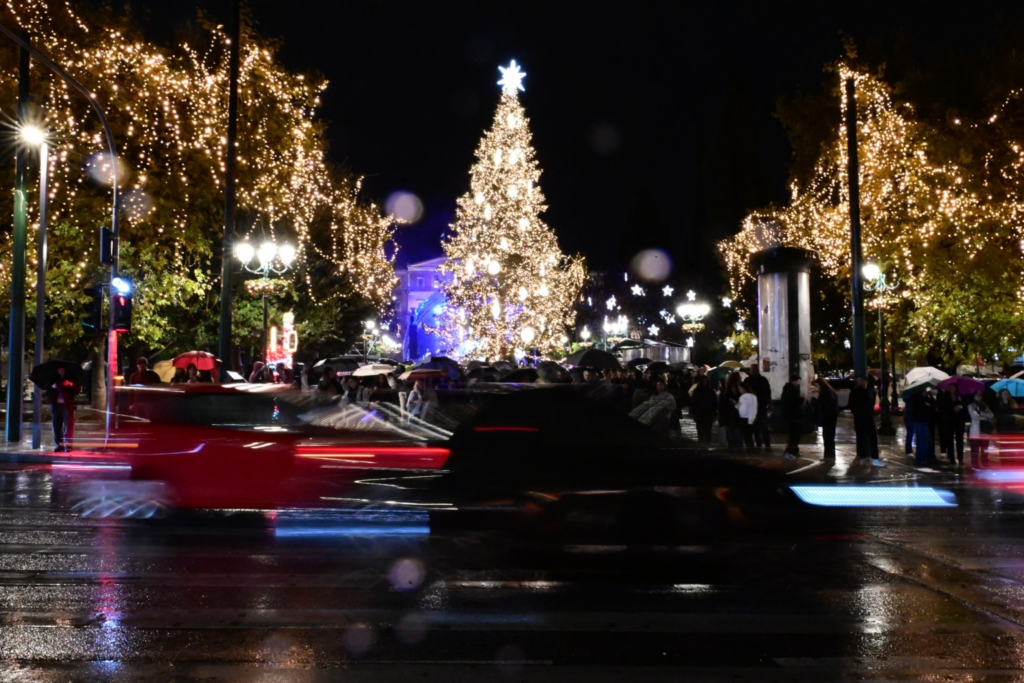
The result is not just beautiful. It is mature, subtle, warm, balanced. A lighting design that respects the city, its spatiality, its architecture, the memories of its inhabitants, but at the same time allows it to dream again. At a time when cities worldwide are investing in distinctive lighting identities, Athens is striving to shape its own, more mature version with careful choices of color, intensity, and materials. At the heart of this effort is the vision of Ms. Filippopoulou.
— How big a challenge is it for a lighting professional and artist to “reintroduce” Athens to the public through its Christmas lighting?
The challenge is indeed great, because through Christmas lighting we are called to create new images and offer a fresh, luminous experience of the city. But the reward is even greater. We feel that what we do is like a collective gift from all those who work on the project to the residents and visitors of Athens. There are people who may not have the means to decorate themselves, but they can still participate in the magic of the holidays through the events and the public lighting provided by the municipality. And this sense of participation is very precious. I would also like to note that the result the public sees requires many nighttime working hours, in difficult conditions and often under time pressure. Yet, when we see people walking, smiling, and sharing moments under the lights, we feel the effort was worthwhile. And this is, I would say, the deepest satisfaction of this work: the fact that our work reaches so many people and perhaps manages to evoke beautiful feelings.
— Athens is historically charged but also visually complex. How do you avoid the trap of “kitsch” or excess and maintain a balance between festive and subtle?
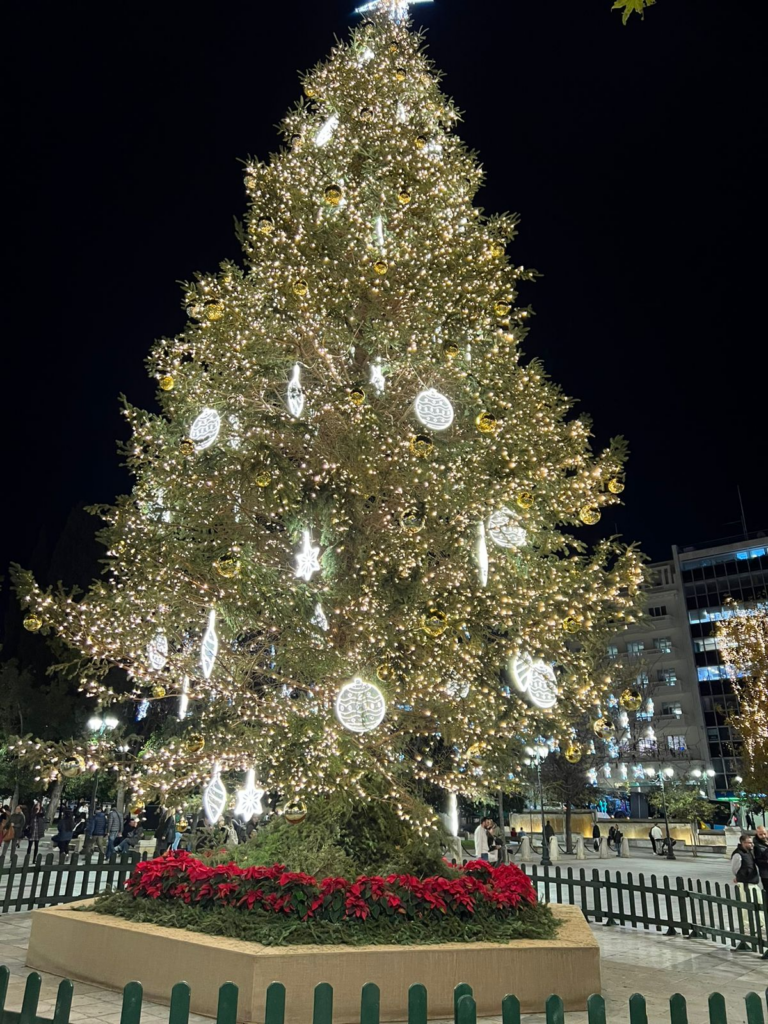
In my work in architectural lighting, I always prefer warm white light and I see that people respond positively to it. This philosophy carries over into the city’s festive lighting: we use warm light as a base, with a few carefully selected touches of cool white to provide contrast but without losing balance. The same logic creates visual continuity in the city, especially this year on Ermou Street, where new, impressive garlands have been installed that harmonize well with the environment. As for this year’s Christmas tree decorations, the choice was to keep it monochromatic. Only golden baubles were used, which reflect the warm white light from the thousands of small lights and the bright Plexiglas ornaments. The result is elegant, warm, and festive without excess.
— What is the most difficult, “invisible” aspect of this work that never shows in the final result but essentially determines the success of the lighting?
The most difficult “invisible” aspect is that in reality there is never a true sample before the final lighting is turned on. We cannot see in advance how the light will behave within the space, how it will be absorbed by materials, or how it will refract on surfaces. At the design stage, we can only imagine the result. This means that the responsibility of our choices is great, because when the project is publicly lit, there is no room for corrections.
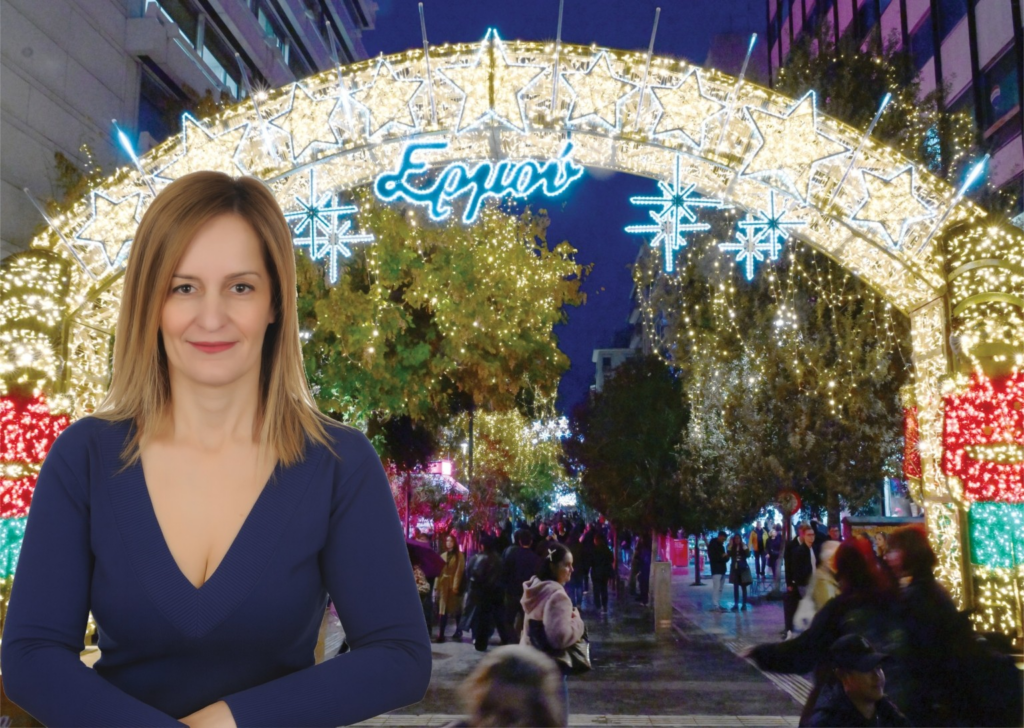
— How does low-energy LED technology affect your design process? Does it give you new creative possibilities or present new challenges?
Low-energy LED technology has radically changed the way we design lighting. On one hand, it allows us to achieve rich brightness with significantly lower energy consumption, which was unimaginable with older technologies. On the other hand, it opens new creative paths because the light source can now take shapes, lines, and geometries that were previously impossible. A characteristic example is the bright ornaments on the tree in Syntagma Square. There, a waterproof high-power LED strip was used, which “encloses” ornaments made of Plexiglas with engraved patterns on their surface. The result is impressive: the Plexiglas is fully illuminated and becomes almost entirely glowing, something that couldn’t be achieved with traditional light sources.
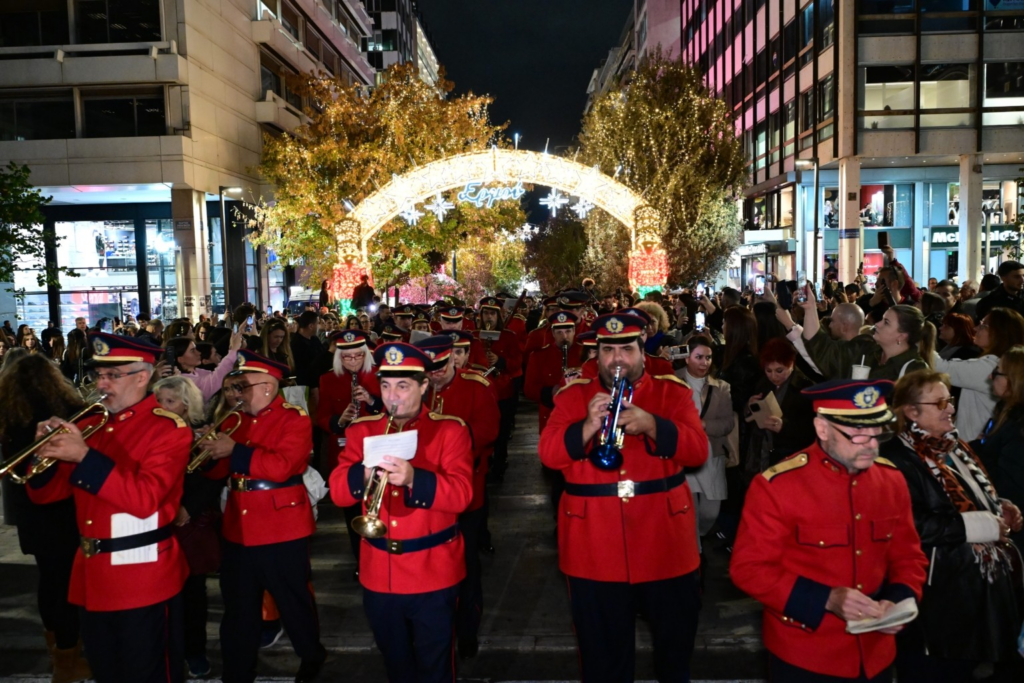
— To what extent does Christmas lighting contribute to the overall image of the city as a destination, as a brand? Do you keep this in mind when creating the concept?
Personally, I would be interested in continuing to gradually build a comprehensive festive lighting scheme, adding new elements each year and relocating older decorations to areas of Athens that currently have little or no lighting. In this way, the Christmas light does not remain only in the center but embraces more neighborhoods. The goal is for Athens to evolve into a Christmas destination, both for Greek visitors and foreigners. And we have the means to achieve this. The city, when properly lit, transforms and truly becomes exceptional at night.
— And a more practical question: Which company was responsible this year for supplying and installing Athens’ festive lighting? How was your collaboration with them on the creative and technical aspects?
The creation of the decorations was undertaken by the company FOTODIASTASIS, based in Thessaloniki. Our collaboration, which began last year, continued perfectly this year. Thanks to the fact that the company has production units both in Greece and abroad, it was able to meet the particularly demanding deadlines and complete the construction and delivery of the decorations within the tight time frames.
At a time when image dominates and the city constantly demands new interpretations, Anastasia Filippopoulou achieved something extremely difficult: to connect technology with poetry, the reality of construction sites with aesthetics, responsibility with joy. This year’s Christmas in Athens bears her signature.
Ask me anything
Explore related questions




