





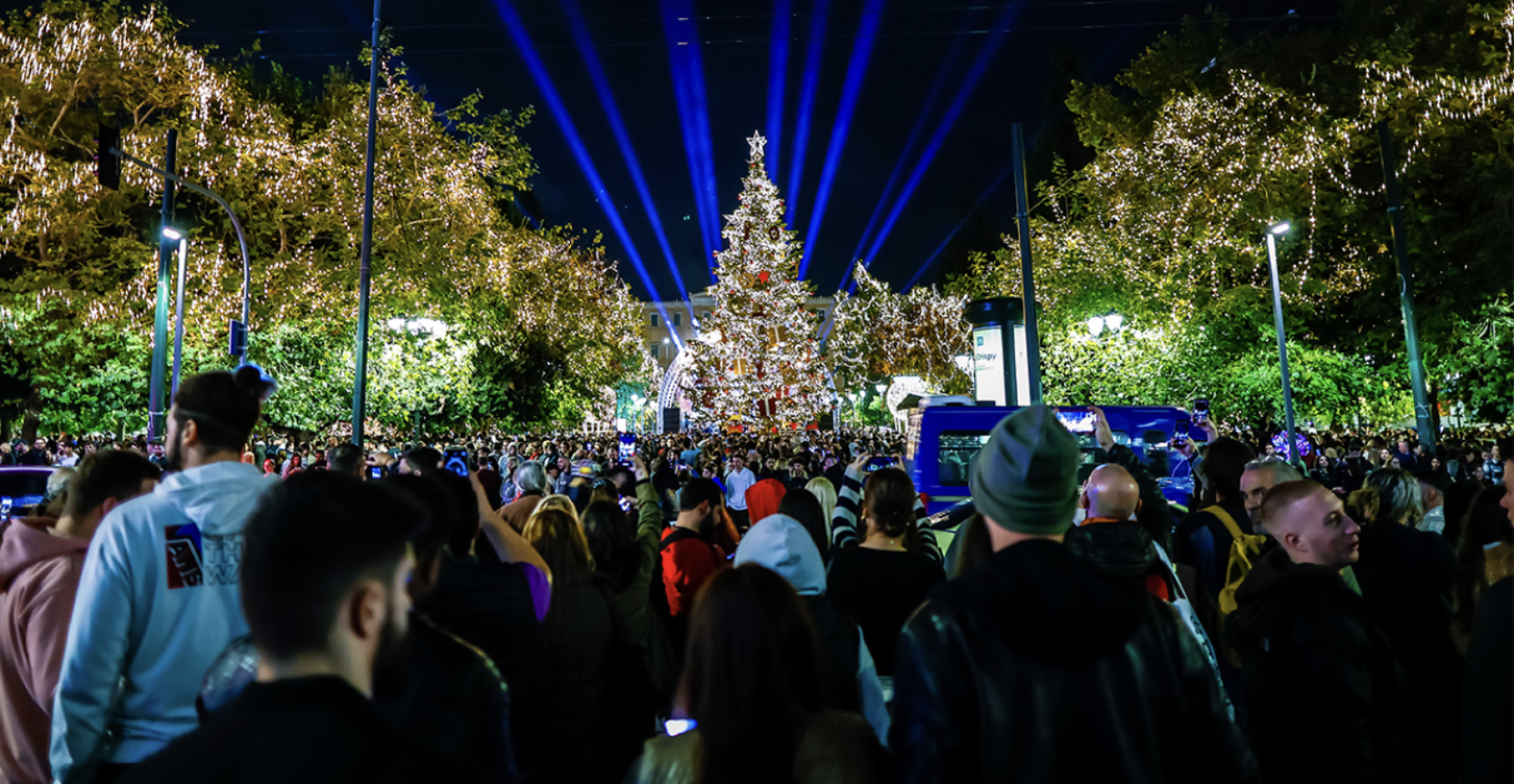
Athens is one vast sold-out phenomenon, an epidemic whose main symptom is the almost compulsive urge “to be where it’s happening.” Where what is happening? Anything worthy of a selfie, a few snapshots, serving as certification on social media that we too saw, for example, Banousi, that we ate at “Pharaoh,” that we went to Epidaurus for Castorf, to OAKA for LEX (or Panathinaikos), and so on. Congestion, being packed, sold out: both a given and a goal, now functioning as a motive in itself—not only as a result, a reward, or a guarantee of quality. And, most likely, the catalyst behind the sold-out phenomenon is twofold: the pressure of the pandemic and the leveling power of social media.
Theater
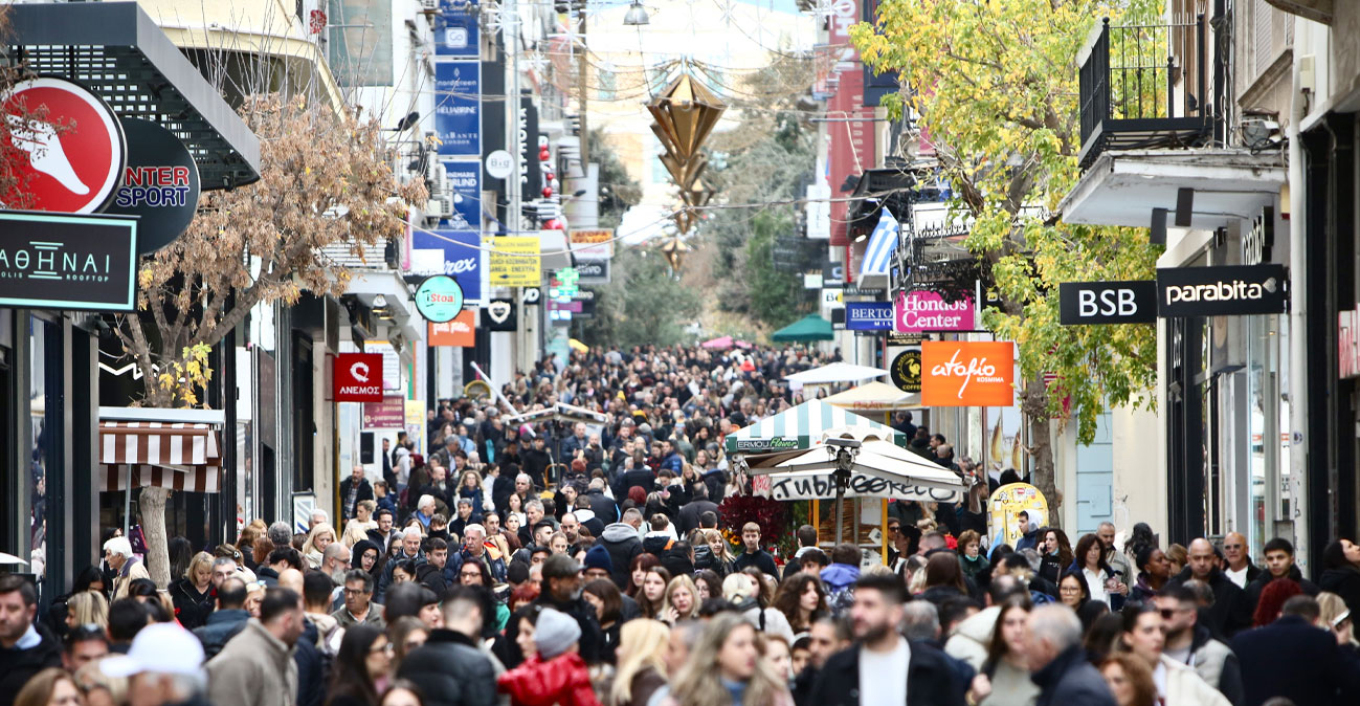
There are about 180 theater venues in Athens: from the massive “Christmas Theater” to an underground hole in Psyrri, deliberately dirty and neglected for reasons of authenticity and alternative naturalism. In any case, productions in Athens exceed 450 for this winter season. Online bookings have skyrocketed, by around 80% compared to the pre-COVID period. Especially in theater, not only have traditional distinctions—or prejudices—between quality and commercial work almost disappeared, but so has the role of criticism.
The audience simply goes everywhere. And the more people prefer a show or, more generally, something that is happening now in Athens, the more others follow them. Suddenly, overcrowding becomes the objective—an observation that reinforces the sense that the sold-out tsunami is fueled, first and foremost, by the pent-up frustrations of lockdowns. And it is clearly amplified by a series of factors, such as the lightning-fast promotion of any given performance or event, or a restaurant/bar/street-food spot, etc.
The most immediately visible result of this, one might say, “hysteria,” is waiting lines—both physical and digital. The latter, in fact, tend to become an inseparable part of the ritual leading up to securing the coveted ticket.
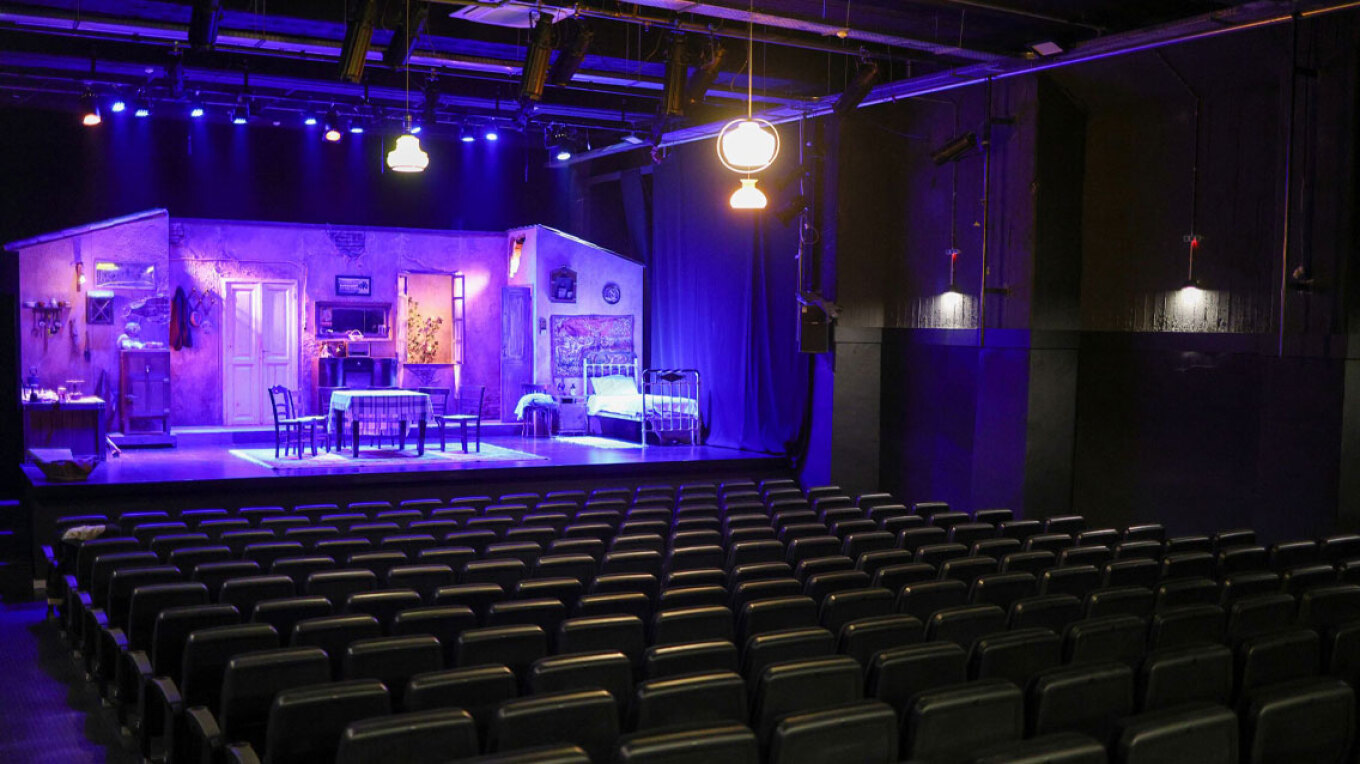
Of course, the detailed picture is far more complex. It goes without saying that not all performances and entertainment products are sold out—quite the opposite, in fact, as people with many years of experience in this market point out to Proto Thema. Especially in theater, demand has recently attracted the entry of so-called “big capital” into the sector, a development that creates—both now and prospectively—conditions of fierce competition, with acquisitions and the imposition of a business-driven approach to what is staged, how and where, with whom, for how long, and so on.
On the other hand, in productions such as Oxygen by Ivan Vyrypaev, which was staged at the Onassis Foundation’s Stegi last year, the realization that there is a parallel flood of talent in Greece today—with dozens of young people acting, singing, and dancing with ferocity—partly justifies the explosive growth of stage production, at least from the creators’ perspective. The thirst, therefore, characterizes not only the audience, but also the artists.
A battle for the ticket
In this context, securing tickets for one of the mesmerizing productions by, for example, Dimitris Papaioannou is increasingly considered a feat of heroism, a rare stroke of luck, and an unimaginably happy exception. Because the rule dictates that the majority of would-be spectators simply won’t make it. Just like those who didn’t manage last year and, most likely, won’t manage next year either—unless they lie in wait in the online queue and click at the exact fraction of a second when presales open.
The same applies to concerts by Teodor Currentzis at the Megaron. But also to Metallica or Iron Maiden. Curiously, Florence and the Machine is not sold out—at least so far for next July’s live show. Tickets are still available for Oedipus, with Nikos Kouris and Karyofyllia Karabeti at the Stegi; after all, the massive and pressing demand made it indisputably necessary to extend the run by an additional month.\

Of course, the detailed picture is considerably more complex. It goes without saying that not all performances and entertainment products are sold out—far from it, in fact, as people with many years of experience in this market point out to Proto Thema. Especially in theater, demand has recently attracted the entry of so-called “big capital” into the sector, a development that creates—both now and prospectively—conditions of fierce competition, with acquisitions and the imposition of a business-driven approach to what is staged, how and where, with whom, for how long, and so on.
On the other hand, in productions such as Oxygen by Ivan Vyrypaev, which was staged at the Onassis Foundation’s Stegi last year, the realization that there is a parallel flood of talent in Greece today—with dozens of young people acting, singing, and dancing with ferocity—partly justifies the explosive growth of stage production, at least from the creators’ perspective. The thirst, therefore, characterizes not only the audience but also the artists.
A battle for the ticket
From this perspective, securing tickets for one of the mesmerizing productions, for example by Dimitris Papaioannou, is increasingly considered an act of heroism, a rare stroke of fate, and an unimaginably happy exception. Because the rule dictates that the majority of would-be spectators simply will not make it. Just like anyone who didn’t make it last year and, most likely, won’t make it next year either—unless they lie in wait in the online queue and click at the exact fraction of a second when presales open.
The same applies to concerts by Teodor Currentzis at the Megaron, but also to Metallica or Iron Maiden. Curiously, Florence and the Machine is not sold out—at least so far for next July’s live show. Tickets are still available for Oedipus, with Nikos Kouris and Karyofyllia Karabeti at the Stegi; after all, the massive and pressing demand made it indisputably necessary to extend the run by one month.
However, are there really free seats? Of course not. Availability is something formal, a magical image on the ticketing platform. The fact that the red “sold out” color does not appear everywhere on the date squares is practically irrelevant. In reality, Oedipus has been sold out since autumn, a performance accessible only to those who secured tickets during phases A and B of presales. Now, only a few scattered, limited-visibility seats remain for the “punished” who delayed.
The same has applied in recent years to Epidaurus and the Herodeion, as well as to basketball games, mainly Panathinaikos and Olympiacos. The same applies to what is staged at the National Theater and the Municipal Theater of Piraeus, the National Opera, and most theater productions deemed “must-see”—even if attending requires effort and predicts spine-shifting in awkward, cramped seats, a martyrdom undertaken in the name of art, for example, on a ground-floor “stage” in a Patission street passage, in a space that until recently housed a mini-market or something similar.
Athens entertainment can be one endless bed—or maybe not; opinions differ sharply. What is certain, however, is that it is an endless line, often without a discernible beginning or end.
The ritual of going out
“What’s going on?” as Savvopoulos might exclaim, gazing at the crowds of Greeks in queues for shows and bread, because, undoubtedly, something is happening here. Dionysis Savvopoulos may have passed away, but he will be heard for ages thanks to his Ballos: “What’s going on? Did a landslide happen, did a rock fall? The crowds scream in the stands. Tambourines, drums, rattles, etc.”
The “electric circus,” which Savvopoulos of Ballos claimed existed in his mind, possibly with a slight digital adaptation to fully align with modern realities, as a figure of speech could serve as an interesting attempt to capture the current reality.
“Electric circus,” then, but as a fanciful metaphor aimed at describing—not criticizing or dismissing—the tsunami of crowds sweeping domestic entertainment. Everything that happens, especially since the pandemic, in shows and performances. More precisely, what the concept of “going out at night” entails for today’s Greeks.
Anticipation—waiting—a struggle with competitors, either in person or virtually, for a double ticket—fulfillment or disappointment of a major expectation. These are the successive steps forming the norm for anyone seeking participation in art and culture, as well as in sports and refined dining. The “menu,” after all, is served complete to those interested, starting with timely information on anything labeled “this cannot be missed.”
Posts, tips, praises, and tributes on Instagram suffice for most to rush. The more curious dig further into Facebook or electronic media; all ultimately end up in the same waiting lines. Because the logical next step is the hard struggle to secure access to a concert, a theater performance, a sports match, or one of the trending restaurant tables such as Manári, Akra, Napul’è, etc. (examples entirely random).
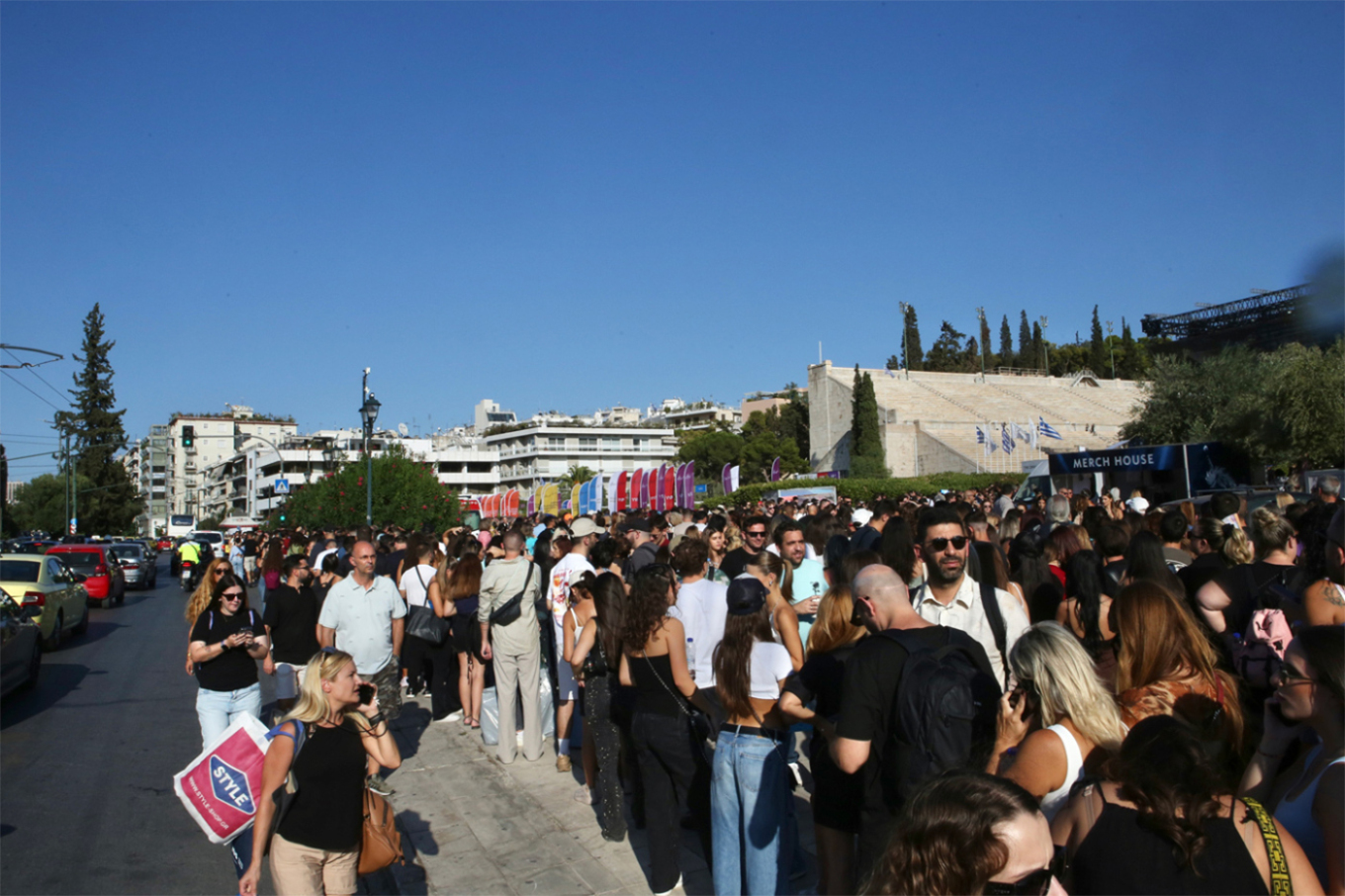
Posts, tips, praises, and tributes on Instagram suffice for most to rush. The more curious dig further into Facebook or electronic media; all ultimately end up in the same waiting lines.
In this scenario, it is almost hubris to demand a reservation for Saturday night, the hottest day of the week. Even more unforgivable is the audacity of exceeding the allotted time by the benefiting customer—the duration of occupation that the management of the respective bar-restaurant/postmodern taverna, or even burger joint, has pre-determined. The fact that the customer struggled and suffered to secure the reservation is of no concern and does not affect the relentless, preordained law.
In due time, before the pre-set hosting period ends, the customer and their party are notified that their time is almost up. And then they must leave immediately, calmly, without complaint. The next customer is already waiting at the entrance line. As for manners and behavior, both from the entrepreneurs’ side and the public’s, they are shaped by demand.
Queues everywhere
LEX filled Athens’ Olympic Stadium twice—just like Coldplay—while Anna Vissi’s performances, also a double triumph at the Panathenaic Stadium, should not be overlooked, as they were by no means inferior to those of her peers. And the sense is that if an additional show had been possible, the audience would have responded with the same enthusiasm.
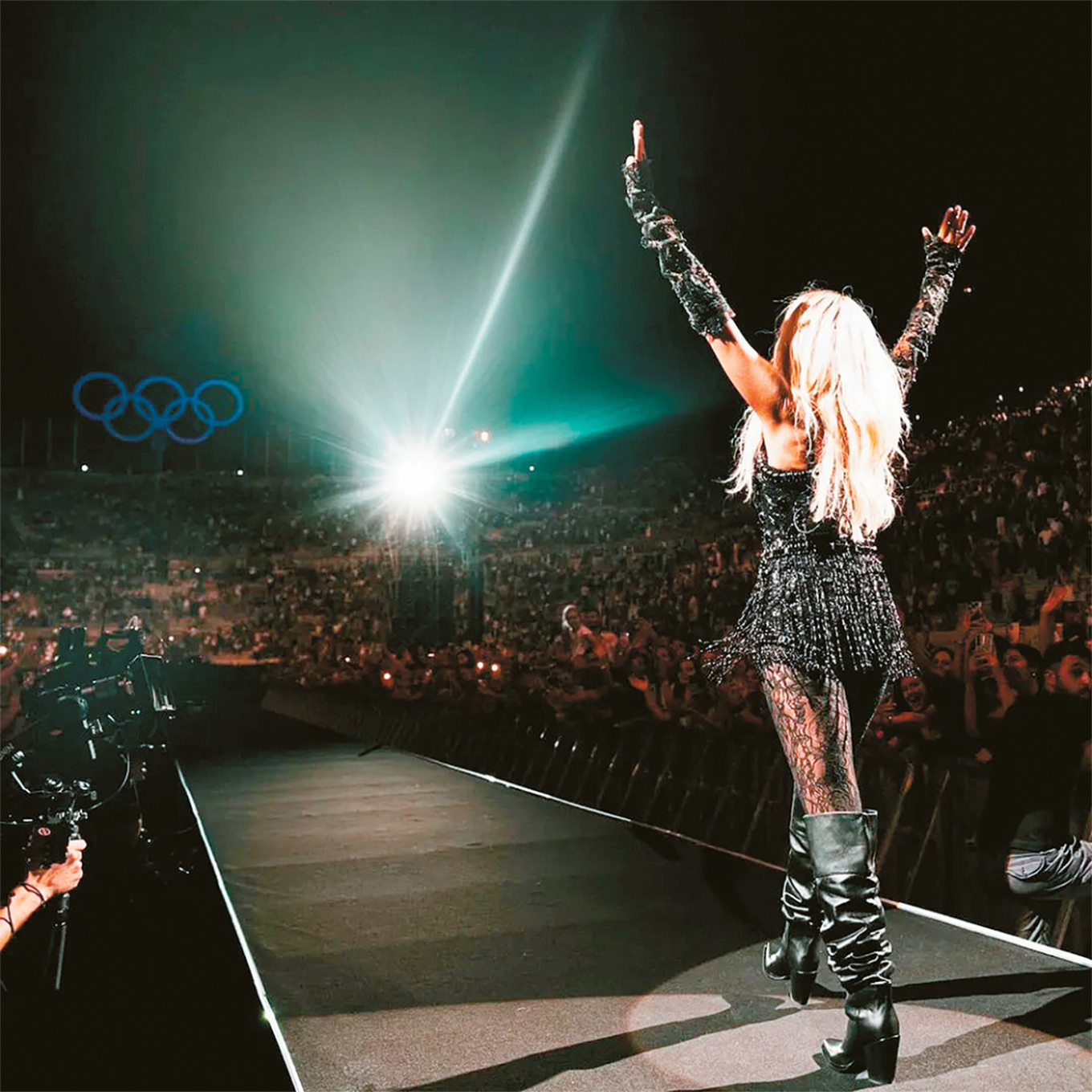
Anna Vissi’s fans packed the Panathenaic Stadium twice to attend her concerts
Within about two hours, tickets for the live show of the “demigods” of heavy metal, Metallica, disappeared. And, as has consistently happened in recent years with anything Dimitris Papaioannou presents, securing a spot for Requiem for the End of Love turned into a challenge for those with lightning-fast reflexes. “Due to the expected high demand, an automatic priority queue system (waiting queue) will be implemented, in which visitors will be grouped, and ticket purchases will be conducted in stages to ensure smooth functioning of the online presale.
Additionally, to serve the largest number of buyers possible, a maximum purchase of four tickets per buyer will be applied.” These were the “practical details” provided by the platform handling ticket sales for the performance, knowing in advance that the combination of two superstars, Dimitris Papaioannou and Theodor Currentzis, along with Giorgos Koumentakis, would be a recipe for a celebratory sold out.
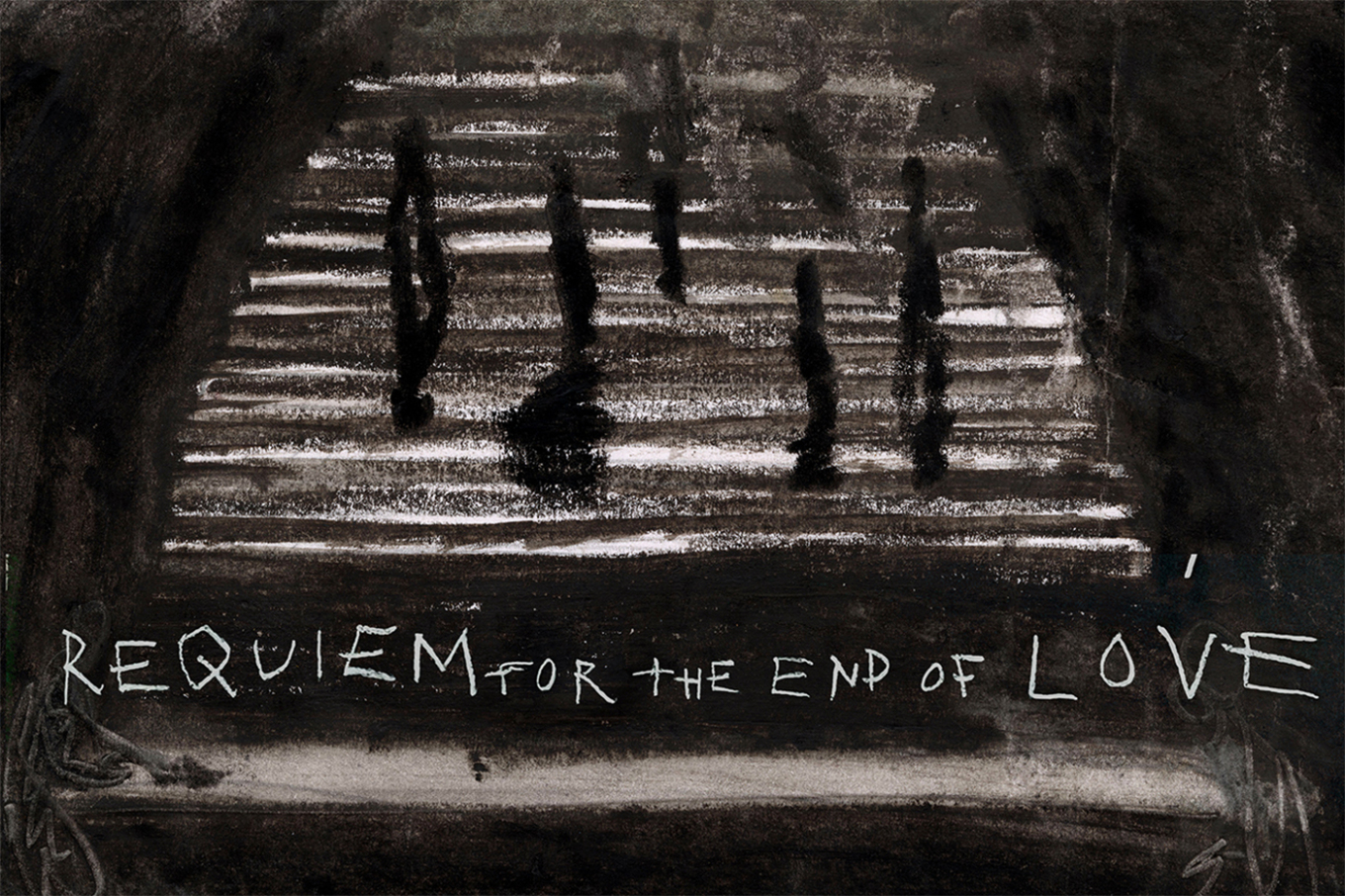
Securing a spot for Dimitris Papaioannou’s Requiem for the End of Love became a challenge for those with lightning-fast reflexes.
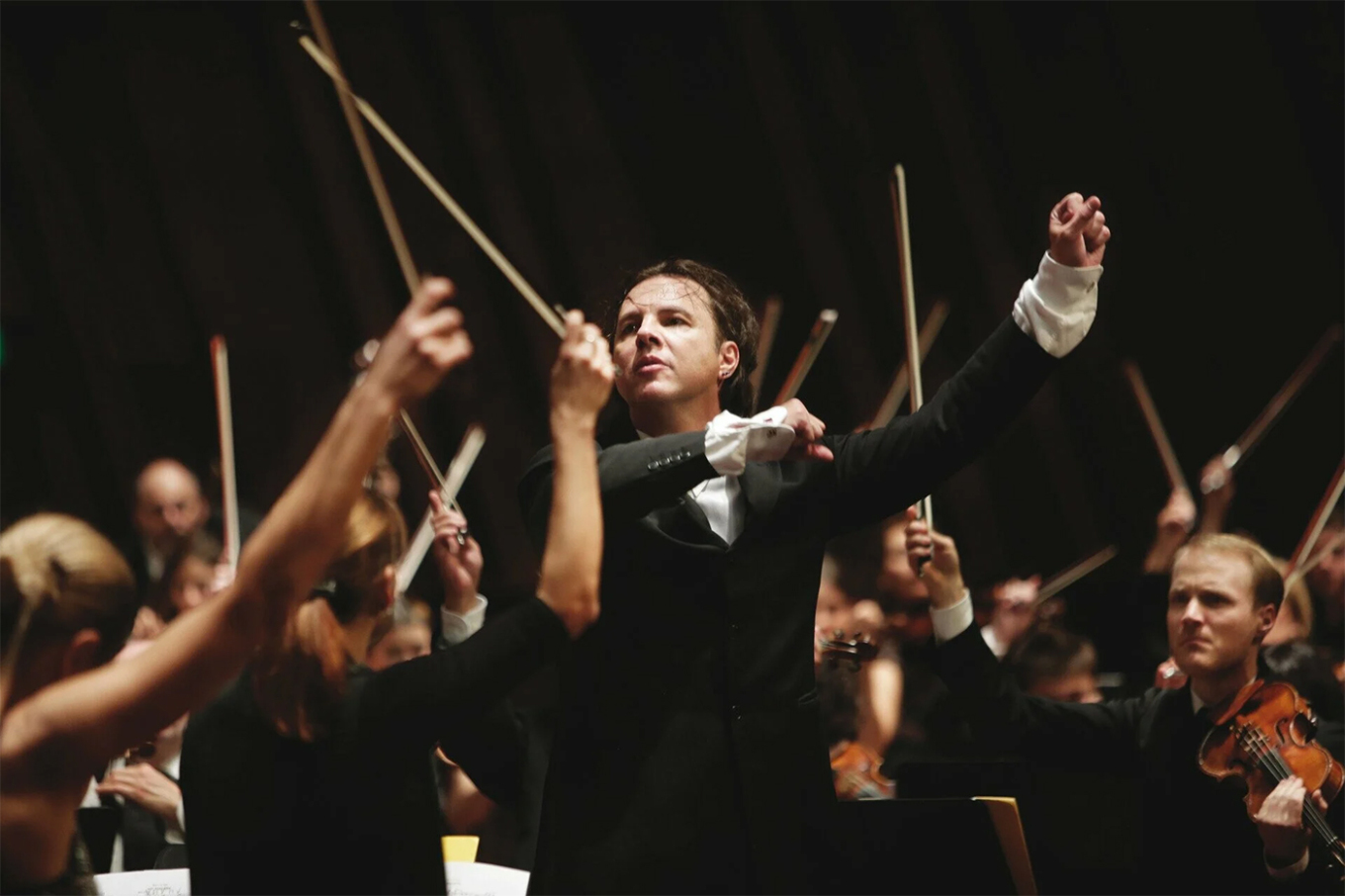
Theodor Currentzis’ concerts at the Megaron were sold out in 10 minutes.
Assuming that everyone who managed to buy a ticket knows exactly what they are about to see is irrelevant. On the contrary, it should be regarded as hopeful and optimistic that the crowding and scramble for the “trophy ticket” occur for the sake of a high-aesthetic performance.
Nevertheless, it is certain that selfies from the seats at the Opera House just before the start—or a few stealthy videos and snapshots of the performance—serve as additional motivation, even for spectators not intending to fully engage with Requiem for the End of Love. If the primary goal is verification via social media posts of the privileged “I was there too,” the performance itself becomes secondary, sandwiched between what happens before the curtain rises and what follows for the rest of the evening.
Which will inevitably include preparation, the journey, and the unavoidable Saturday night traffic, mingling with dozens of other spectators in the theater’s foyer, then the exit line, after the ritual of the standing ovation for the performers, the line at the restaurant hosting the customary debrief and discussion of what was seen, the line at the bar for the after-party, the line at Jackaroo or the Mavili canteen, the gourmet burger at Ekiben, and so on.
Quality crowding
Industry executives in the broader entertainment sector confirm the sense that suddenly, everyone goes to the theater, classical music concerts, dance performances—indulging insatiably in culture and art. It is true, therefore, that crowds attract more crowds.
In line with the public’s tendency to gather in the same places at the same time with hundreds or thousands of others, the week shrinks, peaking on Saturday night. Friday and Sunday serve as the next alternative options.
The defining difference in explosive demand is widely considered to be the suppression caused by the pandemic and prolonged lockdown. The release of these restrictions has largely created the current trend toward attending performances—with emphasis on live events.

Where the spectator can see the actor or musician practicing their craft a few meters from their seat—or even closer. This aligns with a global trend, especially among younger generations, toward rediscovering conventional, analog technology. Vinyl is preferred over Spotify, even over CDs; rolled cigarettes over electronic cigarettes; conventional phones with keyboards over smartphones.
Also, the thirst for immediate contact with whatever is happening and being discussed, here and now, in the public sphere of social media, proves that criticism influences public preferences very little or not at all, since today sold out precedes any expert evaluation.
Pygmalion Dadakaridis’ The Whale, or Eleni Randou’s The Party of My Life, now in its fourth year of remarkable success, are two of the clearest examples of this development. Even the simple fact that repeat performances are increasing shows that something has changed in Athens theater. Akrotiri, When Nietzsche Cried, The Caryatid, Faust, Milk, The Day of the Skirt, etc., offer the audience a second chance.
Artistic superiority
In any case, the sheer volume of attendance inevitably triggers a qualitative shift. The main goal is presence and experience, which is why an audience that could not endure even five minutes of listening to the Third Program rushes with uncontainable zeal to Theodor Currentzis’ concerts. Precisely because he is a genuine superstar of the podium, with international recognition, regardless of the orchestra he leads with his baton and sui generis movements, and regardless of the program of each performance.
In this case, if another conductor—Greek or foreign—presented the same works with Currentzis’ rigor or hypnotic style, e.g., the otherwise exquisite Choral Concerto by Alfred Schnittke with the ethereal verses of Saint Gregory of Narek, the Megaron could fill again, as it did in 2019, in a display of artistic superiority by Theodor Currentzis.
But with another conductor at the center of the stage, the Megaron would not fill with those who prioritize the maestro’s personality over the musical content. This, of course, is merely an elitist speculation, against the backdrop of the generalized Athenian sold out, which is not expected to subside or lessen. On the contrary, it is an established condition, to which even those who tended to equate quality with the spaciousness of half-empty halls must adapt, willingly or not.
Ask me anything
Explore related questions




