





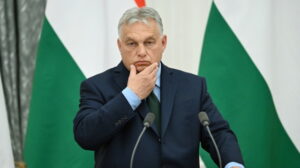
Four months before Hungary’s parliamentary elections, Prime Minister Viktor Orbán, who has been in power for 15 years, appears weakened by a wide range of scandals linked to child protection, scandals that add to the poor performance of the Hungarian economy.
Viktor Orbán, who boasts of being a friend of Donald Trump and Vladimir Putin, has made sure since his return to the premiership in 2010 to consolidate his power in the central European country of 9.5 million people with a raft of measures to restrict the independence of the judiciary and media and silence any dissenting voices.
But the emergence last year of Peter Magyar as opposition leader has brought a new dynamic to the Hungarian political scene, notes analyst Zsuzsanna Végh, a program officer at the U.S.-based German Marshall Fund.
“Instead of a fragmented opposition, Orbán now faces a single candidate who enjoys similar public support.”
The Tisza party of Peter Magyar – the ex-wife of former Orbán government justice minister Peter Magyar – has been leading in independent polls for a year, a fact that has caused concern in the camp of the nationalist Hungarian prime minister, as evidenced by his intense activity since the summer.
In previous elections, Viktor Orbán was ramping up the pace in the last quarter before the vote to dope up his party’s popularity, according to Szabolcs Dull, a journalist and creator of the Ötpontban podcast. “This time Fidesz had to take the aces out of the sleeve much earlier.”
To stir an electorate worried about creeping economic growth and inflation at 4 percent annually, Orbán multiplied the announcements: introducing state-subsidized loans for the purchase of first homes, income tax exemption for mothers of three and a 14th pension…
He has also travelled to Moscow and Washington to ensure that Hungary is able to continue to obtain cheap Russian oil and has organised numerous rallies in the rural areas that have so far been his stronghold.
Locking up power
During carefully staged campaign rallies open only to his supporters, Orbán rehashes one of his favorite topics, the war in Ukraine, and accuses the European Union of plotting a war against Russia and Peter Mayer of being a “Brussels puppet.”
New revelations of physical and sexual abuse of children in protection institutions are nevertheless likely to cost Fidesz’s party dearly, causing a “moral crisis” for its voters, Szabolcs Dull stresses.
The issue is particularly sensitive for Viktor Orbán, who has implemented a policy of restricting the fundamental rights of sexual and gender minorities in the name of protecting children and the family.
On Friday, Peter Mayer published a 2001 report that has documented more than 3,000 cases of child abuse just days before publishing a video showing the director of a juvenile detention center kicking a boy in the head as he lay on the ground.
At Peter Mayer’s invitation, some 50,000 people marched in Budapest on Saturday to demand the government’s resignation.
Last year, Hungarian President Katalin Novak, a loyalist to Viktor Orbán, was forced to resign after granting a pardon to the accomplice of a man convicted of crimes against children.
Against these omens, Orban is taking steps to “lock down” the institutions in the event of his electoral defeat. The latest example: last week, parliament passed a law making it harder to remove President Tamas Souliok, Orban’s man whose term expires in 2030. Although the president’s role in Hungary is symbolic, he has the power to temporarily block the ratification of laws, which would allow him to disrupt the work of any new government.
Ask me anything
Explore related questions




