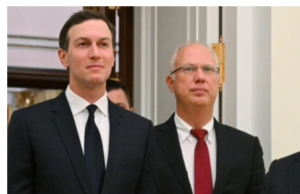
A new round of talks in Florida aiming to end the war in Ukraine concluded without clear progress. White House special envoy Steve Whitkov described the discussions as productive, but without a specific breakthrough.
Ukrainian President Volodymyr Zelensky emphasized that issues related to territory, control of the Zaporizhzhia nuclear plant, and reconstruction remain difficult. Russia characterized most of the peace proposals presented as unconstructive. European leaders agreed to provide a €90 billion loan to Ukraine.
The recent round of discussions in Florida ended without clear progress toward ending the war in Ukraine, although White House special envoy Steve Whitkov described the talks as “productive and constructive” with both Russian and Ukrainian officials.
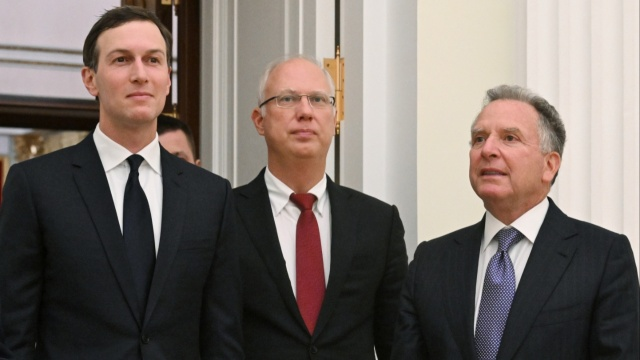
Whitkov said on Sunday that the talks in Miami with Russian counterpart Kirill Dmitriev and Ukraine’s National Security Advisor Rustem Umerov took place in a positive atmosphere but did not result in a specific breakthrough leading to an immediate ceasefire. “Ukraine remains fully committed to achieving a just and sustainable peace,” he said in a written statement, emphasizing the shared priority to stop the bloodshed, secure security guarantees, and create conditions for recovery, stability, and long-term prosperity in Ukraine.
These statements followed two days of intensive discussions and came a few weeks after the Trump administration presented an early plan to end the war, which Kyiv and European governments had described as unworkable. Consultations between Russia, Ukraine, Europe, and the United States continue, but there are no direct negotiations between Moscow and Kyiv, as the two sides meet separately with American officials.
Both Russian and Ukrainian sides shared Whitkov’s statements on social media on Sunday without providing further details on any possible progress. Rustem Umerov posted the part related to Ukraine, while Kirill Dmitriev reposted the section concerning Russia.
The Gap Remains
Despite the talks, the gap between the two warring sides remains wide. Ukrainian President Volodymyr Zelensky said on Saturday evening that “the most difficult issues were and remain Ukraine’s territories,” adding that control of the Zaporizhzhia nuclear plant, post-war reconstruction funding, and some technical issues related to security guarantees remain open. He called on the United States to increase pressure on Moscow, saying, “If diplomacy fails, then full pressure must be applied, including a very strong weapons package for Ukraine, strong support, and extensive sanctions on the entire Russian economy.”
From the Russian side, Vladimir Putin’s advisor Yuri Ushakov said most peace plans presented in Miami came from Ukraine and Europe and described the proposals as “rather unconstructive,” according to the Russian news agency TASS. Kirill Dmitriev indirectly criticized Europeans, saying the “war instigators” did not intervene in the talks and that “everything is fine.” Similarly, European Commission spokesperson Olof Gylt confirmed in Brussels on Monday that European representatives did not participate in the negotiations, despite Whitkov’s statement suggesting otherwise.
The British, French, German, and Polish embassies in Washington did not immediately respond to requests for comment, while U.S. Secretary of State Marco Rubio said on Friday, “We still have a long way to go” before any agreement, estimating that talks could last for months. These statements tempered the optimism expressed by Donald Trump, who had claimed the parties were “closer than ever” to an agreement.
Zelensky also mentioned that American officials proposed a tripartite meeting with the national security advisors of Ukraine and Russia, an idea the Kremlin denied on Sunday. Zelensky expressed doubts about whether such a meeting could lead to substantive progress. On the same day, French President Emmanuel Macron’s office left open the possibility of a meeting with Putin, noting that “in the coming days, the best way forward will be decided.”
Europe agrees on a loan for Ukraine; contrasting views in the U.S.
These developments follow an agreement by European leaders to provide a €90 billion loan to Ukraine through joint debt, after Belgium’s initiative blocked a plan to use frozen Russian assets. In Washington, efforts to increase support for Kyiv have yielded mixed results, as a bill imposing tougher sanctions on Russia has yet to gain sufficient backing in Congress.
Republican Senator Lindsey Graham urged the Trump administration to increase pressure on the Kremlin, stating that if Putin refuses peace talks, the U.S. should “dramatically change the game,” including supplying Tomahawk missiles to Ukraine for strikes on Russian missile and drone production facilities.
Conversely, other voices within the U.S. administration were more critical of Kyiv. Director of National Intelligence Tulsi Gabbard accused the intelligence “deep state” of spreading fear to justify continuing the war and undermining Trump’s peace efforts, comments welcomed by Kirill Dmitriev.
Ask me anything
Explore related questions