





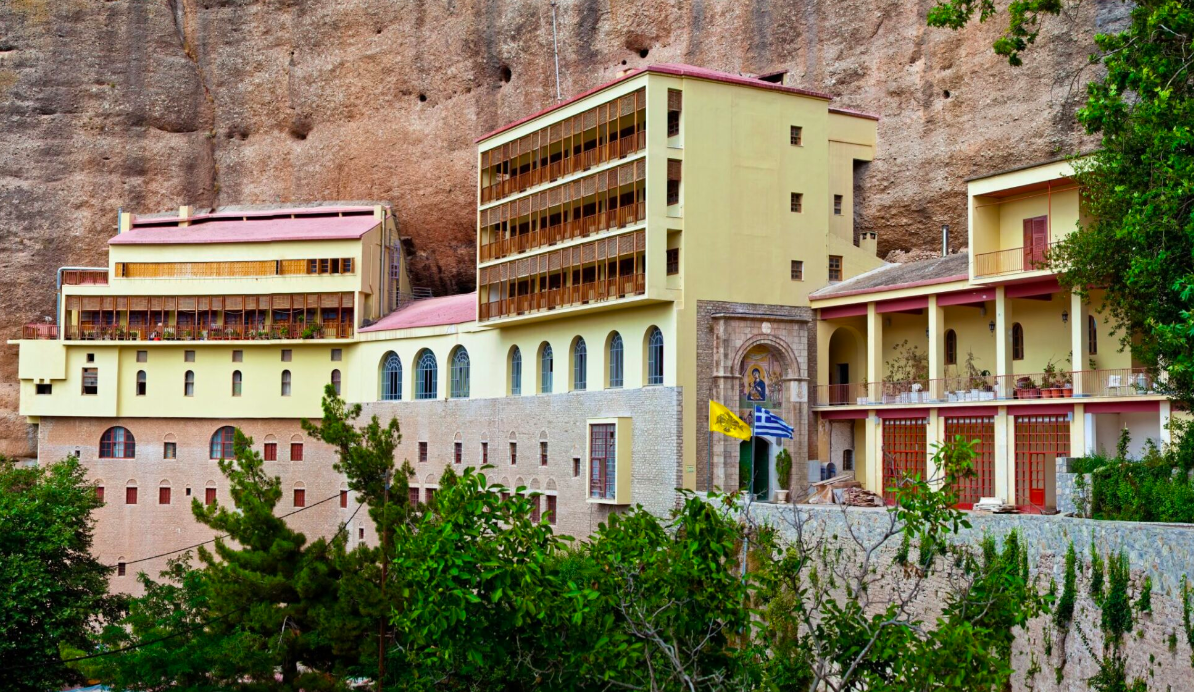
Greece is a land pulsating with stories and souls. Nestled among mountains and gorges, perched on rocks or nestled within lush landscapes, the country’s monasteries have stood for centuries as beacons of faith and culture.
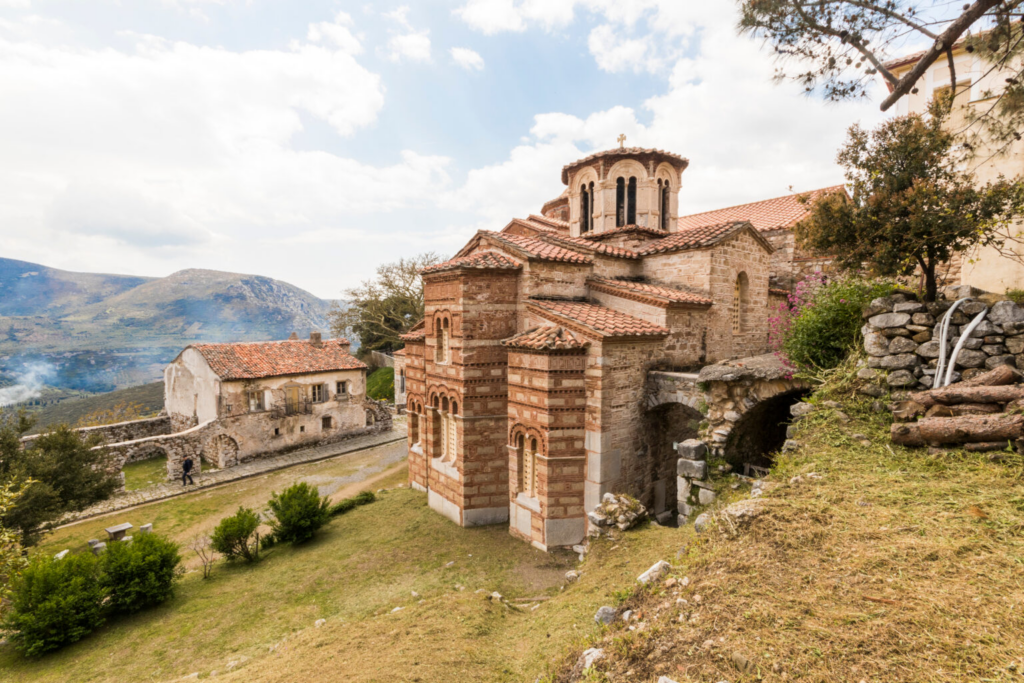
Where time seems to stand still, the visitor encounters not only religious tradition but also an architectural and natural harmony that moves even the most well-traveled traveler.
Here follows a journey to some of the most important and beautiful monasteries of Greece, living witnesses to its spiritual and historical continuity.
Monastery of Hosios Loukas, Boeotia
On a picturesque slope in the western foothills of Mount Helicon, near the village of Steiri, the Monastery of Hosios Loukas stands as one of Greece’s most important Byzantine monuments. Its core was developed at the end of the 10th century, while its main buildings were completed in the early 11th century, dedicated to the miracle-working Hosios Loukas of Steiri. It impresses with its architectural richness and radiant mosaics.
Its history has seen centuries of prosperity and trials, from Catalans and Ottomans to the fires of August 2023, which affected the surrounding area without damaging the monuments of great archaeological value. After your visit, it’s worth stopping by Livadia, at the Springs of Krya, with waters flowing between stone arches, and of course, the tavernas with authentic local delicacies.
Monastery of Prodromos, Stemnitsa
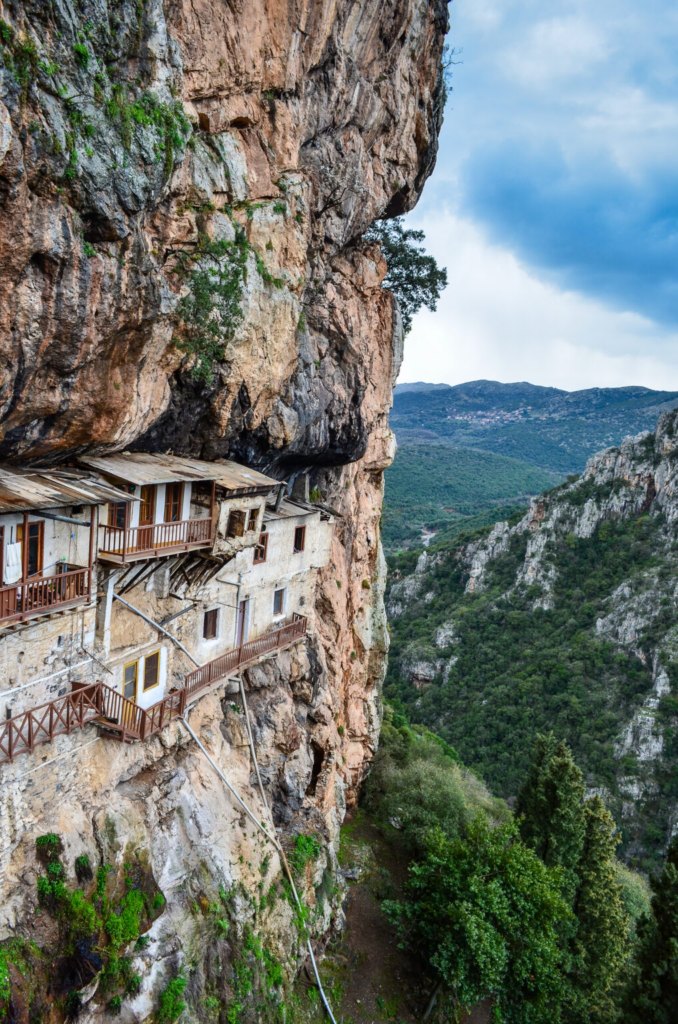
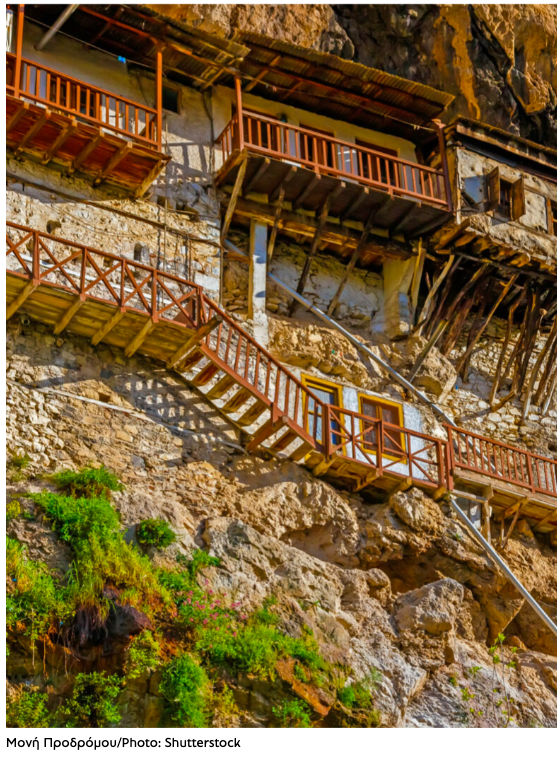
Hidden within the dense vegetation of the Lousios Gorge, the Monastery of Prodromos in Stemnitsa seems to emerge from the rock itself. Its foundation dates back to around the 12th century, and its image — a monastery literally “hanging” over the gorge — takes your breath away.
Access is via a small 800-meter path, which visitors follow before encountering this wonderful refuge of spirituality and nature.
Along the way, AQUA Carpatica water can be a great companion, especially on hiking days. After the pilgrimage, a stop in Stemnitsa or Dimitsana for local wine and well-grilled meat is almost mandatory. More active visitors can continue hiking through the Lousios Gorge, one of the most beautiful in the Peloponnese.
Philosophou Monastery, Arcadia
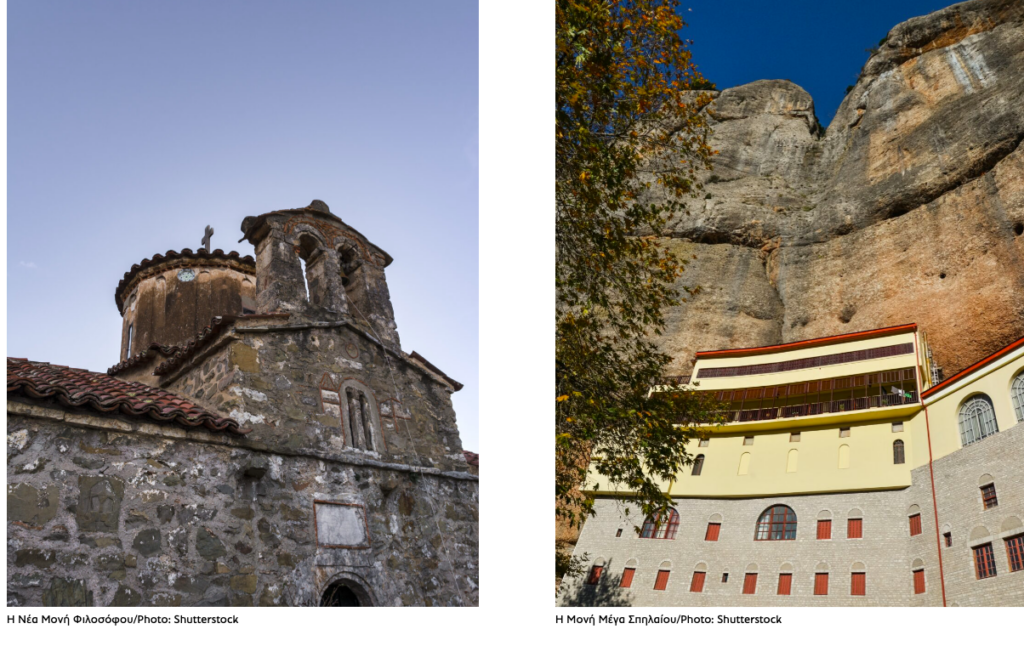
Nestled within the Lousios Gorge, the Philosophou Monastery is essentially two monasteries in one: the Old and the New. The first was founded in 963 AD and is considered one of the oldest Byzantine monuments in Greece. The second, built in 1691, is located just a few meters away.
Hiking between them is an unforgettable experience: silence, the sound of water, and the scent of pines create the perfect setting for reflection, with visitors often pausing to drink water before continuing. Nearby Dimitsana, with its stone mansions and cafes, offers a warm human touch after spiritual elevation.
Mega Spileo Monastery, Kalavryta
Built in a natural cave of Helmos Mountain at an altitude of 940 meters, the Mega Spileo Monastery stands like a fortress of faith. Founded in 362 AD by brothers Symeon and Theodoros, it is one of Greece’s oldest monasteries.
Mega Spileo holds not only religious but also national significance, having been a stronghold during the Greek War of Independence in 1821. Its museum hosts precious exhibits, manuscripts, embroidered epitaphs, and the historic banner of the Revolution. Visiting requires time and walking, with many stopping to drink water before continuing. A little further down, Kalavryta awaits you with its mountain air, local products, and the Helmos ski resort.
Chozoviotissa Monastery, Amorgos
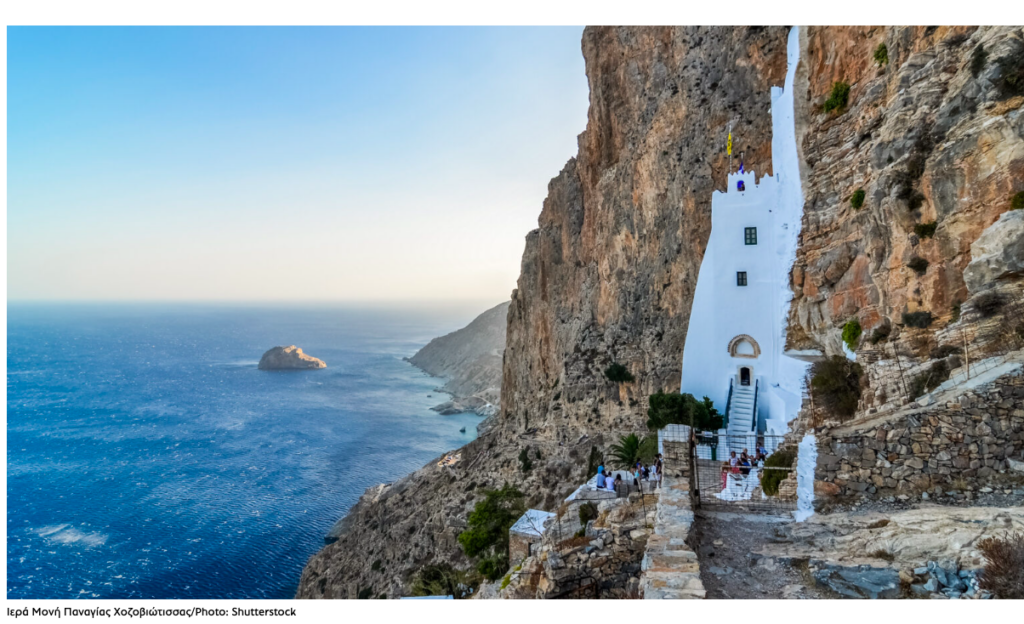
Perched on the cliffs of Amorgos, the Chozoviotissa Monastery appears to hover between sky and sea. It remains one of the most recognizable symbols of the Aegean.
Measuring over 40 meters long and spanning eight levels, the monastery impresses with its simplicity and its view over the vast blue sea. To reach it, one must climb 271 steps, each a small ascent toward the light. The feast of the Virgin Mary of Chozoviotissa on November 21st gathers crowds of worshipers and travelers from all over the Aegean.
Monastery of Saint Marina, Andros
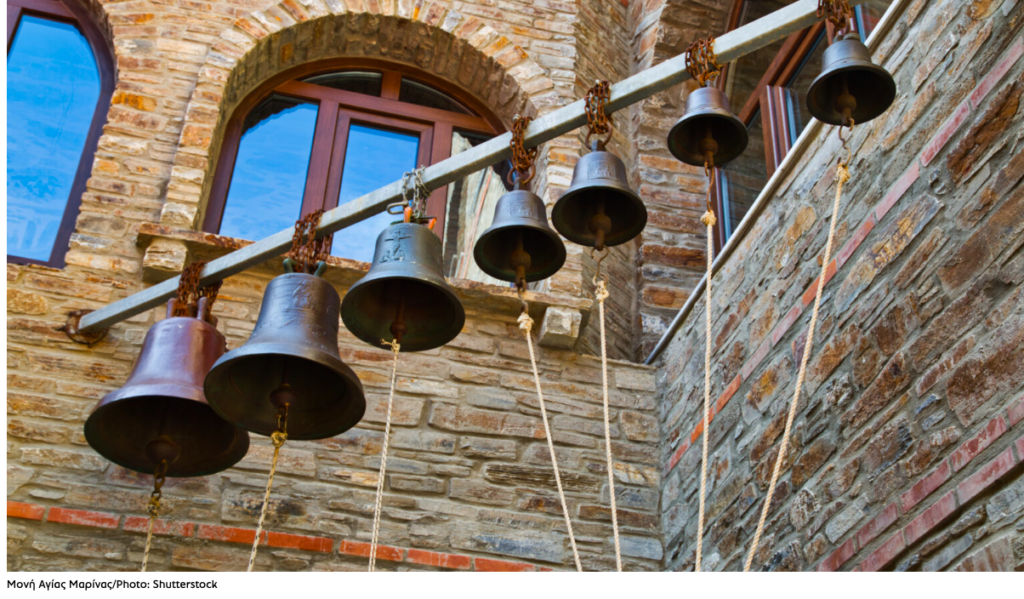
On a lush slope near Apoikia, the Monastery of Saint Marina attracts thousands of worshipers. Founded in the 14th century, it experienced periods of pirate raids and decline but was revived in 1976, gaining new life and an active role on the island.
Today, it is one of Andros’s most important pilgrimage sites and offers visitors a chance to discover a more intimate, authentic side of the island. Its feast on July 17th turns the monastery into a place of collective joy and participation.
Monastery of Saint Antonios, Paros
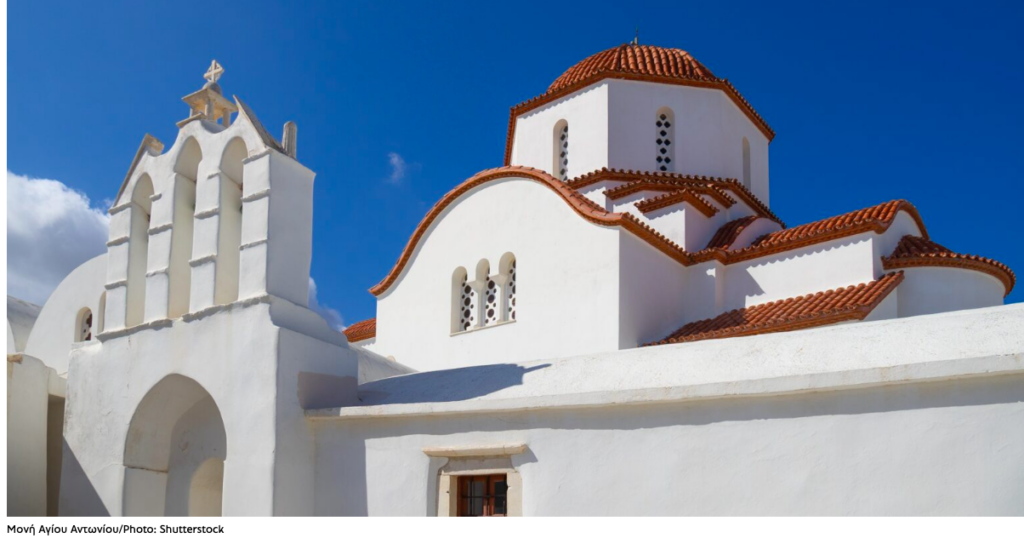
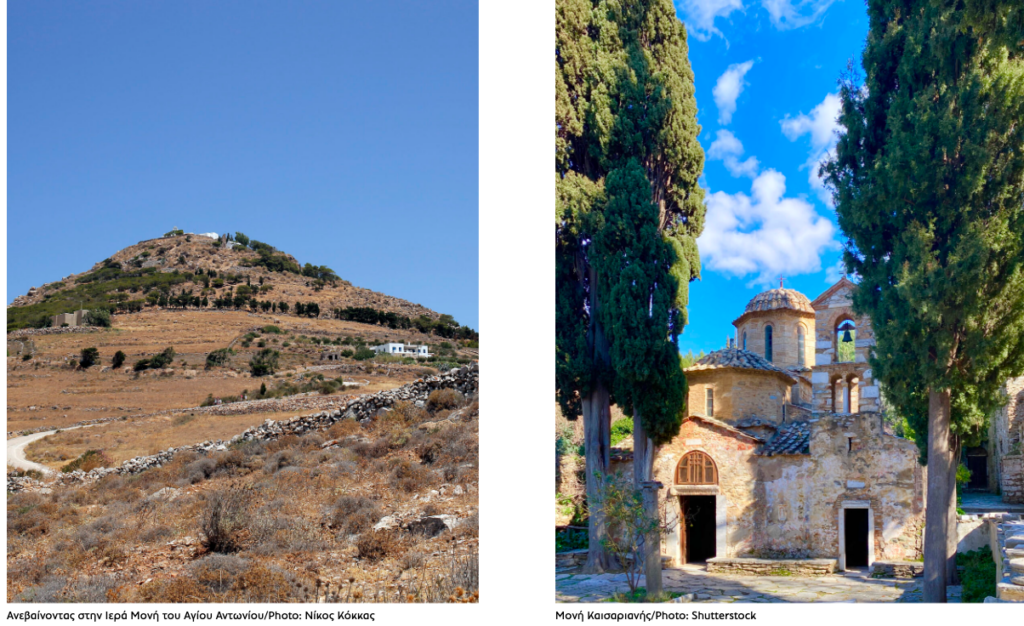
Just outside Marpissa, atop Kefalos hill, stands the historic Monastery of Saint Antonios with panoramic views of the Aegean landscape. Founded in the 16th century, it is an excellent example of Cycladic monastic architecture.
Its katholikon (main church), a three-aisled basilica with two domes, is adorned with 16th-century frescoes and a wooden carved iconostasis from 1693. The ruins of the Venetian castle around it recall the era of the sea lords. The monastery celebrates three times a year, offering an atmosphere of reverence and festivity.
Kaisariani Monastery, Attica
Just minutes from downtown Athens, on the slopes of Mount Hymettus, Kaisariani Monastery offers an oasis of tranquility. Built at the end of the 11th century, it is surrounded by the mountain’s scenic forest and combines Byzantine architecture with natural serenity. The church’s frescoes, works of the Cretan School and Mount Athos, impress with their clarity. It’s an ideal spot for a small “escape” from the city, blending nature walks with cultural exploration.
Panagia Soumela, Vermio
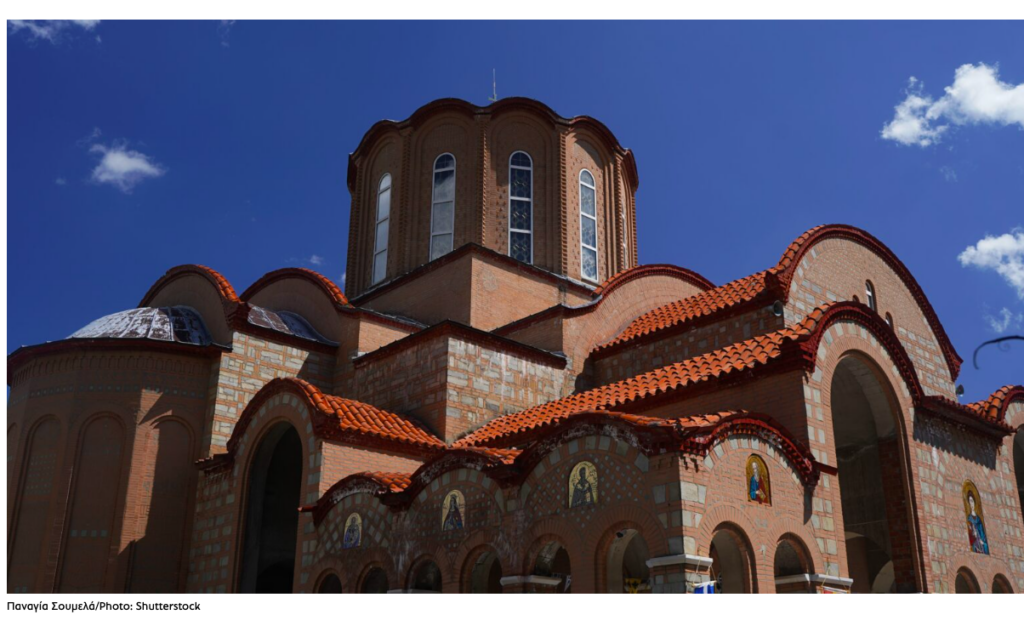
On the lush slopes of Vermio, near the village of Kastania, lies the Shrine of Panagia Soumela, one of the most emblematic pilgrimage sites of Pontic Hellenism. The new monastery was founded in 1951 as a continuation of the famous homonymous monastery in Pontus, which was a spiritual center of Eastern Hellenism for centuries. Every August 15th, thousands of believers gather here to venerate the sacred icon and participate in the celebrations, a day of faith and collective memory.
Monastery of Saint John the Theologian, Patmos
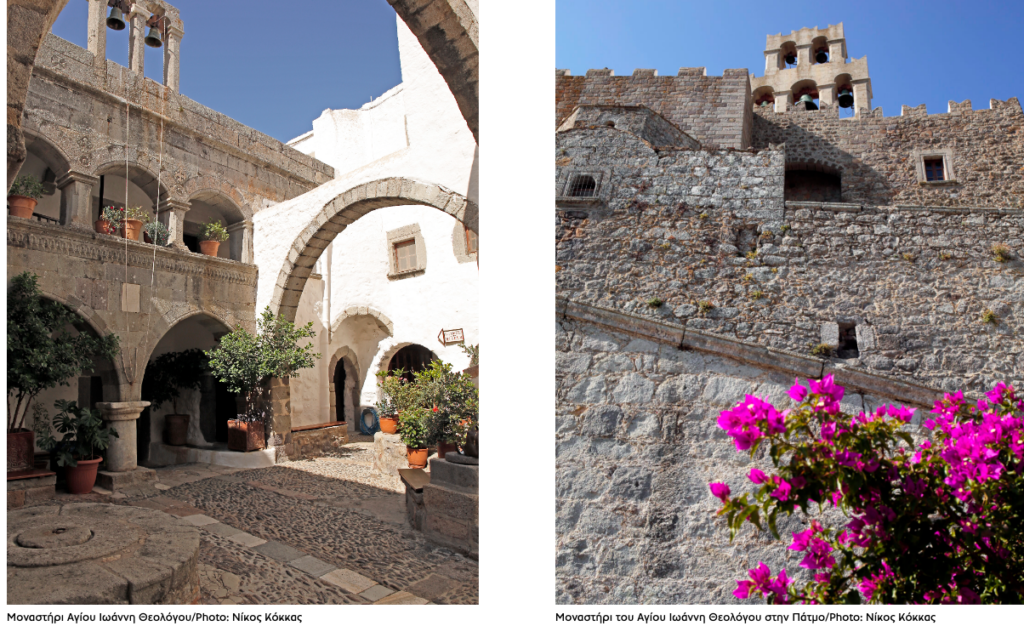
At the top of the Chora of Patmos, the Monastery of Saint John the Theologian dominates the island as one of the most important pilgrimage sites in the Aegean and a UNESCO World Heritage Monument.
Founded in 1088 by Hosios Christodoulos, it resembles more a castle than a monastery, with high walls, chapels, frescoes, and an impressive library. Below the monastery lies the Cave of the Apocalypse, where, according to tradition, the Evangelist John wrote the sacred text of the Apocalypse. A visit here is an experience of historical and spiritual depth.
From the mountains of Boeotia to the islands of the Aegean, the monasteries of Greece serve as living monuments telling stories of endurance, spirituality, and art. Every stone, every icon, every path becomes an opportunity to pause and connect with place and time.
In these journeys, small but meaningful moments make the difference: a pause in the shade, a few minutes of rest, a bottle of water before continuing the path. Because the experience of these places is shaped by how we choose to approach them.
Ask me anything
Explore related questions




