





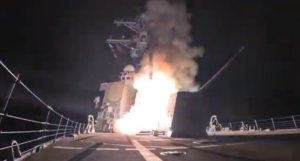
The United States carried out a powerful airstrike against ISIS targets in northwestern Nigeria on Christmas Day, on the orders of President Donald Trump, killing what US officials described as “many Islamic State terrorists.”
According to an initial assessment by US Africa Command (AFRICOM), the strike targeted ISIS camps in Sokoto State, near the border with Niger. The operation was conducted in coordination with Nigerian authorities.
“Tonight, under my orders as Commander-in-Chief, the United States launched a powerful and deadly strike against ISIS terrorists in northwest Nigeria, who have been brutally targeting and murdering primarily innocent Christians,” Trump wrote on Truth Social. He warned that further attacks would follow if the killing of Christians continued.
The US Department of Defense released video footage showing Tomahawk missiles being launched from a US aircraft carrier during the operation.
“I had previously warned these terrorists that if they did not stop the slaughter of Christians, they would pay dearly—and tonight, that is what happened,” Trump said, adding that more “dead terrorists” would follow if the violence persists.
AFRICOM confirmed that the strikes were carried out with Nigerian cooperation and said early indications suggest significant casualties among ISIS fighters. US Secretary of Defense Pete Hegseth thanked the Nigerian government for its support, while Nigeria’s Ministry of Foreign Affairs said the operation was part of ongoing security cooperation with the United States, including intelligence sharing and strategic coordination.
“These efforts resulted in precision airstrikes against terrorist targets in northwestern Nigeria,” the ministry said in a statement.
Trump has repeatedly criticized Nigeria’s government in recent weeks, arguing that it has failed to protect Christians from Islamist militant groups adequately and vowing a strong US response.
Nigeria is officially a secular state, with a population almost evenly split between Muslims (about 53%) and Christians (around 45%). Violence in the country has drawn international attention and is often described abroad as religious persecution. However, Nigerian authorities reject this characterization, maintaining that armed groups target both Christians and Muslims and that the crisis is rooted in complex security challenges rather than religious discrimination.
Ask me anything
Explore related questions




