





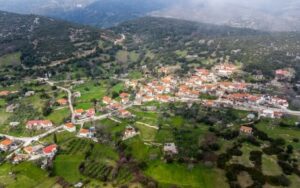
The periphery is the foundation of national cohesion, the government believes, which is why only with vibrant, viable and competitive local communities can the country move forward with balance and resilience, government sources who spoke on the issue to the Athens-Macedonian News Agency said.
Greece, they add, has made progress and is on a path of national and regional convergence, as reflected in the 2026 budget. There are still inequalities, disparities and lags that need to be addressed, at inter- and intra-regional level. Even within the boundaries of a regional unit.
The government’s national effort for regional and local development is based on a fundamental principle: growth must be distributed fairly, proportionately and homogeneously across the country, for the benefit of each place individually and the country as a whole. And at the same time, policies should support the right of every citizen, if they so desire, to live and create in the place where they were born and raised.
A complete road map, with projects being implemented across the country and a series of initiatives to remove inequalities in the regions, was presented a few days ago by the government to the Government Council for Economic Policy, which met under Prime Minister Kyriakos Mitsotakis.
More specifically, according to the same sources:
The government is integrating the regional perspective into ten national horizontal policies, while it has already made 12 point interventions to strengthen the region, such as:
– Preparation of a total of 50 Local Development Plans – one for each regional unit of the country.
– A programme of renovation of old houses with special attention to mountainous and island areas
– Programme of renovation of municipal and state buildings for lease to civil servants with special emphasis on mountainous and island areas
– Reimbursement of two rents each year to medical and educational staff throughout Greece except for Attica and Thessaloniki
– Establishment at the Presidency of the Government of a) a new Special Secretariat exclusively for mountainous areas with the mission to implement an integrated strategy for mountainous areas, the revitalization of mountainous remote areas, aiming at their sustainable development, the retention and attraction of population by exploiting local potentials, cooperation with local communities, decentralization and revitalization initiatives and the private sector and b) a Governmental Commission for Insularity with the aim of optimal and more efficient coordination
– Implement a mountain, insularity and de-linking clause in ministerial policies that have a critical impact on local populations and the economy.
– Creation of a new Digital Platform that will act as an information and interconnection hub between citizens, central services, local authorities and economic operators, where each citizen will be able to be informed about the infrastructure in each region of the country, job opportunities and special employment programs, housing opportunities, incentives for settlement, etc.
– Demographic Development Programme for regions of Northern Greece (Florina, Kastoria, Kilkias, Pella, Serres, Serres, Drama, Northern Evros) in cooperation with local communities and with modifications in the framework of granting the 10,000 euro settlement incentive
– Reduction of 50% of ENFIA and abolition from 2027 in 12,720 communities up to 1,500 inhabitants and in specific settlements up to 1,700 beyond the Regional Unit of Evros, and in the Region of Western Macedonia and the municipalities of the Region of Central Macedonia, the Region of Eastern Macedonia and Thrace and the Region of Epirus adjacent to the borders of the country (38 million euros in 2026, 75 million euros in 2027).
– Reduced (30%) island VAT in Chios, Leros, Samos, Lesvos, Kos, Lipsi, Tilos, Agathonisi, Halki, Megisti, Kalymnos, Nisyros, Patmos, Symi, euros/year)
– Reduction by 50% of the minimum income for freelancers in settlements outside Attica with a population of up to 1,500 inhabitants and school canteens, and exemption from the minimum income for new mothers both in the year of birth of the child and for the following 2 years (10 million euros/year)
– Integrated 12-pillar policy for mountain areas covering: housing, employment, entrepreneurship, health, education, primary sector, environment, spatial planning, energy, tourism and culture, and coordination of funding while activating new financial resources (NSRF 2021-2027: €431 million for OCTs, of which ~€400 million is directed to mountain areas)
National Strategy for Regional and Local Development
The main pillar of the National Strategy, which will be finalized by 2026, is the resolution of immediate issues concerning the Greek periphery and the formulation within 2026 of a national programme throughout the country for the coming years, in cooperation with local communities, so that the country can target national and EU resources most optimally and efficiently to the Greek periphery. The responsibility for the formulation and monitoring of the implementation of the National Strategy for Regional and Local Development is held by Vice President K. Hadjidakis and Deputy Minister Th. Kontogeorgis in cooperation with all relevant ministries.
A. National and European situation
The national planning for regional development is closely linked to the current European planning. As Europe seeks better synergy between competitiveness, defence, resilience, and cohesion, including through the negotiation of the new European budget, Greece insists on the national objective: to be firmly at the core of advanced European countries, while ensuring that no part of the country is left behind. Greece has made progress and is on track for national and regional convergence, as reflected in the 2026 budget. However, there are still inequalities, disparities, and lags that need to be addressed at the inter- and intra-regional level. Even within the boundaries of a regional entity. Regional policy is not just a theory nor just a technical tool; it is a strategic choice for the quality of development, social justice, and the future of the country.
It is in this context that the plan for Greece 2035 is being shaped: a coherent plan for reforms and investments for the whole country with resources that will be secured both through the negotiations for the new European budget and through a strong national public investment development programme.
The goal remains the dual convergence, to converge with the core of developed countries and to distribute growth fairly to all parts of the country. That is why the National Strategy for Regional and Local Development has a top place in the government’s planning.
B. The new Multiannual Financial Framework 2028-2035
Based on the European Commission’s announcement, the first allocation of the new budget foresees resources of 49 billion for our country. The negotiation, however, will be long and arduous. In it, the following elements should be taken into account:
● Each Member State is required to draw up a single national programme. Each national programme will, for the first time, be the product of cooperation between government and local authorities. The Greek National Programme will bring together priorities of central government and local authorities and will operate with milestones, along the lines of the Recovery Fund.
● Greece, as President of the European Council in the second half of 2027, will probably be called upon to reach an agreement at the European level on the new budget.
Γ. Key axes and new architecture of the National Strategy for Local and Regional Development
i). The implementation of the National Strategy
The government is systematically implementing the National Strategy for Regional and Local Development, as it started a year ago in Orestiada, with the Local Development Plan of Evros. Already before the relevant EU recommendations for common priorities of central state and local authorities under the new European budget, the government had launched a completely new way of thinking and acting: detailed planning, substantial consultation, joint planning, coordination of central and local actors, and all financial instruments, so that the available resources can have a real multiplier effect.
A total of 50 Local Development Plans are being prepared – one for each regional unit of the country, with a design to be completed in 2026. More than 1,000 stakeholders have been invited to participate in organised working groups in all regional units. The aim is to progressively formulate a local realistic vision that originates from and is supported by the local community. All local plans are posted on erga.gov.gr for full transparency and monitoring of progress by citizens. This framework acts as a joint commitment between the government and local government.
The planning and staff coordination of all financial instruments for the period 2026-2035 is done in connection with the National Strategy for Regional and Local Development. Monitoring Committees are established with the participation of the Presidency of the Government for all financial instruments for the better coordination of projects and policies concerning the Greek region, with the aim of:
– More efficient use of resources and ensuring complementarity
– Creating synergies and avoiding overlaps, in line with national priorities and local development plans.
– Executive planning and coordination in the integration of new projects
– Minimum quotas in terms of objectives and priorities when specifying programmes.
– Redirection of resources of the new NDP after the initial allocation in line with the National Strategy for Regional & Local Development
This is because already in the Greek region:
More than 8,000 small and large projects are being implemented, while in 2026 and 2027, about 330 flagship projects will be delivered.
* 8 billion euro projects are being implemented by the NIP 2021-2025 in the Region
* €5.6 billion of projects implemented by the CDF in the Region
* 6.5 billion euros of direct funding for the regions through the NSRF 2021-27 (excluding Attica) of which 4.5 billion euros are already being implemented
* 7.75 billion euros from the NSRF 2021-27 of the central government to projects implemented in the Region, while they have been paid
* 1.25 billion euros of approved grants to businesses in the Region through the TAA
* EUR 4.75 billion of loans to investment projects in the Region through the CDF
And EUR 2.7 billion of direct financing for the regions through the NIP 2026-2030 (except for Attica)
To the above resources are added the resources that will be agreed in the new European budget, which include resources from the European Social Climate Fund, the Island Resettlement Fund and the Modernization Fund, which will be allocated from 2026 for important infrastructure in the region until 2032, while the resources from the CAP that are primarily related to the Greek region should be added.
ii) 10 national Horizontal Policies and measures for the Region currently underway, as identified by the government
1. Cooperation with local government: New Local Government Code, Strengthening the management capacity of local authorities to exercise increased responsibilities, planning & implementation of projects, Multi-level governance mechanism to ensure dialogue between local authorities at regional and local levels
2. Strategy for mountain and island regions: 12 pillars to strengthen mountain regions, New Special Secretariat in the Presidency of the Government for mountain regions, Digital platform to support decentralisation, National Strategy for Integrated Maritime Policy in the Island Region, Governmental Commission for Island Affairs
3. Road, rail, and port infrastructure, networks, and energy interconnections: 330 flagship projects across the country completed by 2027. National Infrastructure and Transport Planning. Completion, upgrading, planning of road, port and rail infrastructure projects, Strengthening infrastructure in industrial and business concentrations, Infrastructure to serve large manufacturing & production facilities, Strengthening supply chains, island logistics, Energy interconnections, Digital interconnections: 5G networks, Broadband networks
4. Primary sector: Food security, New agro-climatic zoning of the country, Renewal of human resources, Utilization of real estate and idle land/ Land reclamation, Investment in greenhouse and hydroponic crops Extroversion, LEADER Local Strategy Programmes | Local Action Groups | Strengthening social fabric and capacities & strengthening local governance | Operational planning in combination with other financial instruments, New agricultural subsidy system and modernisation of insurance framework, Support to investments in farms for protection against natural disasters and adverse climatic events
5. Water management and flood planning: Coupled with revision of rural development model due to climate crisis | Investments in the national irrigation network & other land improvement infrastructure projects, completion of unfinished projects, River Basin Management Plans (RBMP) & Flood Risk Management Plans | Monitoring & implementation system | Hydrological studies and project design | Water Management Organization of Thessaly | Modernization of water supply networks
6. Environment/forests and waste management: Forest Management Studies, Mountain Hydrology, Revision of EIA (Natura/Ramsar), Environmental Protection, OFYPEKA,, Protection & promotion of mountainous areas (e.g. Olympus), Apatity Mountains, Paths, Waste water management infrastructure in settlements up to 2,000 inhabitants, Modernization of infrastructure for 20-year projects
7. Spatial planning: Special spatial plans (Tourism, Industry, RES), Regional spatial plans, Local Urban Plans (LEPs,) and correlation with Special Environmental Studies (SEEs), Special Urban Plans in areas with tourist load (Mykonos, Santorini, Ermionida, Chalkidiki, Arachova, etc.), Implementation of city plans | Redevelopments
8. Attracting investment and value to each region: Development laws & special schemes for border regions, Support for focused scale investments in mountainous, remote and disadvantaged areas, Innovation and Extroversion, Linking Local Development Plan with Labour Market Needs Diagnostic Mechanism, Regional programmes in the region | Employment – Integration of teleworking – Youth entrepreneurship – Increased promotion of women – Programmes in areas with special characteristics/ Programmes responding to requests and needs of local businesses, Maintenance and promotion of cultural infrastructure | Cultural Masterplans, Special and alternative forms of tourism | Sustainable development, Infrastructure of tourist ports and marinas, Development and utilisation of ski resorts, Utilisation of inactive real estate and public property / Cooperation between local authorities and RTD/ Consultation with local communities
9. Demographic challenge: National Demographic Action Plan, Diversified and targeted policies in social services, Health Charter, primary care, CMY & Telemedicine, Structures for elderly care | Active ageing. Regional demographic development & retention plans | Pilot project for Eastern Macedonia & Thrace and extension to Florina, Kastoria, Kilkis, Serres, Drama, Pella with a special incentive of 10,000 euros for installation, Housing programme | Renovation and upgrading of old houses through NSRF with increased quotas for mountainous and island regions, Housing programme of the Ministry of National Defence | 719 new apartments (first phase – 12.2026)
Housing programme | 719 new apartments (first phase – 12.2026)
10. Regional planning in education: To support the universities in the region in mapping, evaluation and proposals for strengthening and reorganization through linking to the needs of the market and the national/local economy. Best practices in the design of new schools | DUTH – Veterinary School, Vocational Training Academies | Partnership between the state, productive institutions and enterprises, Linking vocational and post-secondary education with economic priorities of the Local Development Plan, Policies for regional revitalization (criteria and quotas for reorganization and maintenance of school units, etc.)
With the strategy, specific timelines for the implementation of projects were set and it was decided at the January Cabinet meeting and in collaboration with all ministries and supervising agencies to deliver the roadmap by district and by policy for the next 18 months with all critical milestones.
Ask me anything
Explore related questions




