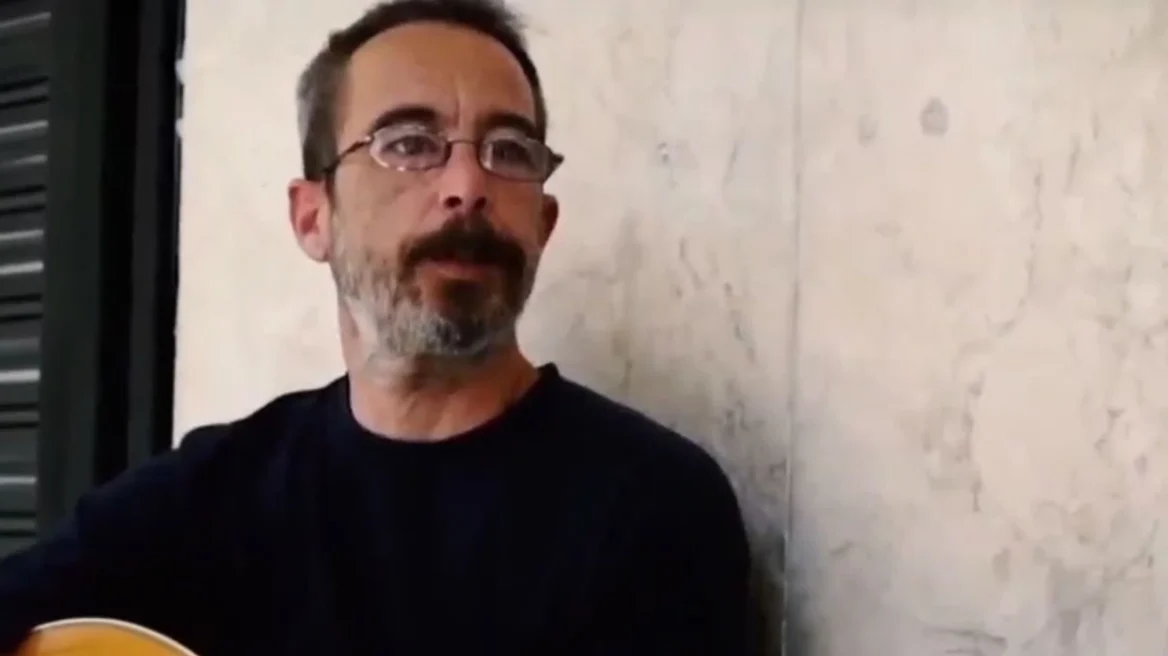
A scandal erupted in recent days following the intervention of the mayor of Florina, Vasilis Giannakis, during a concert held at a local nightclub on Monday, 22/12/2025, by the band “Banda Entopica,” while its members were performing a song in Slavic. The events are widely reported, both in detailed coverage by protothema.gr and other media. The intervention by the mayor was condemned by the local committee of the KKE.
At this point, the article could end, but of course we consider this incident a good opportunity to clarify certain issues and present scientific evidence about how the language of the so-called “North Macedonia” was constructed and what “language planning” means…
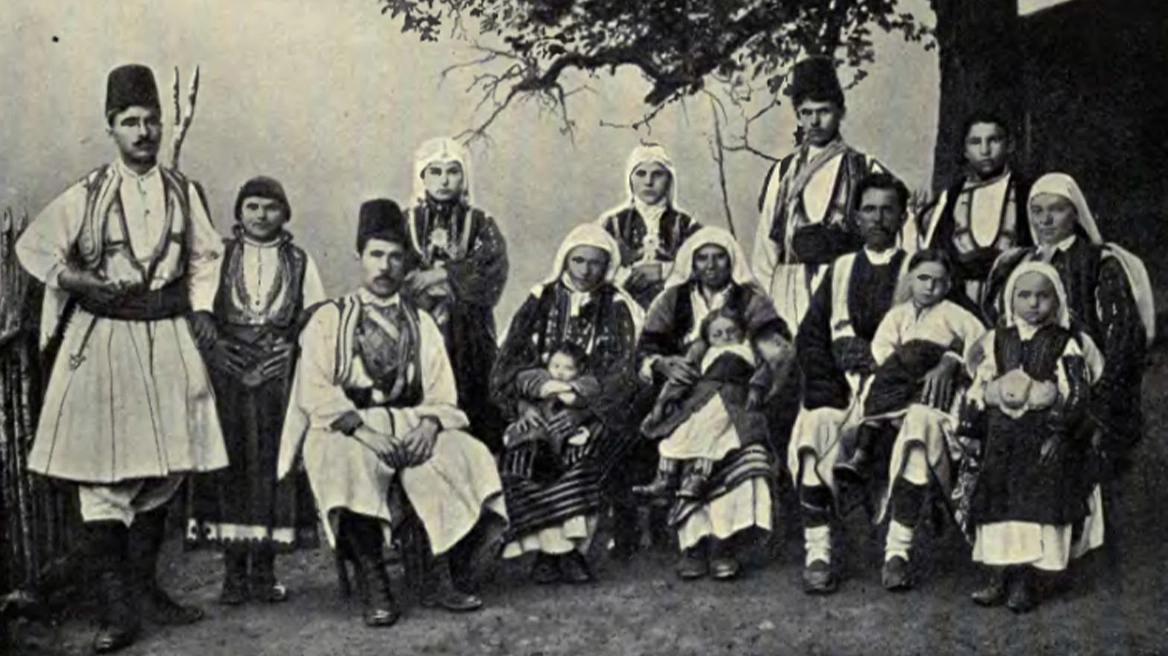
Who are the Slavo-Macedonians?
Following a common practice of some, articles are reproduced by others, creating completely false impressions. As we have written before, this phenomenon has reached uncontrolled dimensions on the internet. They continuously write about Slavo-Macedonians, Slavo-Macedonian language, etc., without giving readers an understanding of who these Slavo-Macedonians actually are.
By thoroughly examining the literature available, we find the view of the Society for Macedonian Studies, the most authoritative institution on the matter, as expressed in a statement in March 1991, when the so-called “Skopje issue” was in the public eye. We present it verbatim:
“The Society for Macedonian Studies, returning to the issue which occasionally arises regarding the alleged existence of a Slavo-Macedonian minority in Greece and the suppression of the human rights of this minority, considers it necessary to point out once again this historical and national inaccuracy, to clarify briefly the historical truth, and to emphasize the real dimension of the issue, which all Greeks must know. No confusion should be made between the terms ‘Slavophones’ and ‘Slavo-Macedonians.’ It is a fact that in Macedonia, specifically in its border areas, there are Greeks who speak, along with the Greek language, a Slavic linguistic idiom. This phenomenon is also observed in many other countries, i.e., inhabitants of border areas speak the language of a neighboring country. However, this does not mean that these people are of a different nationality. The Slavophones of Macedonia have never claimed that they are not Greeks. On the contrary, they have consistently demonstrated their Greek spirit by participating in all national struggles, particularly during the Macedonian Struggle, in which they bore the greatest burden. Most of the local chieftains and fighters of the Macedonian Struggle did not know the Greek language, but it would be sacrilegious to question the Greek spirit and patriotism of Kapetan Kotas, Gonos, Mitrousis, Dalipis, Kyros, and many others. It is therefore evident that the term ‘Slavophone’ has been deliberately misinterpreted.”
“The term ‘Slavo-Macedonian,’ also an anti-Greek construct, aims to serve political purposes. It is historically and scientifically proven that such a nationality never existed and that such a language never existed, and the so-called claims about a Slavo-Macedonian language are completely unfounded. The Society for Macedonian Studies has repeatedly dealt with this issue through its publications and general work and therefore rejects all these ‘newly invented’ constructs, informing that its relevant publications are available to anyone interested.”
Source: Ioannis K. Cholevas, “The Greek Slavophones of Macedonia”
Let us now see what Eleni Sella-Mazi, professor at the University of Athens (EKPA), writes on the matter in her book “Bilingualism, National Identity, and Minority Languages”:
“Greek Slavophones are found in the territories of Macedonia that Greece retook after long and persistent struggles, not only by the local Greeks but also by Greeks from the already independent Greek state, during the Macedonian Struggle, the Balkan Wars, and World War I. During this period, massive population movements took place. Under the Neuilly Treaty (1919), which provided for the voluntary exchange of populations between Bulgaria and Greece, bilingual individuals in Greek and Slavic, who claimed Greek national identity (30,000 people), settled in the territories of Macedonia awarded to Greece. Others of Bulgarian national consciousness (53,000 people) followed the reverse path, and others remained in their place of birth. Shortly after, with the Treaty of Lausanne (1923) and the population exchange between Turkey and Greece, over 300,000 Muslims emigrated to Turkey and 700,000 Greeks from Asia Minor (and Pontus) settled in Macedonia. By 1926, the overwhelming majority of Macedonia’s inhabitants were Greeks (1,341,000 out of 1,511,000), 2,000 were Muslims, 77,000 were Orthodox Slavophones, and 91,000 were various others (presumably Jews, Roma, etc.). By 1949, with the last population movement, the composition of the population of Greek Macedonia was solidified. Two years later, the 1951 census recorded 41,167 Slavophones in all of Greece (35,894 in Macedonia). Regarding this, K. Dinas notes that bilinguals are mainly, and often primarily, Greek-speaking.”
There is, of course, another factor: the civil war. 25,000 Slavo-Macedonians who had taken refuge in Yugoslavia organized again and, with the help of the Yugoslav side, created the NOF (National Liberation Front), whose activity in Greek Macedonia, particularly in the areas of Edessa, Florina, and Kastoria, expanded significantly: founding schools, churches, and teaching “Macedonian.” A new divergence of opinions between Yugoslavia and Bulgaria forced the NOF Slavo-Macedonians to take refuge in Yugoslavia and various Eastern European countries. According to K. Vakalopoulos, in his book “History of Northern Hellenism: Macedonia”, they numbered 35,000, plus 28,000 abducted children.
The idea of Slavo-Macedonism as a political means to achieve autonomy within the Ottoman Empire first appeared in 1903. During the Balkan Wars, however, Slavophones with Greek national consciousness collaborated with the Greek Army, and Slavophones with Bulgarian national consciousness collaborated with the Bulgarian Army. If a distinct Slavo-Macedonian consciousness had existed among the population, writes G. Kentrotis, it should have manifested in the form of resistance to the expansionism of Greece, Serbia, and Bulgaria.
Problems began in 1924, when the 6th Balkan Communist Conference, ignoring and disregarding Greece’s sovereignty over most of Macedonia, adopted the Bulgarian position for an independent Macedonia (similarly for Thrace), where various ethnic groups would live, but, as the prominent historian K. Vakalopoulos notes, without referring to a distinct Macedonian ethnicity. The “Macedonian ethnicity” was a creation of specific historical circumstances, as its inspirer Miriskov notes. Its goal was the easier annexation to Bulgaria, as admitted by the founding member of the Society for Macedonian Studies, Tatarcev.
The “planned” language of “North Macedonia”
The language of the inhabitants of North Macedonia is described as a convergence (Ausbau) dialect with geographical adjacency. It is the official language of the state, which, with Greece’s consent after the unacceptable Prespa Agreement, is now called “Macedonian.” As Eleni Sella-Mazi writes, “it is a product of language planning,” with the main goals being, on the one hand, the planning of the status of the language (status planning), i.e., selecting a specific language (or languages) or a specific variety (or varieties) of a language as a national or official language to serve defined objectives within the society or nation, and on the other hand, the planning of linguistic material (corpus planning), i.e., codifying and regulating a linguistic system, which determines the linguistic characteristics of the given variety.”*
Simply put, it is a controlled language that serves political or other purposes and is entirely artificial. In 1944, Tito formed a special committee for the final “adjustments” to the language of “pseudo-Macedonia.” What created a major problem for the experts responsible for these adjustments was the alphabet of the artificial language.
The Montenegrin Djilas finally agreed not to include the Serbian letters C, Dj, and Markovski compromised by removing the Bulgarian er golyam. The Serbian letters Ij, nj, j, dz, and the Old Church Slavonic S (dz) were retained, and finally, in January 1946, the first concise grammar of the new language was published in 16,000 copies.
The responsibility for the current situation does not lie solely with the SYRIZA-ANEL government but with all post-war governments. Especially the ERE governments under Konstantinos Karamanlis showed incomprehensible inertia. Wishing to maintain good relations with Tito’s regime, they let the issue simmer, while the Yugoslavs proceeded unhindered, erasing Greeks from Skopje. In the 1912 census of Hicimi Pasha, the current “North Macedonia” had 432,000 Muslims (Turks and Albanians, 41.7%), 259,000 Greeks (27.37%), 178,000 Bulgarians (18.81%), 13,150 Serbs (1.39%), and 73,000 Jews and others (10.725%). Naturally, there was no mention of “Macedonians.” In the 1940 Yugoslav census, there were still no “Macedonians.” 710,676 inhabitants of Vardarska Banovina (the name from 1929 to 1941) were Slavs (66.33%), 334,285 Muslims (Turks, Albanians, and Gypsies, 31.20%), and 26,465 Greeks (2.47%). Magically, in 1953, after the painful WWII for Yugoslavia, the Socialist Republic of Macedonia had 861,000 “Macedonians,” 46,000 Serbs and other Slavs, 204,000 Turks, 163,000 Albanians, 21,000 Gypsies, and 10,000 Greeks (0.67%). Since then, if not earlier, Greek governments should have reacted, but unfortunately, our procrastinating, concessionary, and short-sighted foreign policy brought us to faits accomplis once again… While Tito lived, the situation was relatively controlled. After his death in 1980, Pandora’s box was opened, with the well-known consequences…
Does the Slavo-Macedonian language have a future in Greece?
An interesting question is whether the Slavo-Macedonian language has a future in Greece. Eleni Sella-Mazi believes that it has little chance of continuing in full sociolinguistic equality unless politicians or other factors impose a change on the natural course of things. Some of its speakers may feel sympathetic toward “North Macedonia,” but Slavo-Macedonian is a language of medium viability, tending toward low viability. Sella-Mazi continues: “As long as the majority of Slavophones feel kinship, historically, intellectually, and religiously (being Orthodox Christians) with their Greek-speaking fellow citizens and the Greek-speaking state in which they live (note: the term ‘Greek-speaking’ is used by Sella-Mazi, presumably meaning that the official language of the country is Greek, not derogatorily), as long as their economic, social, and intellectual progress, as well as their religious life, are intertwined with the Greek language, and as long as the practice of not transmitting Slavo-Macedonian as a mother tongue to children continues, the bilingual scale of Slavo-Macedonian-Greek will tilt toward Greek, which will then cover the socio-linguistic areas previously served by Slavo-Macedonian.”
Some questions about “Banda Entopica”
I admit that until a few days ago, I was unaware of “Banda Entopica,” which of course does not mean anything. It is a band based in Thessaloniki with five members. As they themselves reported, they also play songs in “Gypsy.” The language is called Romani, never mind, moving on. According to Eleni Sella-Mazi, the language of the Slavophones is referred to by them as “local,” or “entopika” or “topika,” or “local Macedonian dialect.” Therefore, the name of the band directly refers to the Slavo-Macedonian dialect. Perhaps their insistence on performing songs with Slavic lyrics in the sensitive national region of Florina is not so innocent?
Now, whether the song you performed is “Ela Kerko” and not “Eleno Kerko,” whether it is poustjeno or syrto is secondary. To conclude, I pose two questions to the band members. If you were invited to perform in Tirana, would you play “Delvino and Chameria”? And secondly, in Istanbul, would you play, for example, “The Twelve Evzones”? Music unites, I think everyone agrees, but sometimes lyrics divide…
Sources:
- Eleni Sella-Mazi, “Bilingualism, National Identity, and Minority Languages”, with a foreword by Academician Christoforos Charalambakis and Ambassador Periklis Nearchos, Leimon Editions, 2016.
- Ioannis K. Cholevas, “The Greek Slavophones of Macedonia”, Rissos Editions, 1991.
- Konstantinos A. Vakalopoulos, “History of Northern Hellenism: Macedonia”, Kyriakidis Brothers Publishing, Thessaloniki, 1991.
- G. Babiniotis, “The Language of Macedonia”, Olkos Editions.
Ask me anything
Explore related questions