Underwater robots capable of diving as deep as 6.000 meters, cutting-edge search instruments, comparatively smaller perimeter: almost twelve years after the mysterious disappearance of the Boeing 777 with 239 people on board, the search for the Malaysia Airlines passenger aircraft on flight MH370 resumed yesterday (Tuesday) in the southern Indian Ocean.
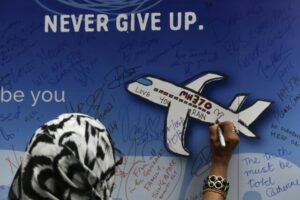
For more than a decade, the disappearance of the passenger plane on March 8, 2014, after its midnight takeoff from Kuala Lumpur bound for Beijing, has remained one of the biggest mysteries in civil aviation history.
The US-British marine exploration company Ocean Infinity has been contracted to carry out the new searches, which are expected to take up to 55 days.
In the venture to finally locate the 777, it will deploy in particular underwater autonomous drones capable of diving up to 6,000 metres and remaining for days at great underwater depths.
These drones will use high-resolution sonar, ultrasound imaging and magnetometers to map the seabed in 3D, searching for buried debris or metallic elements. If they spot anything promising, remote-controlled robots will take turns diving in for a more thorough inspection.
“If there is no discovery, there will be no payment,” based on the terms of the contract made public by Malaysia’s transport ministry. However, if the plane’s carcass is indeed found, a $70 million reward will be paid.
The resumption of the now more targeted search will be in a sea area of about 15,000 square kilometers — about 12 times the area explored in previous efforts — identified with the help of satellite data, modeling of the path it may have taken and updated expert analysis.
Ocean Infinity had conducted an initial search, to no avail, in 2018. The company, specializing in marine robots, repeated it briefly in the spring before suspending it because of weather conditions.
Previously, there had been equally fruitless searches led by Australia for three years, until January 2017.
Despite all the searches, the largest and most expensive in aviation history, the carcass of the aircraft was never located.
Only fragments believed to have come from the Boeing–less than thirty pieces of fuselage, wing and landing gear–were recovered since 2015, when they washed up in Reunion and Mozambique, thousands of kilometers from the search area.
None of the victims’ remains have been recovered.
On board the aircraft were 153 Chinese nationals, some 40 Malaysian nationals and fewer citizens of thirteen countries, including four French, Australians, Indians, Americans and Dutch.
The disappearance of the 777 has given rise to various theories: of deliberate action by the pilot or hijacking or diversion.
Relatives of the missing passengers continue to this day to demand answers from Malaysian authorities.
Ask me anything
Explore related questions