

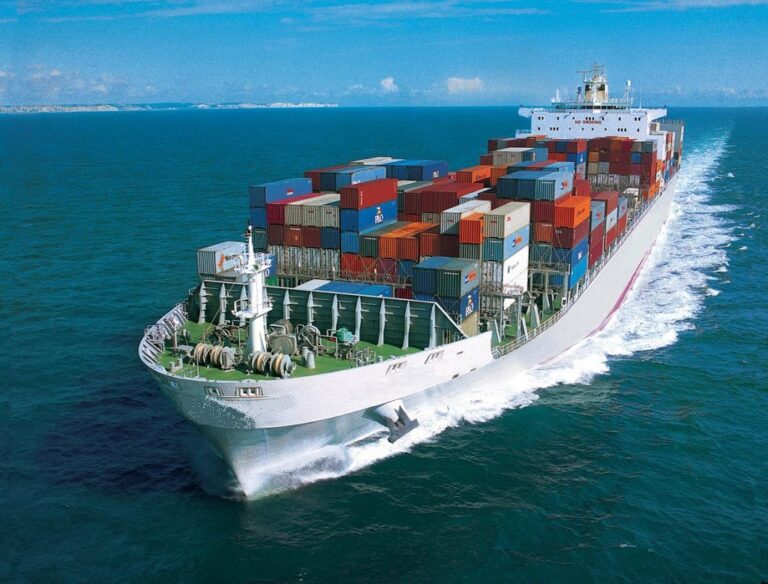
The global economy moves by sea. Almost 80% of international goods, from oil and natural gas to food and industrial products, are transported by ships. According to UNCTAD data, three countries today play the dominant role in shipping: Greece, China, and Japan.
These three countries together control over 40% of global shipping capacity, giving them significant economic and geopolitical power.
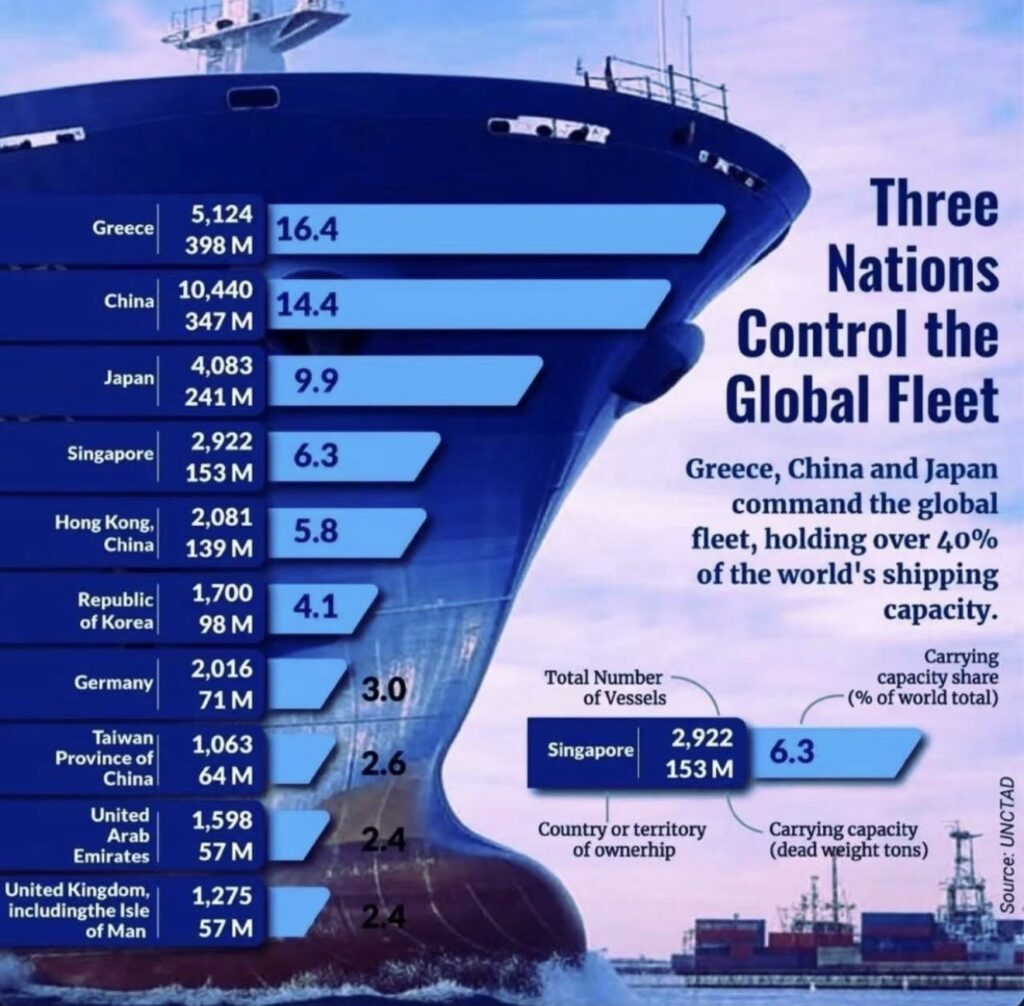
Greece is in the top position worldwide. Greek shipowners control 16.4% of global capacity, with 5,124 vessels and a total capacity of 398 million tons (DWT). Despite its small size as a country, Greek shipping has remained a global leader for decades.
In second place is China, with 14.4% and more than 10,400 vessels, demonstrating its rapid growth in global trade.
Japan comes third with 9.9%, maintaining a strong and stable shipping fleet.
The other shipping powers
Following the top three are Singapore, Hong Kong, South Korea, Germany, Taiwan, the United Arab Emirates, and the United Kingdom. Together, they shape the map of global shipping and international trade.
Meanwhile, shipping is changing. The sector faces three major challenges:
- Decarbonization: using “greener” fuels and reducing emissions.
- Digitalization: automation, data, and smart transportation.
- Investments: new capital in fleets, ports, and technology.
Shipping remains the backbone of global trade. And as the data show, whoever controls the sea also has influence over the functioning of the global economy.
Ask me anything
Explore related questions