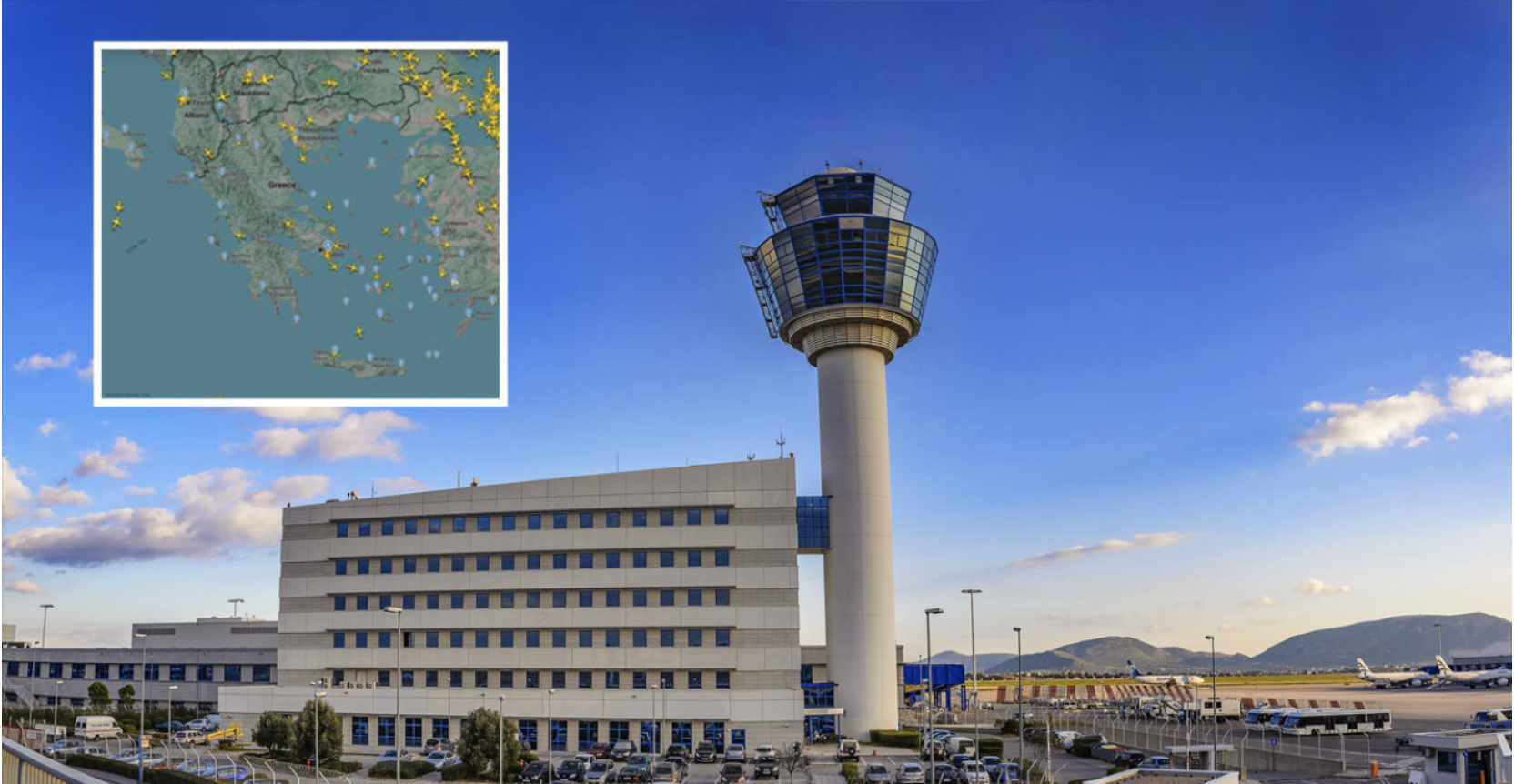
Some landings and takeoffs are gradually resuming, while a knock-on effect of delays is expected even after the problem is fully resolved, as aircraft have been grounded or diverted to other destinations. Airlines are proceeding with flight rescheduling.
Partial restoration of the Athens FIR has begun, with the first landings and departures already taking place. Flight schedules will not return to normal immediately but will be restored gradually. At the same time, investigations continue by the system’s technical contractor and the National Telecommunications Commission to fully resolve the issue that caused a blackout in Greek airspace.
The situation at Athens FIR at 13:14:
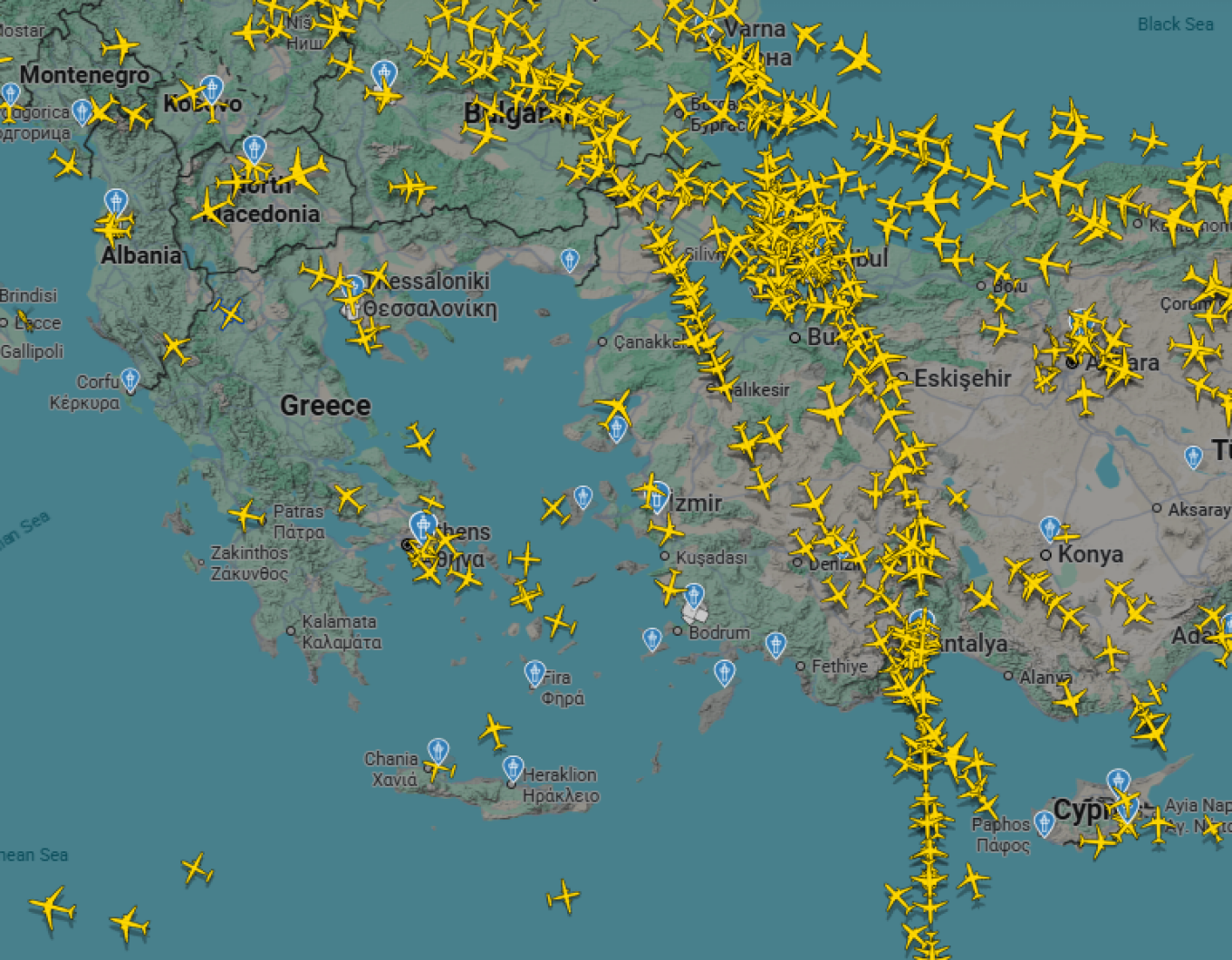
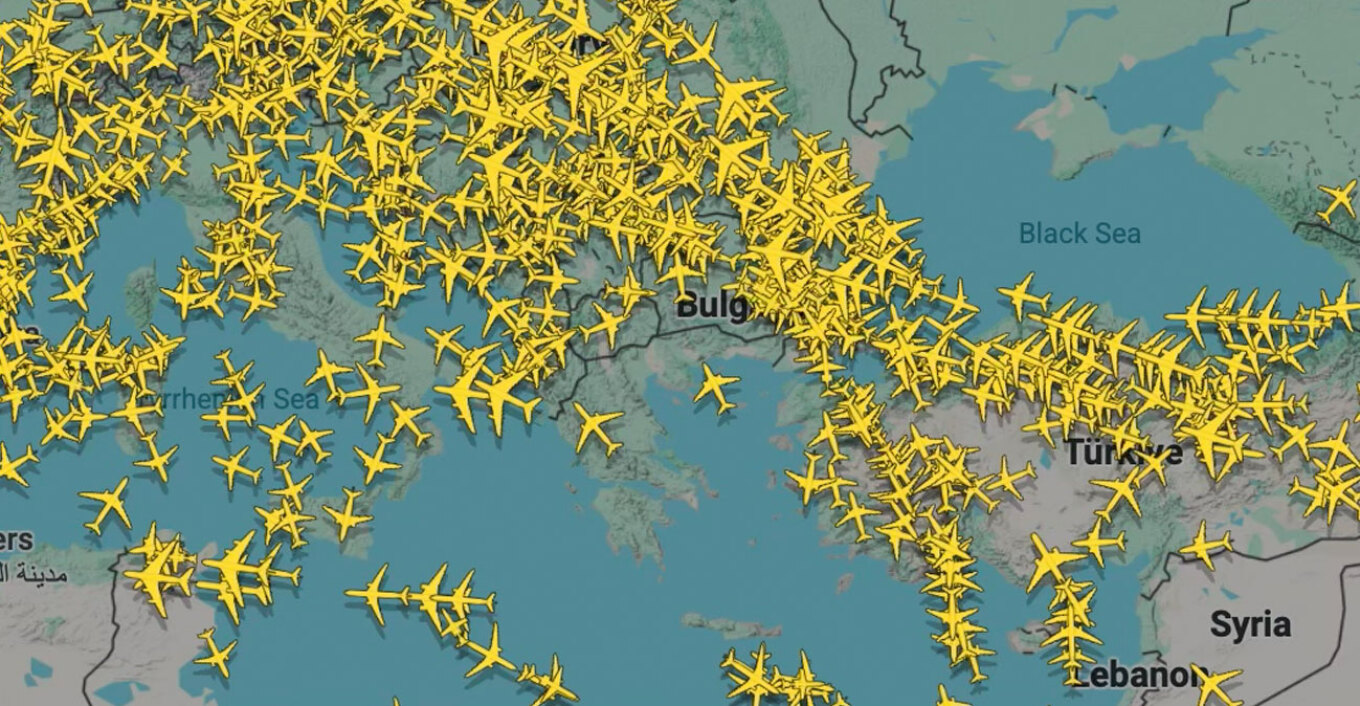
Earlier, the situation appeared as follows:
Current data for Athens Airport:
- 8 aircraft that were ready for departure were unable to take off and returned to parking stands.
- 3 aircraft scheduled to land in Athens were forced to divert to other airports due to the lack of landing capability.
- 4 flights were completely canceled.
- A total of 75 flights were delayed, mainly because specific takeoff slots were assigned by air traffic control.
Measures taken to ease congestion:
- Departures toward the north, east, and south were allowed,
- at intervals of every 4 minutes, regardless of aircraft size or type.
Flights affected and the expected chain reaction of delays
The major issue caused by radio frequency problems, which led to the grounding of aircraft at Greek airports since this morning, is affecting both domestic flights and those scheduled to arrive from abroad today.
Holiday travelers at major foreign airports should be prepared for significant delays in their return journeys. Even if an aircraft departs from Greece—likely with a substantial delay—it will take time to reach its foreign destination before it can return. It is noted that this year, partly due to farmers’ protests, the number of Greeks traveling by air, including last-minute bookings both domestically and internationally, was higher than usual.
Given that today is particularly busy in terms of arrivals, airline sources say efforts are being made at an operational level, focusing mainly on rescheduling flights throughout the day. However, the inability to operate departures from Greek airports—Athens, Thessaloniki, Heraklion, and others—has an impact both on domestic flights and on flights scheduled from abroad for the return of travelers. Rescheduling is made even more difficult by the lack of precise information on when the issue will be fully resolved.
Hellenic Civil Aviation Authority statement
In a statement issued shortly ago, the HCAA said:
“Some frequencies serving the needs of the Athens FIR are experiencing a problem, which is being investigated together with competent external bodies. In order to ensure absolute flight safety, only part of overflights is being serviced, and restrictions have been imposed at Greek airports. A relevant NOTAM has already been issued. The issue remains under investigation, and further announcements will follow.”
It is noted that today, Sunday, is among the days with the highest passenger traffic during the holiday period, especially at the airports of the country’s two largest urban centers, Athens and Thessaloniki, as many travelers are returning from abroad following the end of their leave.
In any case, passengers are advised to contact the airport or the airline they are scheduled to fly with before heading to the airport.
Konstantellos: An unusual and worrying phenomenon
Grigoris Konstantellos, commercial airline pilot and mayor of Vari–Voula–Vouliagmeni, raised serious questions about the operation and resilience of the Athens FIR infrastructure following the radio communication issues.
He described the incident as particularly unusual and concerning, noting that the loss of core communication frequencies is not common in European airspace. So far, no official technical explanations have been provided, increasing concern.
Konstantellos stressed that a key principle in air traffic system design is avoiding a single point of failure. “Communication systems must have redundancy and separation so that a single fault does not lead to total dysfunction,” he said, pointing to the need for substantial modernization of infrastructure.
He also emphasized that aircraft are equipped with autonomous safety systems, such as TCAS, and internationally established loss-of-communication procedures. However, when such procedures are activated simultaneously by a large number of flights, safety margins are reduced—though this does not imply immediate danger.
Regarding flight diversions, he explained that some aircraft may bypass Greek airspace by following alternative routes through neighboring FIRs, while those already airborne continue according to approved flight plans and international procedures.
Finally, Konstantellos left open the question of what caused the overall malfunction. Beyond issues of aging and maintenance, he said broader concerns about infrastructure security must be examined calmly and institutionally. He also raised the issue of how revenues from air navigation charges are used, stressing they should be prioritized for upgrading technical infrastructure to ensure the reliability and resilience of Greek airspace.
Ask me anything
Explore related questions