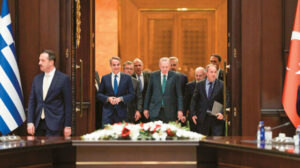
Nothing at White Palace of Recep Tayyip Erdoğan last Wednesday suggested that Greece and Turkey had been on the brink of open conflict just a few years ago, when the two leaderships exchanged sharp rhetoric. Over the past three years, despite flare-ups and isolated challenges, Greek waters have largely remained calm, and Greece’s intention is for this to continue.
Greek–Turkish relations have also receded from the top of the political agenda, with citizens less anxious than in the past, even if domestic political “Turkish-baiting” remains popular. Still, the complex geopolitical reality following Trump’s election and the instability in the region require a reassessment of past assumptions—something both the Greek Prime Minister and the Turkish President appear to recognize.
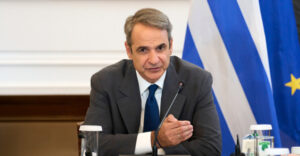
The Prime Minister’s 4.5-hour official visit, together with the Greek delegation, to the monumental government complex in Ankara may have marked the most restrained encounter between the two leaders since 2019, when Kyriakos Mitsotakis took office. According to people familiar with their private meeting, Greece and Turkey have decided, for now, that existing differences should not become a trigger for tension.
Instead, communication channels should remain open at all levels, with de-escalation and prevention mechanisms, alongside bilateral cooperation in areas of so-called “low politics” that nonetheless help keep relations steady. It was likely no coincidence that six bilateral agreements and joint statements—on business cooperation, the Thessaloniki–Smyrna ferry link, civil protection, research and innovation, and culture—were announced before the Mitsotakis–Erdoğan statements, which both leaders delivered verbatim, underscoring the careful choreography of the visit.
“If not now, when?”
Erdoğan’s conciliatory tone and his reference to Mitsotakis as a “valuable friend” drew attention within the Greek delegation. Diplomatic courtesies cannot erase decades of Turkish provocations, nor is Turkey expected to abandon its long-standing revisionist positions. With multiple fronts open and the White House actively engaged in the Middle East and Iran, it is evident that the Turkish President does not want another source of tension. Mitsotakis, too, is deeply concerned about the evolving geopolitical landscape, especially for a mid-sized European country like Greece.
In this context, Mitsotakis used a rhetorical question to urge Erdoğan to refrain from threats of war—clearly alluding to casus belli and “grey zones”—and reportedly linked this issue in their one-on-one discussion to Turkey’s participation in Europe’s defense architecture through the SAFE program. “If not now, when?” he asked publicly, echoing the May ’68 slogan. Foreign Minister Giorgos Gerapetritis later summarized the message: participation in collective defense cannot coexist with threats against members of that collective.
While Turkish officials listened, they offered no substantive response—making it optimistic to expect a decades-old policy, anchored even in decisions of the Turkish National Assembly, to change overnight because a summit went well.
Still, Athens noted with interest Erdoğan’s remark that the Aegean issue “and related matters” could be resolved on the basis of international law—an area Turkey often invokes selectively, particularly regarding maritime zones.
Meetings and goodwill
So where do things stand? The Greek assessment is that Greek–Turkish relations will remain calm at least until the 2027 elections. No one signs a contract with Erdoğan, but Turkey appears unwilling to load the agenda with new tensions.
Officials from both countries will continue meeting, following agreements prepared by the team of Deputy Foreign Minister Haris Theocharis and announced at the Supreme Cooperation Council. Finance ministers Kyriakos Pierrakakis and Mehmet Şimşek agreed to hold business forums in Athens and Istanbul, while further sectoral visits and talks are planned within the framework of political dialogue and the positive agenda.
Mitsotakis will visit Ankara again on 7–8 July for the NATO Summit, hosted by Turkey. It is unlikely the welcoming billboard seen this time will reappear, but another encounter between the two leaders is plausible. As winter gives way to spring, Turkish tourists are expected to return to the 12 Greek islands benefiting from the visa facilitation regime—perhaps the most tangible outcome of the positive agenda in recent years. And when both sides benefit, who wants to stir the waters?
Ask me anything
Explore related questions