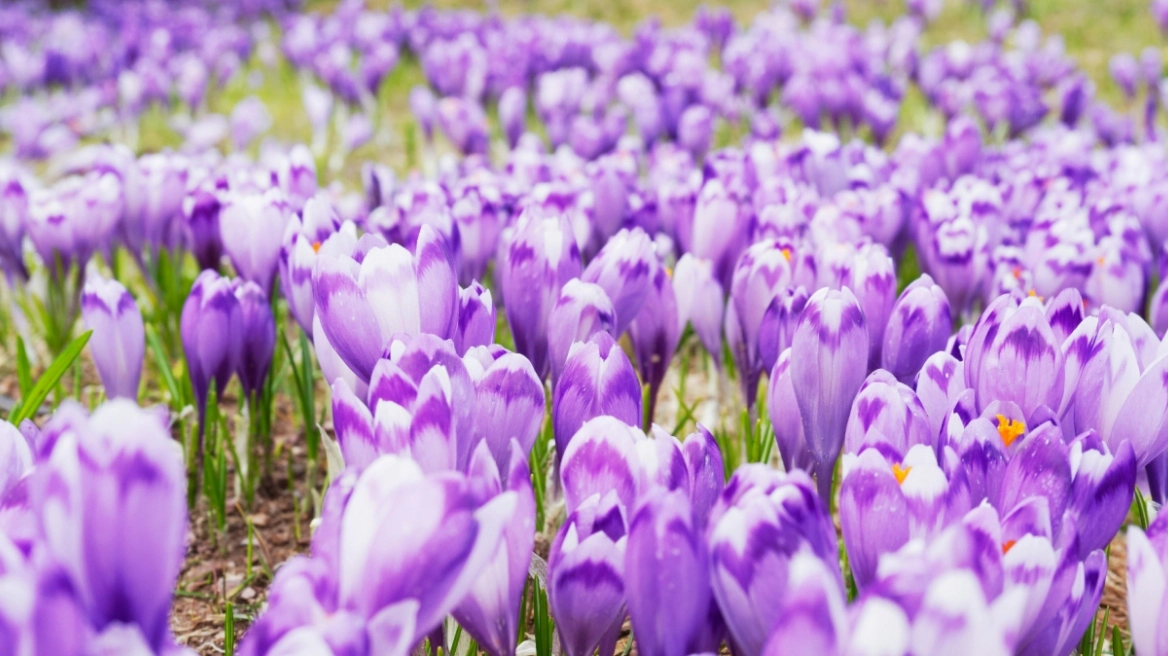
A small, wet meadow in the center of a village in Britain has become one of the most striking natural spring landscapes, thanks to an unusual natural phenomenon featuring the bloom of approximately 400,000 wild crocuses.
The area, known as Inkpen Crocus Field, is now a wildlife sanctuary managed by the Wildlife Trust and is considered one of the first signs of spring in the British countryside, according to The Guardian. The meadow lies between homes and farmland and represents a rare example of a traditional meadow that has not been plowed or agriculturally improved.
Such natural meadows have almost disappeared from the British landscape, with an estimated 97% lost in recent decades. This particular site, however, has remained largely intact, hosting rich biodiversity.
Various species of wild plants grow in the area, including heath spotted-orchid, devil’s-bit scabious, meadow saxifrage, betony, and pignut. The landscape is complemented by old hedgerows and a small stream fed by a spring.
The meadow is also an important refuge for local wildlife. Bumblebees and brimstone butterflies are frequently observed, while the barn owl hunts for rodents like voles. Small predators, such as weasels, also cross the meadow regularly.
However, the most striking feature of the area is the hundreds of thousands of crocuses that bloom each spring. The flowers emerge through the grass, which has been grazed by cattle over the winter. The blooms are a vivid purple with yellow, pollen-rich centers.
This is the largest concentration of wild spring crocuses in Britain. The area was officially declared a nature reserve as early as 1912, at a time when traditional meadows were still relatively common.
The presence of crocuses in this location remains a mystery. One theory connects the flowers to the 12th-century Crusaders. According to this theory, the Knights Templar may have brought the bulbs from the Middle East, possibly believing them to be saffron.
The historical presence of the Templars in the area supports this idea. Members of the order settled locally, while Sir Roger de Ingpen, a Crusades veteran, founded the local flint church and is buried there. Near the village, a small settlement named Templeton further suggests a connection to the Templars.
Researchers, however, note that the crocuses in Inkpen are not the saffron-producing variety. The crocuses blooming in the meadow are Crocus vernus, which flower in spring, whereas saffron comes from Crocus sativus, which blooms in autumn.
Another theory suggests the crocuses may have simply originated from garden plants abandoned in the area centuries ago.
Despite uncertainty about their origin, the crocuses have helped preserve the meadow to this day. The result is an unusual natural landscape that is neither typical lawn nor entirely wild meadow, but something in between.
Each spring, when warm southern winds blow across the local hills, the crocus flowers sway in the breeze, creating a spectacular natural display. The first butterflies of the season appear above the meadow, marking the arrival of spring.
Ask me anything
Explore related questions