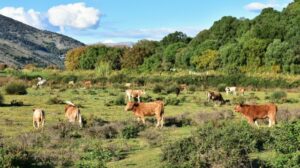
The total confirmed cases of foot-and-mouth disease have reached five across seven farms in Lesbos, according to an update from the General Directorate of Veterinary Services of the Ministry of Rural Development and Food.
The three new cases were identified in five sheep and cattle farms, which have been declared infected. Specifically, these include one sheep farm, one cattle farm, and three co-located sheep farms.
As reported by the General Directorate of Veterinary Services, following laboratory confirmation, it was decided to immediately cull all animals in the infected farms to limit the spread of the disease.
Measures applied at the infected farms include:
- Culling all animals of susceptible species on the farm and destroying carcasses.
- Cleaning and disinfecting facilities, surrounding areas, vehicles transporting animals, carcasses, materials, etc., as well as any material that may be contaminated.
- All stocks (milk, dairy products, meat, meat-based products, slaughtered animals, semen, embryos, eggs, hides, wool, manure, liquid manure, bedding, and animal feed) on the farm are either isolated or subjected to treatment to destroy the foot-and-mouth virus.
Additionally, a 3-kilometer protection zone has been established around the infected farms, within which the following measures apply:
- Registration of all farms with susceptible species, as well as an inventory of all animals present on those farms, updated continuously.
- All farms with susceptible species are subject to regular veterinary inspections conducted in a way that prevents the virus from spreading.
- Transportation of animals to slaughterhouses in Lesbos is prohibited until further notice.
- Transportation of susceptible species between farms is prohibited.
- Livestock fairs, markets, exhibitions, and other gatherings of susceptible species are prohibited, as well as the assembly and spread of these animals.
- Mobile trading of susceptible species is prohibited.
- Artificial insemination and the collection of eggs and embryos from susceptible species are prohibited.
- Fresh meat, minced meat, meat preparations, and meat-based products from susceptible species within the protection zone may be marketed on the island under certain conditions and with authorization from the Local Disease Control Center.
- Milk and dairy products from susceptible species within the protection zone may be marketed under certain conditions and with authorization from the Local Disease Control Center.
- The marketing of semen, eggs, and embryos from susceptible species within the protection zone is prohibited. Any exceptions require authorization from the Local Disease Control Center.
- Wool, hides, fleece from sheep, hair from ruminants, and pig hair from susceptible species within the protection zone may be marketed under certain conditions and with authorization from the Local Disease Control Center.
- Transportation and spreading of manure from farms, facilities, and vehicles within the protection zone are allowed under certain conditions and with authorization from the Local Disease Control Center.
- Animal feed, hay, grass, and straw from the protection zone may be marketed under certain conditions and with authorization from the Local Disease Control Center.
Ask me anything
Explore related questions