Dolce & Gabbana, one of the last iconic fashion houses still under the control of its founders, is currently facing one of the biggest challenges in its forty-year history.
According to market sources, the company has begun a new round of negotiations with its lenders as the continued decline in global demand for luxury goods puts suffocating pressure on its profits and debt service terms. With the assistance of Rothschild & Co. as financial adviser, the Italian giant is attempting to renegotiate a €450 million bank debt in an attempt to secure the necessary “breathing room” to implement its ambitious expansion plan.
The current economic environment is not favorable to players pursuing an independent path. The luxury sector, long perceived as resilient to crises, is now facing significant pressure from geopolitical instability. Recent conflicts in the Middle East and the uncertainty surrounding military activity in Iran have effectively “frozen” consumption in a region that has traditionally been a key pillar of demand for Dolce & Gabbana.
According to a report by Bain & Company and Altagamma, global luxury sales declined by 2% in 2025, forcing even giants such as Ferrari to temporarily suspend deliveries to the Middle East due to lack of visibility.
Dolce & Gabbana’s debt is not new, but its nature reflects the strategic decision of Domenico Dolce and Stefano Gabbana to retain control rather than sell to major conglomerates such as LVMH or Kering. Last year, the company refinanced €300 million in obligations maturing in 2030 and secured an additional €150 million to fund expansion into beauty and real estate.
The rationale behind this move was to create new revenue streams that could offset fluctuations in the ready-to-wear market. However, the slowdown in high-end retail has made the terms of these loans increasingly burdensome, forcing management to seek waivers or amendments to financial covenants.
The history of Dolce & Gabbana underpins its credibility with lenders. In 1985, when the designers presented their first “Real Women” collection in Milan, few could have imagined that a business launched without capital—using friends as models and a bedsheet as a backdrop—would evolve into a global empire. Their ability to transform Italian tradition, particularly Sicilian aesthetics, into a globally recognized brand helped build a loyal clientele seeking authenticity. Today, lenders are effectively being asked to price that authenticity, assessing whether the company can survive as an independent entity in an increasingly consolidated market.
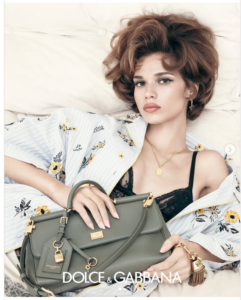
Diversification into beauty and real estate represents the house’s central strategic bet. Unlike other brands that license perfumes and cosmetics to third parties, Dolce & Gabbana has brought these activities in-house, assuming both the risks and potential rewards. This approach requires substantial working capital, explaining the rise in borrowing. The beauty sector remains more resilient than apparel, offering “accessible luxury” to a broader audience. At the same time, expansion into branded luxury real estate aims to monetize the brand through long-term, tangible assets.
In discussions with lenders, the company highlights its Alta Moda and Alta Sartoria lines as key value-preserving assets. Domenico Dolce has argued that modern luxury is at risk from what he calls the “lazy fashion” of logo-driven products. The house’s commitment to craftsmanship and local artisanal production is not only an artistic stance but also a business strategy. By investing in collections that require hundreds of hours of work, Dolce & Gabbana creates products less susceptible to rapid depreciation, maintaining high margins and attracting ultra-high-net-worth individuals, who are less affected by inflationary pressures.
Dolce & Gabbana’s case is not unique. The luxury sector is undergoing a period of restructuring similar to that seen at Valentino, where shareholders Kering and Mayhoola injected €100 million after breaches of loan terms. The key difference is that Dolce & Gabbana lacks such financial backing. Its independence depends entirely on its ability to generate liquidity and convince capital markets of the viability of its vision.
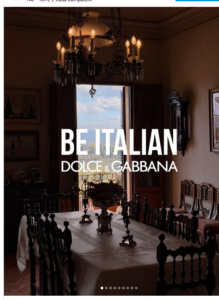
Ongoing discussions with Rothschild & Co aim to reassure lenders that the current slowdown is cyclical and that the expansion strategy will bear fruit once geopolitical conditions stabilize.
Additionally, the expansion into high jewelry (Alta Gioielleria), now marking ten years, illustrates the brand’s ability to create new markets. Dolce & Gabbana was among the first fashion houses to challenge traditional jewelry giants with a more sensual and bold aesthetic. The success of this segment demonstrates that innovation can thrive when paired with technical excellence and authenticity—factors banks take into account when assessing debt restructuring.
Ultimately, Dolce & Gabbana’s future will depend on balancing creative boldness with financial discipline. The ability of Domenico Dolce and Stefano Gabbana to mediate between the “ego” of creation and the “superego” of the markets—borrowing their own terminology—will be critical to their survival. If they secure the necessary flexibility from lenders, they will gain time for their investments in beauty and real estate to mature, ensuring that the banner of Italian independence continues to fly over Milan.
In an era where luxury is increasingly standardized and industrialized, Dolce & Gabbana is betting on the opposite: uniqueness and the personal commitment of its founders. The outcome of negotiations with lenders will send a strong signal across the industry. An agreement that allows the house to continue without relinquishing ownership would mark a victory of entrepreneurial independence over corporate consolidation. The market is watching closely, as Dolce & Gabbana is not just a fashion company, but a test case for the resilience of independent luxury in the 21st century.
Ask me anything
Explore related questions