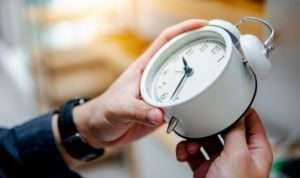
As March comes to an end, Greece is preparing for the annual switch to daylight saving time, when clocks move forward by one hour.
The time change will take place in the early hours of Sunday, March 29, 2026. At 03:00 a.m., clocks will be set forward to 04:00 a.m., meaning one hour of sleep will be lost.
Despite the shorter night, the transition brings longer daylight hours in the evening, a key benefit of the system.
What is daylight saving time and why it is used
Daylight saving time is designed to make better use of natural daylight, helping to reduce energy consumption and extend evening light.
In Greece and across most of Europe, daylight saving time lasts for seven months, while winter time—also known as standard time—applies for the remaining five months, beginning on the last Sunday of October.
The concept dates back to Benjamin Franklin, who first suggested in a letter to a French newspaper that people could make better use of daylight by waking up earlier. The modern system of changing clocks, however, was introduced much later.
Is daylight saving time being abolished?
Globally, fewer countries now apply seasonal time changes, as most nations in Asia and Africa do not use the system. Several others have already abolished it or are considering doing so.
The European Union had decided to end the mandatory time change from 2021, allowing member states to choose whether to adopt permanent summer or winter time. However, the reform has not yet been implemented, and the current system remains in place.
In Greece, daylight saving time continues to apply as normal.
What to do with clocks and devices
Most modern devices—including smartphones, computers and smartwatches—will update automatically.
However, manual adjustment is still required for analog clocks and older electronic devices.
When does winter time return?
Daylight saving time in 2026 will remain in effect until Sunday, October 25, when clocks will move back one hour, marking the return to winter time.
Ask me anything
Explore related questions