

The OPEKEPE case is entering a new, more critical phase, as the European Public Prosecutor’s Office has sent the second case file it compiled, which is not limited to administrative or procedural aspects but reaches Parliament and the government, as it is accompanied by a request to lift the immunity of 11 sitting MPs.
According to information, all belong to New Democracy, giving the case significant political weight, at a time when the Prime Minister’s Office is adopting a wait-and-see stance until it has a full picture of the evidence. Once fully informed about the case file and the involvement of each individual, it may decide to follow the same approach as in the first case file, when the then Minister of Migration Makis Voridis and three deputy ministers (Tasos Chatzivasileiou, Christos Boukoros, Dionysis Stamenitis) resigned after recorded conversations were revealed. In such a case, the ministers and deputy ministers mentioned in the file would be replaced.
Indicative is the statement by Deputy Minister to the Prime Minister and Government Spokesperson Pavlos Marinakis: “Today’s announcement by the European Public Prosecutor’s Office constitutes a serious development. We are awaiting the transmission of the case file to the Hellenic Parliament in order to assess each case individually.”
It is not considered coincidental that the scheduled parliamentary debate on the “rule of law” was postponed to April 17, with many linking this decision to the expected submission of the case file.
The scope of the case is not limited to the 11 sitting MPs. The European Public Prosecutor’s Office also refers to five former MPs, as well as one former minister and one former deputy minister of Rural Development—a total of 18 current and former politicians. Protothema.gr has the names but is not publishing them, as they have not been officially confirmed.
Particular interest lies in the assessment of the evidence. According to unofficial information, for two MPs who have served in government, recorded conversations are considered particularly incriminating at both political and criminal levels.
Some recorded conversations reportedly indicate active involvement, with pressure or clear instructions—often in a forceful tone—towards civil servants regarding the outcome of specific cases.
This is where the criminal dimension of the case emerges, as such interventions may be linked to offenses such as incitement to breach of duty or participation in processes leading to the illegal disbursement of European funds.
By contrast, for the remaining individuals, no directly incriminating criminal evidence has emerged. Based on current data, their actions fall within a familiar party-related but institutionally problematic framework: political mediation for favors to third parties, essentially resembling clientelist practices toward voters, mainly in rural constituencies, rooted in the traditional party and parliamentary mechanisms of New Democracy.
These interventions appear to relate to the management and allocation of agricultural subsidies. MPs are said to have communicated with officials or OPEKEPE figures to facilitate or obtain information about specific cases involving citizens or groups. This may include expediting procedures or approving applications, but not financial or other personal gain, nor encouragement of illegal acts.
For a significant portion of those involved, the references are even more indirect, arising from conversations of third parties who invoke political “support” or influence, without direct intervention by the MPs themselves being recorded. This creates a spectrum in evaluating the evidence, from simple political favors to potentially prosecutable acts.
Reports suggest that the transmission of the case file concerning 2021 data (when Mr. Melas was head of OPEKEPE) may have been expedited, as the misdemeanors involved could become time-barred after five years. For the same reason, a second case file based on 2022 data (including wiretaps, etc.) may also exist and be sent to Parliament at a later stage.
Parliament
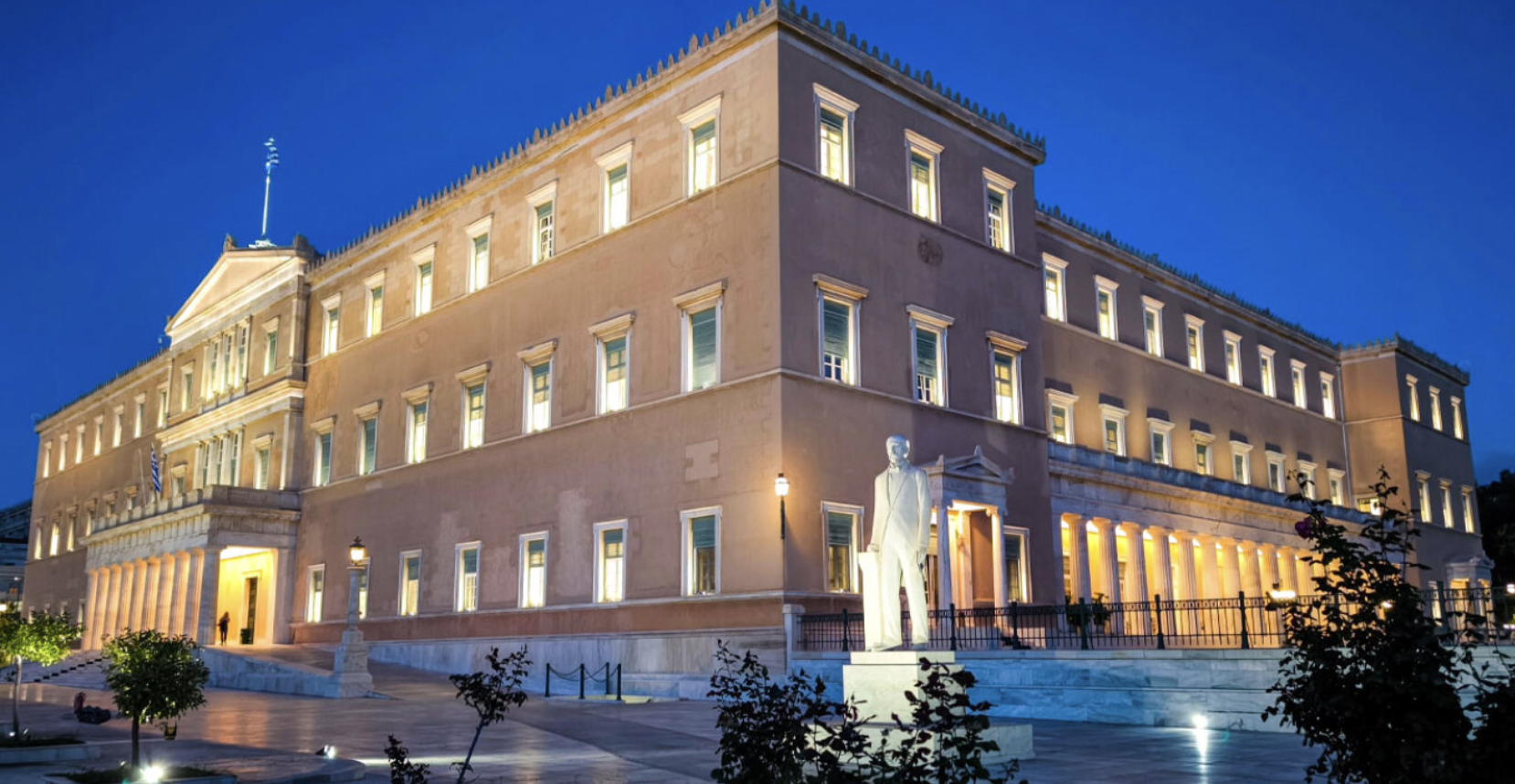
The extensive case file, containing numerous recorded conversations and two separate requests involving a total of 11+2 individuals (the two being the former minister and deputy minister of Rural Development), is expected to reach Parliament via the Ministry of Justice. Parliament will not deal with former MPs.
According to information, the case file has already been forwarded by the European Public Prosecutor’s Office to the Supreme Court and is likely to be submitted to Parliament tomorrow, Thursday. The accompanying briefing outlines the procedure Parliament will follow and includes two separate requests.
The first requests the lifting of immunity for 11 sitting MPs and includes all findings of the investigation, including recorded conversations from lawful surveillance in 2021. The Speaker of Parliament, Nikitas Kaklamanis, will forward the request to the head of the Ethics Committee, Giorgos Georgantas, who will distribute copies to committee members.
Committee members, after reviewing the evidence, will recommend to the plenary whether to lift immunity for each MP individually. Final decisions will be taken by open roll-call vote, requiring a simple majority of those present.
By established practice, Parliament usually approves most such requests, though in this case the government has stated that each case will be evaluated individually.
The second request concerns the prosecution of a former Minister and a former Deputy Minister of Rural Development. In this case, the procedure of Article 86 of the Constitution will be followed.
This part of the file will not be distributed but will be available in a secure room for MPs to review. If sufficient evidence exists, at least 30 MPs may propose the formation of a preliminary investigation committee.
The government
The government will assess “case by case” whether to consent to lifting MPs’ immunity, while for former ministers it will consider whether a preliminary or investigative committee is required.
Unlike the previous case, this file appears to include more substantial criminal assessments, including references to felonies and misdemeanors. Decisions will be based on the severity of actions, distinguishing between simple interventions and potential illegal acts.
Politically, the case is highly significant, as even sitting ministers are involved. Given that the previous case led to resignations, further political developments are likely if serious responsibility is established.
There is also the possibility of expulsions or resignations of MPs, which could reduce the government’s parliamentary strength. Observers note that the government faces a difficult situation, as it must decide whether to rely on MPs under investigation.
The European Public Prosecutor’s Office
The investigation concerns serious offenses against the financial interests of the European Union, such as incitement to breach of trust, electronic fraud, and false certification aimed at unlawful benefit for third parties. The alleged acts date back to 2021 and are linked to an organized scheme exploiting agricultural funds.
The case also highlights institutional limits in investigating political responsibility. Under Article 86 of the Constitution, any evidence concerning ministers must be forwarded to Parliament, requiring procedural separation and limiting unified investigation.
In any case, the European Public Prosecutor’s Office stresses that no further details will be disclosed for now to protect the investigation, and all individuals are presumed innocent until proven guilty. However, the political impact is already significant and is expected to shape the political agenda in the coming weeks.
Ask me anything
Explore related questions