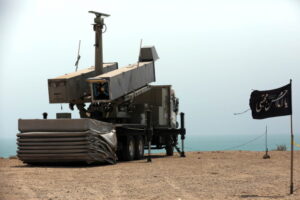
Iran appears to retain significant military capabilities despite continuous strikes by the United States and Israel over the past five weeks, according to a report by CNN citing three anonymous sources familiar with U.S. intelligence assessments.
According to the report, U.S. intelligence estimates that about half of Iran’s missile launchers remain intact, while thousands of one-way drones are still part of the country’s arsenal. This means Tehran continues to possess substantial operational capabilities in the region.
“They remain capable of causing chaos across the entire region,” one source told CNN, describing the intelligence community’s assessment. The count may also include launchers that are not immediately accessible—buried under rubble after airstrikes but not completely destroyed.
The same sources indicate that roughly 50% of Iran’s drone capabilities are still intact, while a significant portion of its coastal defense cruise missiles remains operational. These missiles are considered a critical part of Iran’s strategy, as they enable it to threaten shipping in the Strait of Hormuz—one of the world’s most vital routes for energy and trade.
A different picture from Washington
These intelligence assessments present a more complex picture compared to the public statements of the U.S. government regarding military successes. In a speech on Wednesday, Donald Trump stated that Iran’s ability to launch missiles and drones has been significantly reduced, claiming that weapons factories and launchers are being destroyed on a large scale.
According to U.S. Central Command (CENTCOM), more than 12,300 strikes had been carried out on targets inside Iran as of Wednesday. CNN’s sources acknowledged that U.S. operations have reduced Iran’s capabilities and that high-ranking Iranian officials have been killed in U.S. and Israeli strikes, including Supreme Leader Ali Khamenei and National Security Council chief Ali Larijani. However, despite heavy losses, intelligence services believe Iran still retains a large number of missiles.
At the same time, the Pentagon has emphasized the effectiveness of operations by focusing on the sharp decline in Iranian attacks rather than the number of destroyed weapons systems. U.S. Defense Secretary Pete Hegseth stated on March 19 that ballistic missile attacks against U.S. forces have dropped by 90% since the conflict began, with a similar decline in drone attacks.
A U.S. official added that Iran’s ballistic missiles are being destroyed at a rapid pace, yet Israel, Gulf countries, and U.S. forces continue to face missile and drone attacks.
Pentagon spokesperson Sean Parnell dismissed the CNN report as “completely inaccurate,” asserting that the U.S. military has dealt decisive blows to Iran and is progressing faster than expected toward key objectives, including dismantling Iran’s missile arsenal, neutralizing its navy, and weakening its regional allies.
Similarly, White House spokesperson Anna Kelly accused CNN’s anonymous sources of attempting to politically undermine the U.S. president and downplay military effectiveness. She reiterated that Iranian missile and drone attacks have dropped by 90%, that its navy has suffered major damage, and that two-thirds of its weapons production facilities have been destroyed or severely damaged. She also stressed that the U.S. and Israel maintain clear air superiority and that the main strategic goal remains preventing Tehran from acquiring nuclear weapons.
“Unrealistic” two-week timeline
Israeli military officials appear more cautious regarding Iran’s remaining capabilities, estimating that only about 20%–25% of its launchers remain operational. According to sources familiar with U.S. assessments, this difference stems from the fact that Israeli estimates may not include launchers buried or hidden in tunnels and underground facilities.
On Wednesday, Donald Trump suggested that military operations could conclude within two to three weeks. However, a source familiar with the intelligence assessments described this timeline as unrealistic, noting that Iran still has substantial resources available.
“We can keep hitting them, no doubt—but you’d be crazy to think this will be over in two weeks,” the source said.
Iran’s ability to transport and conceal launchers in underground facilities is a key reason why its arsenal has not been weakened further, according to CNN sources. The country has spent decades building extensive tunnel and cave networks in preparation for potential conflict, making detection and destruction of mobile launchers particularly difficult.
These sources also highlight Iran’s ability to rapidly move mobile launch platforms, complicating efforts by U.S. and Israeli forces to locate them. This tactic resembles challenges the U.S. has faced in Yemen against Houthi rebels—one of Iran’s main regional allies—who use similar concealment and mobility strategies.
Ask me anything
Explore related questions