Only 119,000 people live in Erlangen, a well-known university town near Nuremberg. Religious communities in the city are particularly active. Preparations have already begun for the construction of a new synagogue, with the Bavarian government granting a plot of land near the city’s university. The two large Muslim mosques are planning expansions, while construction of a Hindu temple in a suburb of Erlangen will begin soon.
Silvia Klein, head of the municipal office for “multiculturalism and equal opportunities” notes, the initiative for a Hindu temple was undertaken by the active association “Hindu Temple of Franconia,” which purchased the necessary land through donations, its own funds, and a bank loan. Construction will begin by 2027 at the latest.
Many students from India
Klein points out that more than 2,000 Indian students are currently studying at Erlangen University. Traditional Christian churches still exist for now (Catholic, Protestant, Greek Orthodox, and Russian).
For the past three years, Coptic Christians in the city have been operating their own church in the suburb of Bruck. As a Coptic priest explains to Deutsche Welle, “in the past we had only 18 families with a total of 50 or 60 members; today there are more than 60 families with about 200 members. Our community also includes around 40 students.”
Many Germans outside the Church
At the same time, traditional Christian churches are shrinking. Until a few years ago, one in two Germans (50%) belonged to the Catholic or Protestant Church. Now, the number of members of the two churches has fallen to 36.6 million, about 44% of the total population. It is worth noting that leaving a church is done simply by declaration, and in that case the “church tax” is no longer required.
“Germany is becoming increasingly atheist,” read bold newspaper headlines. But is this really true or Germany is becoming less Christian?
Official statistics (for 2020) indicate that more than 5.3 million people living permanently in Germany are Muslims. According to a study by the Protestant Church, there are another 3.8 million Orthodox Christians. Others follow Judaism, Buddhism, the Baháʼí faith, or Hinduism. There are no precise statistics for all of these groups.
It is clear, however, that the “urban landscape” is becoming more colorful in religious terms, and this is reflected in the growing number of newly built places of worship. In the summer of 2024, Buddhist nuns established their own monastery in central Berlin, one of the 20 Buddhist monasteries now in Germany. In 2026, the largest Hindu temple in the country opened in the German capital, although the first plans had been submitted back in 2004.
“We are a community that is constantly growing,” says Vilvanathan Krishnamurti, one of the key figures behind the project. From 2014 to 2024, the number of permanent residents with Indian citizenship in Berlin increased tenfold, reaching 41,000.
According to Krishnamurti, the new temple “meets our desire for a meeting place, especially for young people. In this way, many parents who remain in India worry less about their children who are far away…”
Buddhist temples and mosques increasing
There has also been a notable rise in the number of Buddhist temples. In Frankfurt alone there are at least six, and they are also increasing in Cologne, Hamburg, Munich, and Berlin. Each temple represents different traditions of Hinduism and different national identities.
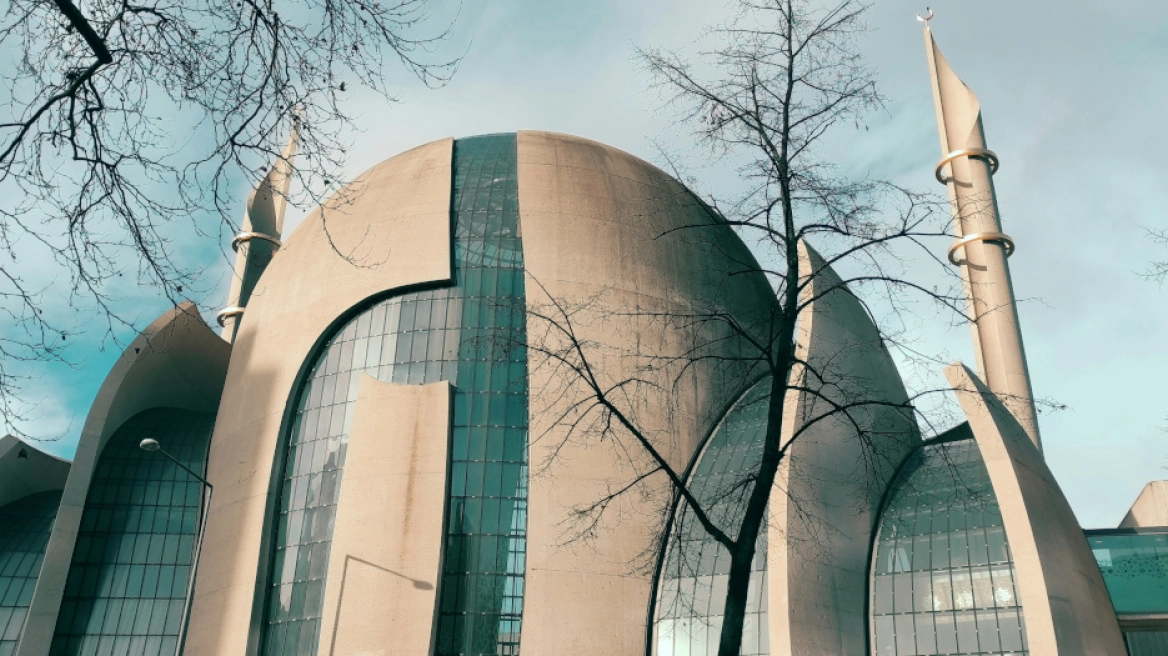
At the same time, more and more Muslim mosques are being built. In response to a written inquiry from DW, the Turkish-Islamic Union (DITIB) stated that “in the past year, mosques have been completed in the cities of Voerde, Kornwestheim, and Kengen,” while groundwork has been laid for mosque construction in Giessen and Willich.
DITIB includes a total of 862 mosque communities, according to its own figures. They are directly subordinate to Turkey’s Directorate of Religious Affairs (Diyanet), which in turn reports to the Turkish president. Some new buildings are delayed, such as in Krefeld, where the third-largest mosque in Germany has been under construction for many years.
New mosques are also regularly opened by the Ahmadiyya community, a religious minority from Pakistan that faces systematic persecution there. The group describes itself as more “open” and uses the German language more than DITIB. Its representative, Suleiman Malik, told DW that the community’s latest mosque was inaugurated in February in Erfurt, the capital of Thuringia. Another had previously opened in Nordhorn, while construction is ongoing for yet another in Husum on the North Sea.
In Erfurt, there were threats and even attacks when the building’s structure was completed. Today, guided tours are held almost daily for groups of students and even retirees. Visitors show strong interest, Malik notes.
Jewish Academy and new synagogues
Jewish communities in Germany are also inaugurating new places of worship. Synagogues opened in Magdeburg in 2023 and in Potsdam in 2024; another will follow in Erlangen, while one synagogue in Berlin is being expanded. Some “liberal” Jewish communities are also planning new projects, especially in Berlin and Munich.
At the same time, construction is progressing on the Jewish Academy in Frankfurt, expected to open in November 2026. This is a major project in the city center, notable for its architecture, combining a preserved villa with a modern building featuring Bauhaus elements.
The combination of old and new reflects the philosophy of the Jewish community, explains Doron Kiesel, co-chair of the Academy. “We build our identity based on our experiences, traditions, and beliefs, while at the same time looking toward future developments, challenges, and problematic situations.”
Orthodoxy continues to spread
Yet there are also those building or inaugurating new churches in Germany—namely Orthodox communities, which are seeing increasing attendance. In many cases, Orthodox communities take over churches that have been deconsecrated by the Catholic or Protestant Church. For example, in Oberbachem near Bonn, Serbian Orthodox believers pray in a church that once belonged to the Catholic Church. Something similar is happening in Hildesheim, where the Serbian Orthodox Church in Germany is restoring an old monastery.
Others prefer newly built churches. In June 2024, the Church of the Apostles Peter and Paul was inaugurated in Butzbach, in the state of Hesse. It is the first newly built church in Europe of the Antiochian Orthodox Church, which mainly brings together Christians from present-day Syria.
However, there are also obstacles in German urban planning law. In Vilshofen in Bavaria, on the banks of the Danube, the Romanian Orthodox community in Germany is planning its own church. For three years now, it has been waiting for approval from the relevant planning authorities, says Father Marius Jitveian—but the approval is still pending.
Ask me anything
Explore related questions