





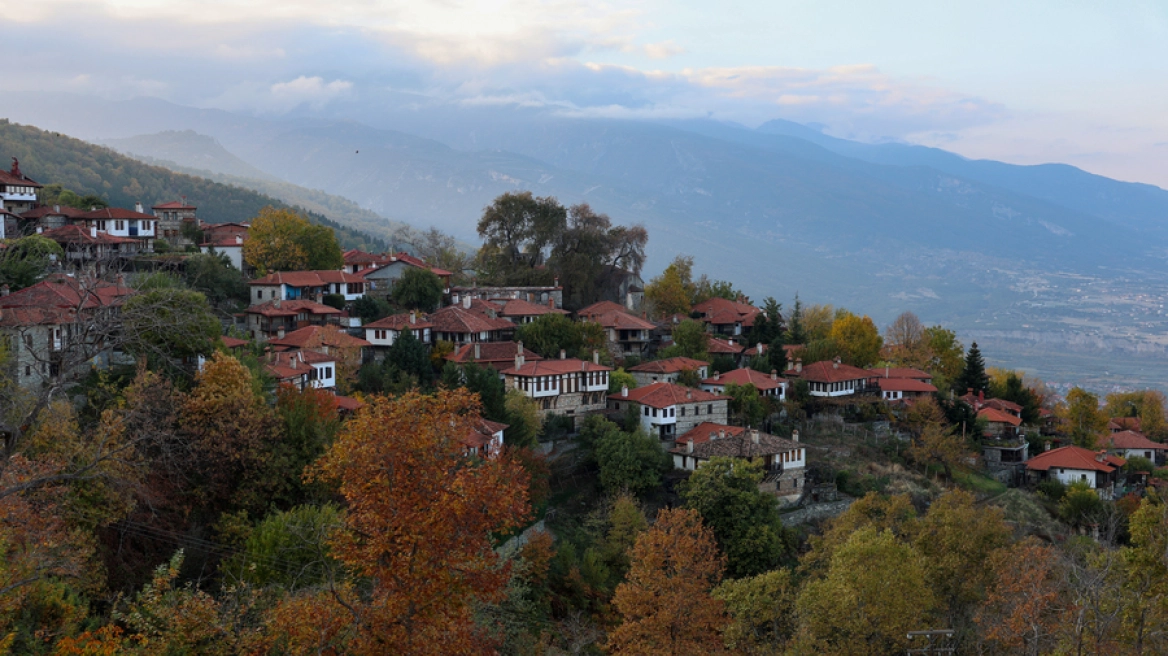
The Ministry of Environment and Energy is attempting, through the bill for the expansion of the activities of EYDAP and EYATH, to activate an urban planning tool that had remained essentially inactive since 2014. These are the Special Plans for Environmental Upgrading and Development (E.S.PER.A.A.), which are being amended in order to become operational and be used for the revival of abandoned and declining small settlements through organized urban planning.
According to the Ministry of Environment and Energy, the intervention aims to address the demographic decline of the Greek countryside and the abandonment of hundreds of settlements by utilizing the existing housing stock, at a time when out-of-plan construction is being restricted and Local Urban Plans are being prepared.
As stated, the goal is to create conditions for attracting residents and investments, strengthening the local economy, and protecting the natural and cultural environment.
However, behind the government initiative lies a broader debate about the new model of rural development. The central question is whether the new framework will operate solely as a tool for revitalizing existing settlements or whether, in practice, it will lead to organized urban expansions into adjacent out-of-plan areas.
The E.S.PER.A.A. as the Main Tool
The main instrument of the new framework is the Special Plans for Environmental Upgrading and Development (E.S.PER.A.A.), through which the revival of abandoned and declining settlements can be organized, while under specific conditions the urban planning of neighboring out-of-plan areas functionally connected to them will also be permitted.
The areas to be developed must have a minimum surface area of 30 stremmas (30,000 sq. m.), while the total area of the intervention, together with the existing settlement, may not exceed 200 stremmas (200,000 sq. m.).
The new developments will not constitute independent settlements but will function as an extension of the existing one, served by shared technical and social infrastructure.
The ministry’s rationale is that the revival of an abandoned settlement cannot be limited only to the restoration of existing buildings, but requires a broader development plan, with new infrastructure, activities, and economic opportunities that will strengthen permanent residency and the local economy.
How Urban Planning Development Will Take Place
Organized developments may be implemented by building cooperatives and development entities.
A basic requirement is the transfer of at least 50% of the planned urban area for public-use and community-benefit spaces or public-interest projects.
At the same time, a special financial contribution is foreseen, which will be directed exclusively toward projects upgrading the settlements, such as the restoration of public buildings, construction of infrastructure, protection of architectural heritage, and enhancement of the natural landscape.
In response to concerns that have been raised, the Ministry of Environment and Energy argues that the regulation does not introduce a general right to create new settlements nor does it relax the rules governing out-of-plan construction.
Instead, it emphasizes that every E.S.PER.A.A. will be approved exclusively by Presidential Decree, following an opinion from the Central Council for Urban Planning Issues, Spatial Planning and Development (K.E.SY.PO.TH.A.) and a full urban planning, environmental, and technical assessment, without providing any automatic right to development.
The ministry also stresses that the focus of the intervention remains the existing abandoned or declining settlement.
For this reason, the framework provides for the recording of public spaces and historic or traditional buildings, the protection of architectural character, and the imposition of special design rules, so that new developments function as a means of reactivating the settlement rather than as independent residential expansions.
At the same time, urban development is prohibited in forests, forest areas and reforestation zones, archaeological sites, coastal zones and beaches, high-productivity agricultural land, and any other protected area where construction is prohibited.
The framework also requires geological and geotechnical studies, checks on waterways, documentation of infrastructure adequacy, and compatibility with higher-level spatial planning.
Which Settlements Are Included
The new framework may apply to abandoned settlements that predate 1923 and had zero population both in the 1981 census and the 2021 census.
At the same time, it allows the inclusion of small and declining settlements with a permanent population below 150 residents, which have experienced significant demographic decline over recent decades.
Inclusion will not be automatic, as, in addition to population criteria, settlements will need to have a cohesive core, architectural interest, and meet all geological, environmental, and urban planning suitability requirements provided by the new framework.
Concerns of Scientific Organizations
The regulation has already triggered reactions from scientific organizations, such as the Hellenic Society for Environment and Culture (ELLET) and the Association of Greek Urban Planners and Spatial Planners (SEPOCH).
Both organizations acknowledge that rural abandonment is a serious national problem, but they express reservations about the way in which the issue is being addressed.
According to their position, the center of gravity of the intervention is shifting from the restoration and reuse of existing settlements toward the possibility of organized urban development of neighboring out-of-plan areas.
They also estimate that the inclusion criteria are broad enough to include not only genuinely abandoned settlements but also small settlements that are still inhabited or located in areas with increased investment interest.
ELLET further points out that, since the majority of settlements covered by the regulation predate 1923 and already have construction potential within their boundaries, the actual outcome may be the creation of new organized residential developments in neighboring out-of-plan areas rather than the restoration of the historic settlement core itself.
Ask me anything
Explore related questions




