





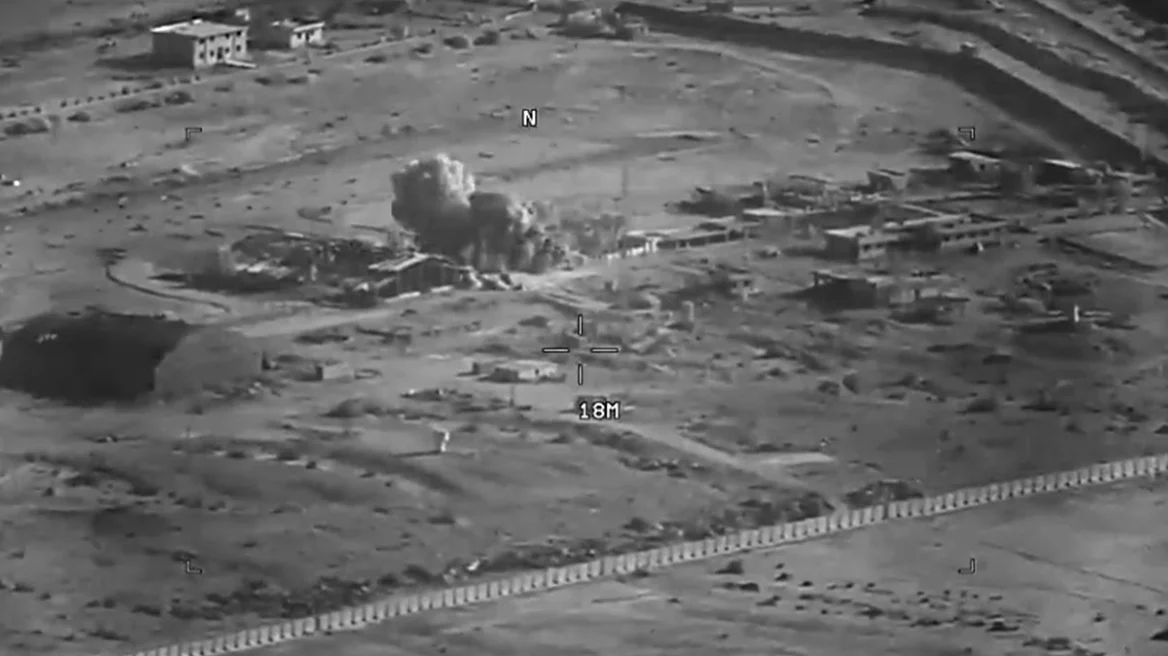
The 13th consecutive night of military operations in Iran featured heavy bombardments focused on the Iranian interior rather than the Strait of Hormuz, against the backdrop of escalating rhetoric from the U.S. leadership and oil prices reaching $100 per barrel.
The attacks began in the early hours of Friday morning (Greek time), with the objective of “holding Iran accountable and reducing the threats posed by the Islamic Revolutionary Guard Corps (IRGC) to commercial shipping,” according to U.S. Central Command (CENTCOM), which is conducting the operations.
Iranian state media reported explosions in Ahvaz (in southern Iran), Bandar Abbas, the country’s major southern port, and Qeshm Island, near the Strait of Hormuz. Additional strikes reportedly hit Andimeshk and Omidiyeh in the south. Iranian media reported that at least four people were killed in Ahvaz.
Air defenses also appeared to have been activated in Tehran.
The strikes ended approximately two and a half hours later. CENTCOM, which also released footage of the operation, stated that the attacks targeted “military command centers, drone storage facilities, communications networks, coastal surveillance stations, and naval installations, with the objective of further reducing the threat Iran poses to civilian mariners and commercial vessels transiting the Strait of Hormuz.”
The U.S. maintains that the international shipping lane through the Strait of Hormuz “remains open to transit despite recent attacks by Iran’s Islamic Revolutionary Guard Corps. Commercial vessels continue to pass freely through the strait with U.S. military support.”
Meanwhile, for another consecutive night, air raid sirens sounded in Kuwait after Iran targeted U.S. military bases. Sirens also sounded in Jordan, at Muwaffaq Salti Air Base, following the detection of Iranian missiles.
Trump increases the pressure
On Thursday, through a series of public statements, the U.S. president sent warnings to both the Houthis and Iran, making clear that any future attack on shipping would be attributed to Tehran and that compensation would be drawn from frozen Iranian assets. He also warned that such attacks would trigger a strong U.S. military response.
Furthermore, he told Axios that he is seriously considering resuming a major military operation against Iran, with strikes that, according to him, would be larger than those carried out during Operation “Epic Fury.”
He clarified, however, that he has not yet given the final authorization, while U.S. officials emphasized that the armed forces have not received corresponding orders.
Against this backdrop, Trump’s threats of further military escalation against Iran ignited oil prices.
The September Brent crude futures contract rose above $100 per barrel on Thursday afternoon for the first time since last May, closing at $100.69.
Meanwhile, U.S. West Texas Intermediate (WTI) crude climbed to $92.19 per barrel.
Ask me anything
Explore related questions




