





In the bowels of the Earth, where temperature and pressure increase and the light of the Sun never reaches, scientists discovered an unexpected inhabitant: a microscopic worm that survives at a depth of approximately 1.3 kilometres. The Halicephalobus mephisto, also known as the “devil’s worm”, lives among bacteria and rocks.
Its discovery radically changed what we knew about the limits of life on the planet, proving that even complex organisms can survive without the Sun. At the same time, it opens new fields of research into the origin of life on Earth, as well as into its possible existence beneath the surface of other planets.
The “devil’s worm”, although microscopic, is particularly large within the… Lilliputian ecosystem. When it dies within the slimy microbial film that develops on the rock, scientists estimate that its body is consumed by bacteria and other forms of life, contributing to the nourishment of this strange cycle of life, according to the BBC.
Before the 1980s, most biologists did not believe that life existed at a depth greater than about 30 centimetres below the ground. The detection of bacteria living at great depths—and the discovery of the “devil’s worm” in 2011—represented a shift in our understanding of the depths of the Earth.
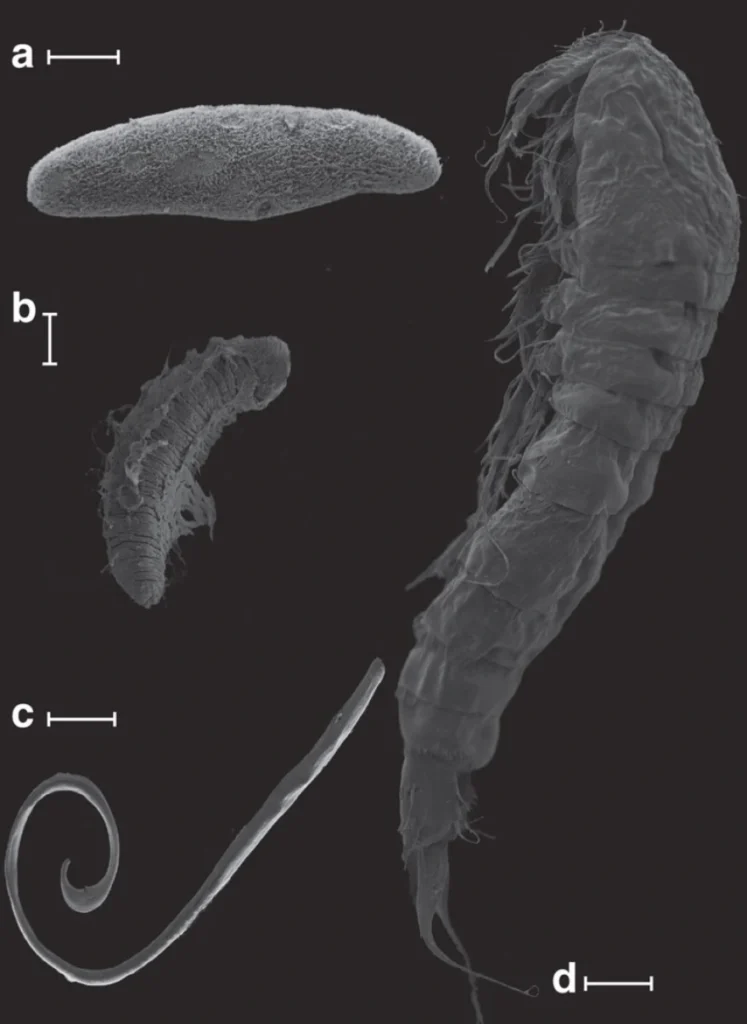
The story of the worm shows how life finds a way to survive without the energy of the Sun, radically expanding what scientists considered possible for living organisms and sparking new ideas about the origin and future of life. “If you can find a worm down there, what else might be escaping us?” wonders geomicrobiologist Karen Lloyd from the University of Southern California.
Thanks to a sequence of events, scientists managed to obtain offspring from the “devil’s worm” and are studying them in order to understand how the species survives in the hot and dark depths of the Earth.
The deep biosphere and the worms that survived the Columbia crash
The first reports of life deep beneath the Earth’s surface appeared in the 1990s. In 1997, bacteria were found at depths of up to 2.8 kilometres, inside a natural gas borehole. In the early 2000s, worm biologist Gaëtan Borgonie, who founded the non-profit research institute Extreme Life Isyensya in Belgium, wondered whether a group of small worms, known as nematodes, could exist deep below the ground.
Borgonie recalls earlier scientists mocking the idea that more complex forms of life could exist in the depths of the Earth. But he himself, knowing how resilient these animals are, considered it worth investigating. After all, when the space shuttle Columbia broke up in the atmosphere in 2003 and an experiment with nematodes that was on board fell from a height of 64 kilometres to the ground, the animals survived and were found to be multiplying normally.
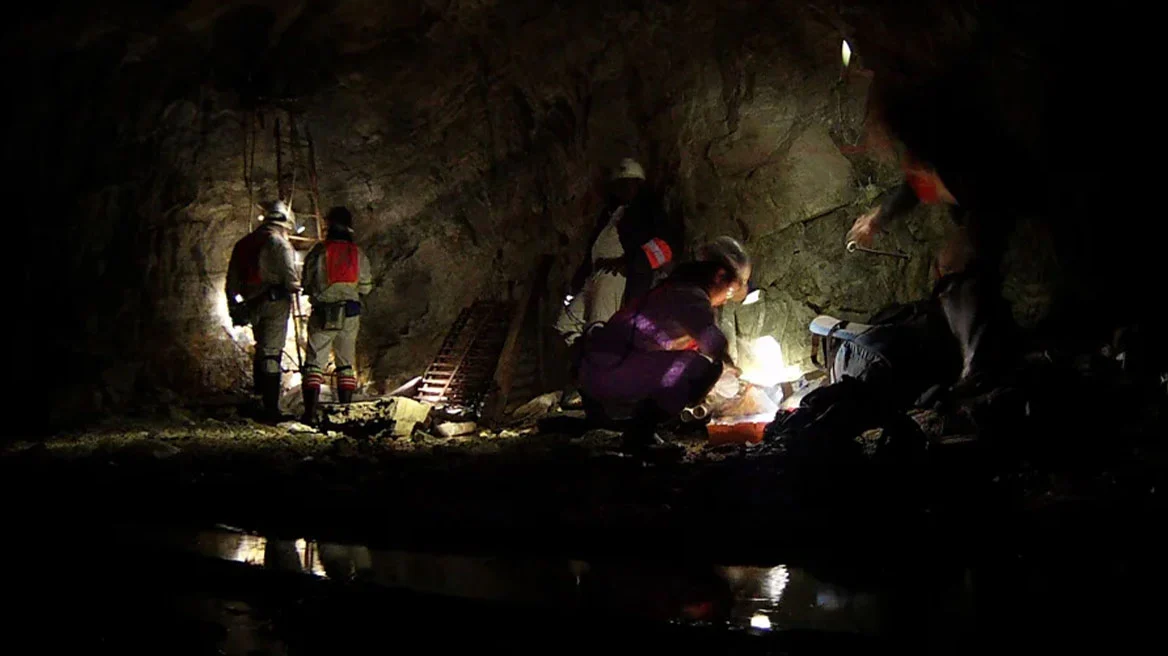
In 2008, Borgonie collaborated with other specialists in life in extreme environments to visit the Beatrix gold mine in South Africa. At a depth of 1.3 kilometres, the team gained access to openings that had been drilled into the walls of the mine so that water at a temperature of about 37 degrees Celsius that was inside the rock could be pumped and passed through filters designed to retain small forms of life, as Borgonie recalls. After filtering more than 6,000 litres of water, they collected a microscopic worm.
In two other mines in South Africa, they filtered even larger quantities of water and found a few different species of worms, along with some other invertebrates, fungi and several forms of life. “I never expected to find an entire zoo,” says Borgonie. Most of the species are also known from surface environments, but the worm from the Beatrix mine—whose tail had broken during the filtering process—belonged to a species that Borgonie did not recognise. In 2011, they announced that it was new to science and gave it the name Halicephalobus mephisto.
A broken tail is a death sentence for a nematode. Fortunately, however, this particular individual was female and parthenogenetic—meaning that it could reproduce on its own, without needing to mate—and laid eight eggs before it died. “We were very, very lucky” that it survived, says Borgonie. Since then he has not found another “devil’s worm”.
“It was the worm that survived. Like Harry Potter,” comments John Bracht, a genomics researcher at Washington University. Some of the worm’s offspring ended up in Bracht’s laboratory, where they are reared under conditions similar to those used for the relative of the “devil’s worm”, Caenorhabditis elegans, a nematode species that has been extensively studied and lives on rotting fruit. There are, however, some differences: mephisto does not swim in water, but attaches itself to the walls of a plastic tube, an ability that probably helps it to hook onto underground rocks.
Apparently they do not prefer the food of Caenorhabditis elegans—the bacterium E. coli—as the “devil’s worms” move towards other bacteria that end up in the Petri dishes and form colonies there.
The important thing is that mephisto does not do well at room temperature. At 20 degrees Celsius, its development slows down and it needs eight days to complete its life cycle. It prefers temperatures of 37 degrees—conditions that usually kill Caenorhabditis elegans, but in which mephisto reproduces without problem every two days.
Adaptation and resilience
It is difficult to study a species by examining the offspring of a single individual, especially when these are far from their natural environment for a long period of time. Nevertheless, Bracht has identified indications of the way in which the worm survives deep below the ground.
When he and his collaborators sequenced the DNA of mephisto in 2019, they discovered an unusually large number of genes that produce heat-shock proteins, molecules that protect other proteins from the damage caused by extreme temperatures.
More recently, in 2024, Bracht’s team carefully examined another molecule, called cytochrome c oxidase (complex IV), a key component of the process of consuming oxygen and utilising it to produce the energy required to sustain life.
Through a series of experiments, Bracht found that the cytochrome c oxidase of mephisto functions only at high temperatures. At room temperature, the molecule is deactivated, slowing down energy production—a fact that explains why the worms are so sluggish under these conditions.
Bracht hypothesises that this “deactivation” mechanism could constitute a survival tactic. “They ensure that they reproduce more in the best environment, which would be the hottest,” he says.
Bracht is currently studying whether the parthenogenetic reproduction strategy of the “devil’s worm” is also a survival tool. Because the “devil’s worms” may not frequently encounter other individuals of their species in the vast expanses of the underground world, this type of reproduction may sometimes be the only way to obtain offspring.
However, it is considered that this particular reproduction has a cost, as it does not create the healthy genetic diversity that results from the mixing of genetic material when males and females mate—which is why many scientists consider that species that reproduce parthenogenetically are doomed to extinction.
Perhaps there are male “devil’s worms” but they have not yet been discovered, Bracht conjectures. In any case, the worms show how adaptable nematodes are. “Wherever there is a source of food and the possibility for animals to reach there, nematodes will evolve to occupy that ecological niche,” he states.
Resilience in the depths of the Earth
It remains a mystery how these forms of life got there. Research by Borgonie and geobiologist Cara Magnabosco suggests that at least some nematodes move downwards from surface environments via water, perhaps with the help of the vibrations caused by seismic activity. Thus, some species survive, while others die. “There must be some connection and some mechanism of transporting them from the surface to this deep environment,” says Magnabosco.
Researchers estimate that the microbes of the deep biosphere constitute a significant part of life on the planet, representing 12% to 20% of the total biomass of Earth’s microbes. These underground bacteria—which have evolved complex strategies to extract carbon and energy from the dark world around them—probably play an important role in supporting more complex forms of life, such as nematodes.
They not only provide food, but may also produce small quantities of oxygen, which the nematodes living at great depths need, says Karen Lloyd. And, by influencing the levels of acidity inside deep water cavities, “they can contribute to the creation of a favourable environment, within which larger organisms can develop”. The invertebrates, in turn, provide food to the microbes: nitrogen when they defecate and carbon from their bodies when they die, adds Borgonie.
Such ecosystems of the underground world may have thrived for centuries. Research by Maggie Lau, from the Institute of Deep-Sea Science and Engineering of China, and her collaborators identified evidence showing that a species of bacterium living at great depths may have been in the Earth’s crust since the breakup of Pangaea, which began about 165 million years ago, at the time when dinosaurs were roaming the planet.
“As humans we believe that we rule the world, but we do not rule it”
The “devil’s worm” and its relatives in the depths of the Earth may rank among the most resilient forms of life on the planet. The study of the deep biosphere, say the experts, could help us better understand the conditions under which living organisms first appeared, and also contribute to research into extraterrestrial life.
And if an asteroid capable of eliminating life struck the Earth and sterilised its surface, life could re-emerge from the microorganisms that inhabit its bowels.
“As humans we believe that we rule the world, but we do not rule it,” says biochemist Esta van Heerden, chief environmental scientist at the South African bioremediation company iWater, who participated in the team that discovered the “devil’s worm”: “For me, it was an experience that filled me with humility. I understood that they are here, here for millions if not billions of years and that they will remain here for a very, very long time after we have disappeared.”
Ask me anything
Explore related questions




