





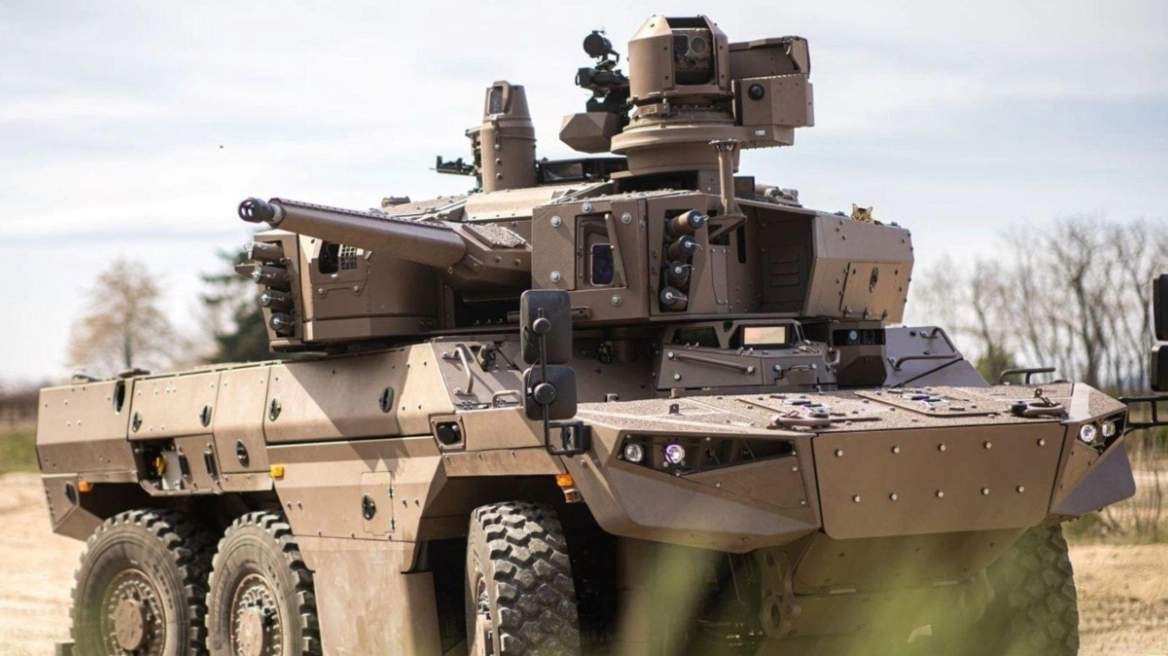
Cyprus is turning to European, Israeli, and American weapons systems, gradually reducing its dependence on the Russian defense industry. Purchases for air defense, helicopters, coastal missiles, armored vehicles, drones, and individual equipment, decisions to replace the Russian T-80U and T-80UK tanks, and the modernization of the naval base at Mari and the air base in Paphos together constitute the largest modernization program for the Cypriot National Guard in decades.
The National Guard is gradually transitioning from Russian-origin systems to Western and Israeli platforms, investing primarily in air defense, surveillance, counter-drone capabilities, coastal defense, and the rapid deployment of forces.
The new core of air defense
The most significant change concerns anti-aircraft defense. At the end of 2024, deliveries began of the Israeli BARAK MX system from Israel Aerospace Industries. The delivery of the Israeli system was confirmed by both Reuters and the Associated Press, although Nicosia has not released the technical and financial details of the agreement.
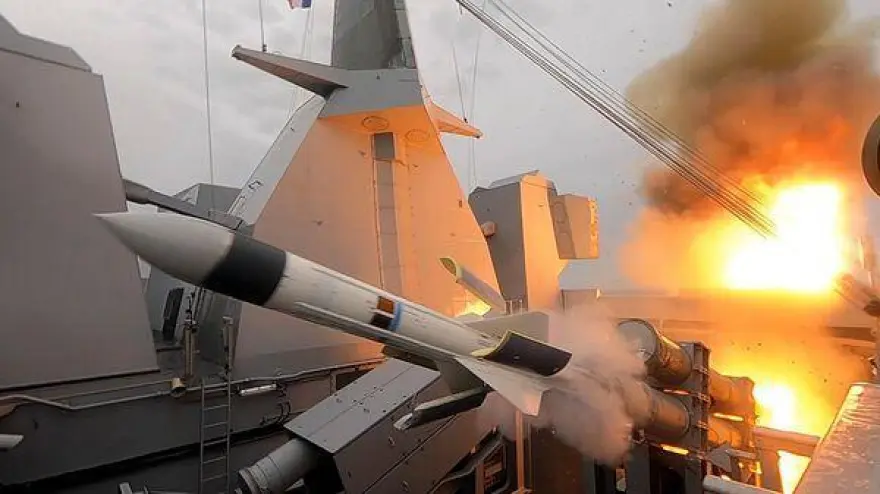
BARAK MX is a “family” of networked air-defense systems and can use different types of interceptor missiles, depending on the version and desired range. The manufacturer offers MRAD, LRAD, and ER missiles internationally, but based on the information available to us, it does not appear that Cyprus acquired all of the variants. The number of batteries, types and quantities of missiles, radar configuration, and cost have also not been announced, for obvious reasons.
The system’s operational significance lies in its ability to link radars, command centers, and launchers, creating a protective umbrella over the entirety of Cypriot airspace. It can serve as the new backbone of air defense, with the French Mistral systems providing medium- and short-range defense. The older Russian TOR-M1 and BUK-M1-2 systems remain operational for a transitional period, but in a supplementary role.
Cyprus has also ordered next-generation Mistral systems from the French company MBDA. These are Mistral 3 systems. The agreement was linked to the parallel purchase of Exocet surface-to-surface missiles, and its total value was reported to be approximately €240,000,000.
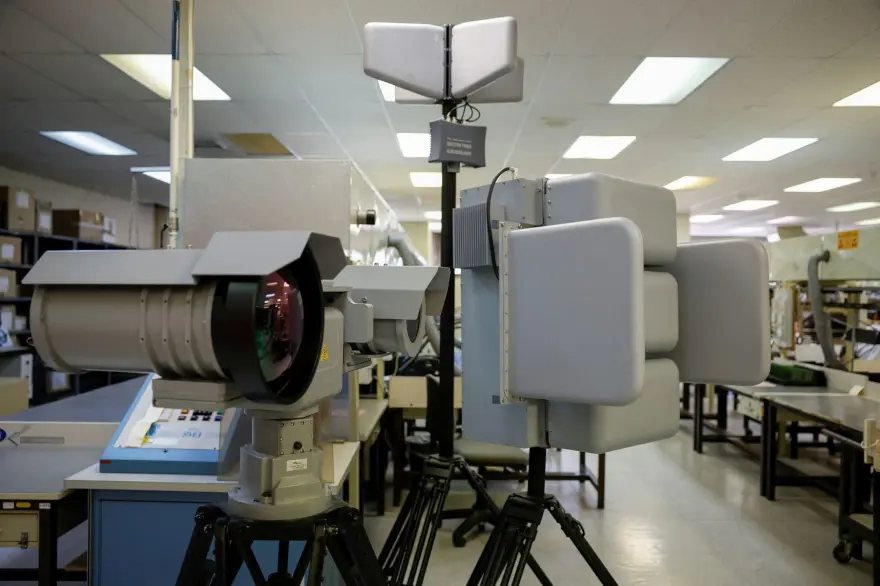
A more recent addition to anti-aircraft protection appears likely to be the Greek “Centaur” counter-drone system. According to reports, the National Guard is proceeding with the purchase of four systems from the Hellenic Aerospace Industry (EAB), financed through the European SAFE program.
The “Centaur” uses electronic-warfare capabilities to detect and “blind” hostile drones. Its operational use in the Red Sea by Greek frigates brought it to prominence as a tested solution against unmanned aircraft.
French H145M helicopters and the sale of the Mi-35s
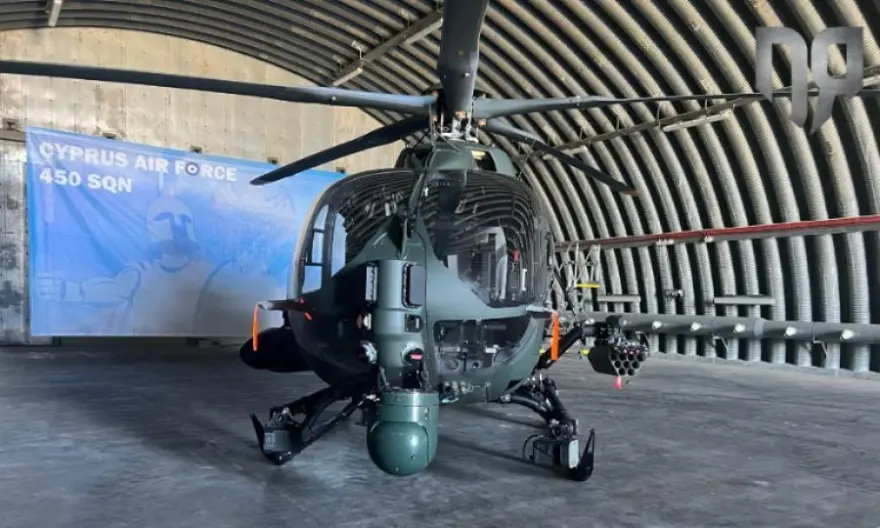
The most clearly confirmed procurement for the National Guard’s Air Force Command is the six French H145M helicopters from Airbus. The contract was announced in 2022 and includes an option for another six helicopters.
The H145Ms are light, twin-engine, multirole helicopters. They can be used for special-forces transport, reconnaissance, escort, armed support, search and rescue, and anti-tank missions. They feature the HForce system, which allows the integration of machine guns, cannons, guided and unguided rockets. The specific helicopters are planned to be equipped with Israeli Spike ER2 anti-tank missiles.
The cost of the Cypriot contract was reported at around €140,000,000, including the helicopters, weapons, training, equipment, and support.
The H145Ms fill the gap created by the sale of the Russian Mi-35Ps, which were purchased by Serbia, which is not participating in sanctions against Russia and can therefore maintain them. The two types of helicopters are not completely equivalent. The Mi-35 was a heavier attack helicopter, while the H145M is smaller and more agile, with significantly easier support through European spare parts.
It has not been announced whether the option for another six H145Ms will be exercised. There is a separate program to purchase five helicopters through the SAFE program, but the type and manufacturer are not known, and it cannot be considered certain that these will be additional Airbus H145Ms.
Maritime protection from land
Despite periodic reports about the purchase of a new offshore patrol vessel, Cyprus’s main investment in maritime defense so far concerns Exocet coastal missiles and the modernization of infrastructure and sensors.
Cyprus ordered a modern version of the Exocet MM40 Block 3 from MBDA. The Block 3C version features improved electronic systems and greater resistance to enemy countermeasures.
For an island state with a limited fleet, mobile Exocet batteries have particular deterrent value. They can be moved, concealed, and used to cover maritime areas without being exposed in the way a large surface vessel would be. Their effectiveness depends on the ability to detect and continuously track the target through radar, electro-optical systems, drones, and other surveillance assets.
The largest modern unit of the Cypriot Navy remains the P61 Andreas Ioannidis, an OPV 62-type vessel built by Israel Shipyards and commissioned in 2018. It is used for offshore patrols, surveillance of the Exclusive Economic Zone, search and rescue, and presence missions.
Despite earlier reports about a second similar vessel, there is no publicly confirmed contract for a new corvette, frigate, or second OPV 62. This, however, does not rule out the examination of options.
More than €200 million for the naval base
A central element of Cyprus’s naval planning is the modernization of the “Evangelos Florakis” base at Mari. The project is intended to improve berthing, refueling, technical-support, and accommodation capabilities for larger Cypriot or allied vessels, primarily Greek and French.
The projects involve European and American participation, as well as the construction of a new helipad with American funding from U.S. European Command. The total cost of the project at Mari is estimated to potentially exceed €200,000,000.
At the same time, projects are being planned at the “Andreas Papandreou” air base in Paphos, with published estimates putting the cost between €10,000,000 and €14,000,000. The modernization is intended to better support helicopters, transport aircraft, drones, and partner forces operating in the Eastern Mediterranean.
These bases are becoming more important because of Cyprus’s geographic location, civilian evacuation operations from the Middle East, and expanding military cooperation with the United States, France, Greece, and Israel. The modernization plans have been undertaken by the United States, while both the naval and air bases remain under the command of the Cypriot National Guard.
SAFE finances the major shift
Most of the new planning is now linked to the European SAFE program. Cyprus has submitted a plan worth approximately €1.2 billion and in June received the first installment, amounting to €177.2 million.
It should be clarified that SAFE is not a European grant. It provides low-interest, long-term loans for specific defense procurements, preferably involving European production and cooperation between member states.
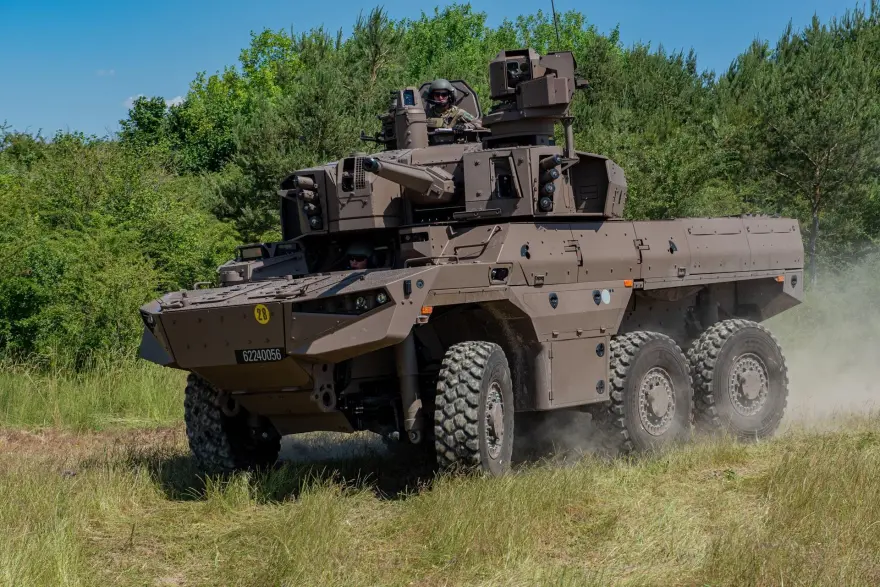
According to available information, the Cypriot plan includes helicopters, tanks, drones, anti-tank missiles, ammunition, and French armored vehicles.
Media reports indicate that the EBRC Jaguar may be selected to replace the French AMX-30B2s. Within the same framework, the acquisition of 80 Griffon and 100 Serval armored vehicles, the upgrade of approximately 80 VABs, and the purchase of Akeron MP anti-tank missiles are being considered.
The U.S. market is also open
The lifting of the embargo on the Republic of Cyprus’s access to U.S. defense equipment opens three main avenues: government-to-government sales through Foreign Military Sales, the provision of surplus equipment through Excess Defense Articles, and the use of training and support programs offered by the U.S. Department of Defense.
Nicosia has already expressed interest and submitted requests for specific surplus equipment. Reports indicate interest in wheeled armored vehicles, Humvees for special forces, night-vision goggles, two search-and-rescue helicopters with firefighting capability, and possibly two vessels for the Coast Guard.
The exact types of armored vehicles and helicopters, as well as the cost, have not been made public. U.S. surplus equipment can be provided free of charge or at a low price, but this does not mean zero expenditure. Cyprus would have to cover transportation, inspection, repair, refurbishment, training, spare parts, and future maintenance.
The U.S. procurement is expected to initially be used for wheeled vehicles, electro-optical equipment, personnel equipment, search and rescue, surveillance, and support.
Looking for a replacement for the T-80s
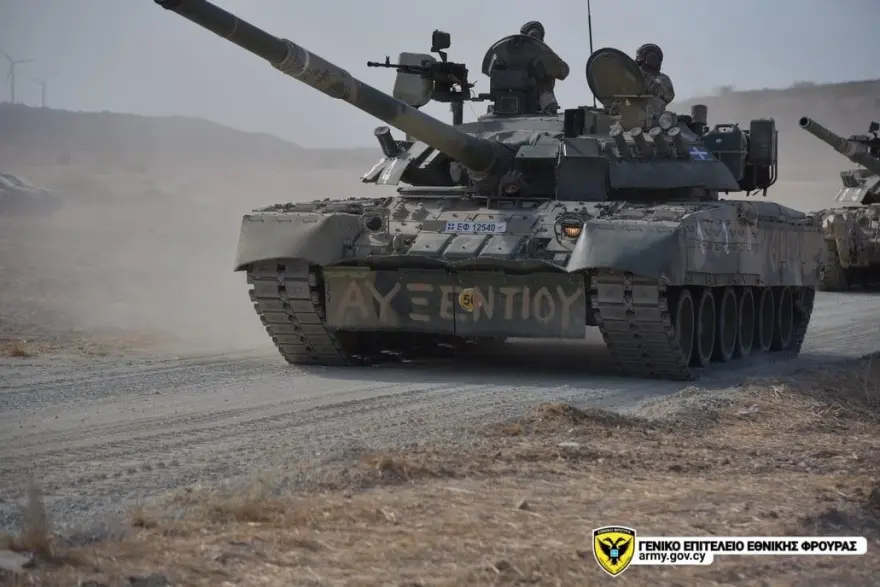
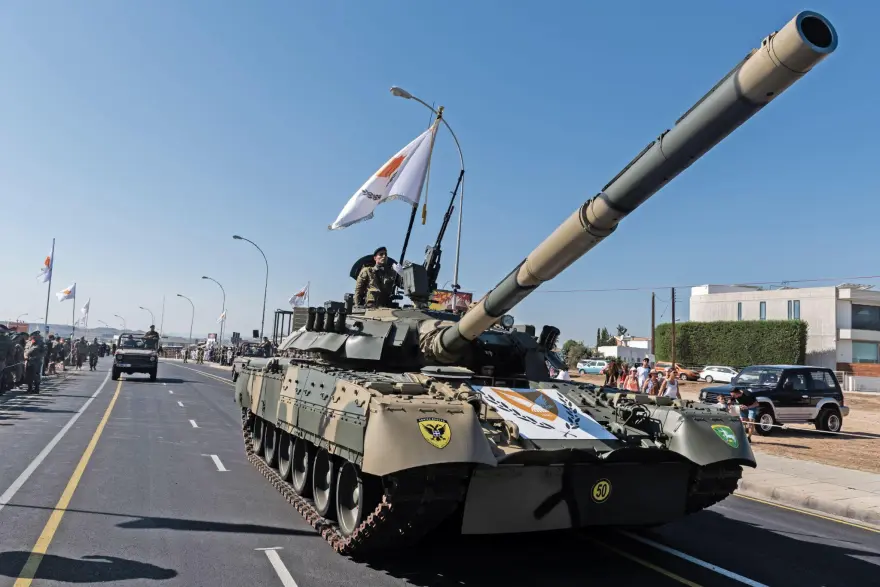
The Russian T-80U and T-80UK tanks continue to form the core of Cyprus’s tank force. Maintaining them over the long term is becoming more difficult because of limited access to Russian spare parts, sanctions, and the need to transition to equipment compatible with European armed forces.
Through the SAFE program, the purchase of a new European tank is being considered. Leopard 2 and Leclerc tanks have been mentioned at various times, without a final selection having been announced.
Earlier discussions about transferring the T-80s to Ukraine had been linked to the condition that they be immediately replaced with equivalent Western equipment, while there is also the legal issue of the End User Certificate. The tanks remain in Cyprus and are expected to be gradually withdrawn only once new tanks have been secured and entered into National Guard service.
TOR and BUK in reserve air defense
The situation is similar with the Russian TOR-M1 and BUK-M1-2 systems. The delivery of BARAK MX marks the beginning of the replacement of Russian air-defense assets, but the two systems have not been withdrawn.
The TOR-M1s can continue providing short-range protection to critical installations, while the BUK-M1-2s add another interception range. Continued use of the systems depends on the condition of the missiles, the availability of spare parts, and the ability to provide technical support, which is limited.
Access to new Russian missiles and electronics is now particularly problematic. The most likely development is that they will be retained for a transitional period, with their role gradually reduced as the number of available BARAK and Mistral units increases, followed by their eventual withdrawal, although there is currently no timetable. No decision has been announced to transfer the TOR or BUK systems to Ukraine or another country.
New individual weapons for special forces
The modernization is not limited to major weapons systems. In recent years, the National Guard has been carrying out targeted upgrades to individual weapons and load-bearing equipment, with priority given to special forces and high-readiness units.
The most recent purchase concerns the American Colt M5, in the CM-556-11H-M5A configuration with an 11.5-inch barrel. The weapons have been issued to the Underwater Demolition Unit (OYK) and the Police Special Anti-Terrorist Unit.
The equipment package reportedly includes 40 mm M203 grenade launchers, Trijicon MRO sights, INFORCE visible and infrared lights, Steiner DBAL-A3 laser designators, HUXWRX HX-QD suppressors, and helmet-mounted night-vision goggles.
Special forces have also been issued FN SCAR-L, SCAR-H TPR, and IWI Tavor X95 rifles, FN Minimi Mk2 Para machine guns, Accuracy International AXMC and AX50 precision rifles, and Milkor MGL Mk1S multiple grenade launchers.
The presence of different types reflects small and specialized procurements for commandos, snipers, support teams, and operations aboard ships or at coastal installations. The main weapon for National Guard units remains the G3 A3/A4.
No program has been announced for its wholesale replacement or for a general transition from the 7.62 mm to the 5.56 mm caliber. Such a decision would require the purchase of tens of thousands of weapons, new stocks of ammunition and magazines, spare parts, gunsmith training, and different organization for the reserve force.
Helmets, body armor, night vision, and communications
The biggest change for National Guard personnel is in their equipment and electro-optical systems.
Elite units have been equipped with modern body armor, new helmets with night-vision mounts, ballistic eyewear, combat load-bearing equipment, gloves, modern slings, thermal devices, and secure communications equipment. THEON ARGUS and PANOPTES night-vision systems have also been purchased, along with thermal and electro-optical equipment for reconnaissance and targeting.
Active hearing protection, individual radios, and infrared designators allow a team to move and fight at night with better coordination. In many cases, these capabilities have a greater impact on operational performance than replacing an old weapon with a newer one.
The picture primarily concerns special forces and high-readiness units.
What can Cyprus manufacture?
Cyprus does not have the industrial infrastructure to manufacture tanks, fighter aircraft, major missile systems, or warships. It does, however, have growing expertise in high-value-added subsystems.
Cypriot companies operate in electronic warfare, signals collection and analysis, sensors, secure communications, cyber defense, command software, artificial intelligence, and unmanned systems.
SignalGeneriX has developed the RF Hunter and participates in European electronic-warfare and radio-frequency collection trials. The COMMANDS program brings together Cypriot and Greek companies, including Intracom Defense, IKNOWHOW, Eight Bells, SKYLD, and the Vetronics Research Centre.
Swarmly has presented the vertical-takeoff UAVs Poseidon H10 and H12, as well as the B5 Hydra unmanned surface vessel. The systems can be used for surveillance and reconnaissance and, depending on their configuration, armed missions.
Among the projects selected under the European Defence Fund in 2025, ten Cypriot companies participated in 16 of the 57 selected projects. The total budgets of these projects amount to €280.8 million. The figure concerns the international consortia as a whole and does not represent funding that goes entirely to Cyprus.
Cooperation with Greece, the EU, and Israel
Cooperation with Greece includes operational planning, joint exercises, participation in European research programs, discussions concerning Leopard 1A5 tanks, and the reported purchase of Centaur systems from the Hellenic Aerospace Industry.
Through the EU, Cyprus is making use of two different instruments: SAFE for financing procurements and the European Defence Fund for research and development and the participation of Cypriot companies in multinational programs.
Relations with Israel mainly concern procurement, technical integration, training, and joint exercises. BARAK MX, the OPV 62, and certain types of individual weapons are of Israeli origin, while the trilateral cooperation between Cyprus, Greece, and Israel has expanded through more air and naval exercises and the exchange of expertise.
The transition will take years
Cyprus has already made its first major moves. It has received the H145Ms, begun integrating BARAK MX, purchased Mistral and Exocet systems, modernized its bases, and gained access to the U.S. market. Through the SAFE program, it is preparing its next major procurements, involving tanks, armored vehicles, helicopters, drones, ammunition, and counter-drone systems.
However, major gaps remain, as the tank that will replace the Russian T-80s has not yet been definitively selected, and the purchase of a new offshore warship for the Navy has not been finalized. There is also no timetable for the withdrawal of the Russian TOR and BUK systems. At the individual-equipment level, the special forces have made considerable progress, but a comparable upgrade has not yet been observed across the National Guard’s conscripts and reservists as a whole.
Ask me anything
Explore related questions




