





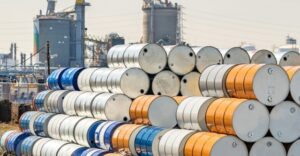
Oil prices closed more than 2.5% higher on Monday as renewed military attacks between the US and Iran brought concerns about potential disruptions to global oil supplies back to the forefront, as the conflict enters its sixth month.
Brent futures rose $2.39, or 2.71%, to $90.49 a barrel, while US WTI crude gained $2.36, or 2.83%, to $85.76 a barrel.
During the session, Brent climbed as high as $91.52 a barrel, its highest level since August 25.
The latest price surge followed an exchange of military strikes between Washington and Tehran. US President Donald Trump was reportedly preparing a tough response after Iranian missiles were launched at two US air bases in Jordan. Tehran’s attack came in retaliation for a US strike on Iran’s Larak Island.
“We will hit them hard. There will be a response,” Trump was reportedly quoted as saying by Fox News.
Meanwhile, crude inventories in the US Strategic Petroleum Reserve (SPR) fell by around 3.1 million barrels last week to 286.6 million barrels.
Market Looks for Signs of De-escalation
Investors are now focused on whether the latest military tensions can ease or whether the recent attacks signal the beginning of a new cycle of conflict.
On Sunday, Trump said in a social media post that Iran’s energy hub on Kharg Island was “being blown to pieces,” although there was no evidence confirming that the island was under attack. The post was accompanied by an AI-generated video and contained no further details.
Iran denied that Kharg was under attack, saying oil operations on the island were continuing normally.
On Monday, US Vice President J.D. Vance said that Trump was sending a message to Tehran through the post.
Strait of Hormuz in Focus
The situation in the Strait of Hormuz remains a critical factor for the oil market, as mediators’ efforts to reach an agreement that would allow the strait to reopen have stalled.
Before the war began in late February, roughly one-fifth of global oil supplies passed through the Strait of Hormuz, making the area critically important to international energy markets.
Shipping data showed that the number of visible cargo vessels crossing the strait over the weekend fell to five per day.
Analysts at Gelber & Associates noted that some volumes of Gulf oil are still passing through the strait, limiting the extent of the price increase. However, the first direct military exchange of fire in a month forced traders to once again price in a significant short-term supply risk premium.
Bessent: Sanctions Aim to Bring Iran Back to Negotiations
US Treasury Secretary Scott Bessent told CNBC on Monday that the goal of US sanctions against Iran is “to create the conditions so that they will want to come back to the table” for negotiations.
Concerns about supply could nevertheless be eased by the prospect of additional oil supplies from Venezuela.
Trump said Sunday that oil secured under a deal with Venezuela would be used to replenish the US Strategic Petroleum Reserve, which is close to its lowest level in 44 years.
Meanwhile, Chevron, GE Vernova, ONGC, Eni and GeoPark are moving toward signing final agreements in Venezuela following months of negotiations to finalize energy projects in the OPEC member state.
Ask me anything
Explore related questions




