





The two doctors, Ilias Theodoropoulos, and his wife, who run the clinic have since been released after giving statements to police, with the preliminary examination continuing as prosecutors await forensic findings on the circumstances of singer Giorgos Mazonakis’ death yesterday afternoon. The internal medicine specialist who owns the clinic, and his wife, also a doctor, left Kypseli Police Station in Athens shortly before midnight once their statements had been taken as part of the ongoing investigation.
According to the doctors’ lawyer, Nikos Agapinos, the pair were released on a temporary basis while authorities continue gathering evidence, including staff testimony and an on-site inspection of the clinic. Agapinos stressed that the forensic examination would be the decisive factor in the case, since it must establish whether there is any connection between Mazonakis’s death and the medical procedure he had undergone.
Giorgos Mazonakis had gone to the Stem Cell unit in Kolonaki on Wednesday afternoon (9 September) for a scheduled plasmapheresis treatment. He’d had an initial consultation the day before, with the procedure itself scheduled for the following day. During preparations for the treatment, after an intravenous cannula had been inserted, the singer, according to clinic staff, experienced severe chest pain and then suffered a cardiac arrest. Clinic staff immediately began CPR, which was continued by paramedics from EKAV, Greece’s National Centre for Emergency Care, and later by doctors at Elpis Hospital, but he could not be revived.
Following the incident, attention has turned both to the treatment itself that he had been due to undergo, and to the legal basis on which it could be carried out at the clinic.
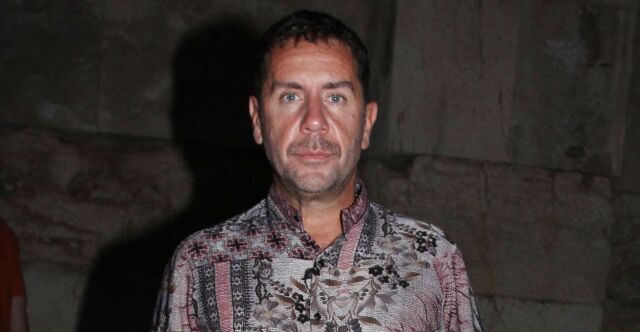
Doctor: “no connection between the procedure and the incident”
Prosecutors have reportedly asked for further evidence to be gathered, both on the circumstances of the singer’s death and the plasmapheresis procedure he had undergone. Investigators are examining whether the procedure was carried out within the required legal framework, since under Greek regulations plasmapheresis must be performed by a haematologist in a public hospital rather than a private practice.
The clinic owner’s wife, a gynaecologist, is reported to have described to investigators the procedure followed during Mazonakis’s treatment. For his part, the clinic owner has reportedly denied any involvement in the incident, maintaining that his wife had full responsibility for running the clinic, carried out the treatments and monitored patients.
Their lawyer said the forensic report was what mattered, pointing to the presumption of innocence his clients were entitled to. “The question is whether there is any connection between the well-known artist’s death and whatever medical procedure took place,” he said, adding that in his clients’ view there was no such connection and therefore no criminal liability. Asked whether civil liability might apply, he said that would require medical negligence, which he rejected. He said the equipment had been legally registered with the Athens Medical Association (ISA) and that nothing about the clinic was unlawful. According to Agapinos, the couple share the same professional premises, and the woman who carries out the treatments is an internal medicine specialist.
“Equipment has been legally registered”
Earlier, arriving at the Security Division offices, Agapinos told reporters outside Kypseli Police Station: “Ilias Theodoropoulos and his wife are personal friends of mine. The singer was his wife’s patient. They are giving statements and a forensic examination will need to take place. I think this was a coincidental event that remains to be proven. This equipment has been registered with the medical association by my law firm. We’re talking about a completely legal clinic with properly registered equipment.”
Questions over the clinic’s licence
Photographs from inside the Stem Cell clinic, published by protothema.gr, appear to confirm that the premises operate as a pathology practice more than a clinic. That is the same point raised earlier by health minister Adonis Georgiadis, who described it in a post on X as an “alleged clinic” holding a licence only for a simple pathology practice, at which, he said, a procedure such as plasmapheresis is not permitted.

The interior photographs show, among other things, religious icons of the Virgin Mary and various saints, a suit of samurai armour, a sword resembling a Japanese katana displayed in a glass case, a bicycle, red gloves and several paintings.

Particular attention has focused on the clinic’s specialism, which its website describes as sitting “at the intersection of medical science and new regenerative medicine technologies.” It is headed by Theodoropoulos, a doctor specialising in internal medicine with a research background in haematology, who, according to the clinic’s website, “has dedicated his career to developing an integrated approach to health, combining scientific knowledge with modern therapeutic practices.”
Georgiadis also revealed that the president of the ISA had already ordered an inspection into the exact circumstances of Mazonakis’s cardiac arrest. His statement, in full, read: “From the initial information, Mazonakis suffered a cardiac arrest at what is alleged to be a clinic, during what is described as a plasmapheresis procedure. Naturally, the exact causes of his death will be established by the forensic investigation, along with whether there is any liability, and to whom it belongs. However, we must examine the exact circumstances of the incident.
In fact, the licence held there was for a simple pathology practice, and such a procedure cannot be carried out at a simple practice. I have asked the president of ISA to carry out the required inspection immediately, since responsibility for inspecting medical practices lies with the local Medical Associations. That process has already begun. In any case, I urge patients to be cautious about what they read online, and not to put their health at risk in dubious circumstances. I offer my sincere condolences to his family and his thousands of fans.”
The president of the ISA, Giorgos Patoulis, said: “As the Athens Medical Association, we have a specific institutional responsibility to ensure that every medical procedure takes place in a legal, properly licensed setting.” Patoulis added that he had given immediate instructions, and that an emergency inspection by an ISA team was already under way at the site where the incident occurred.
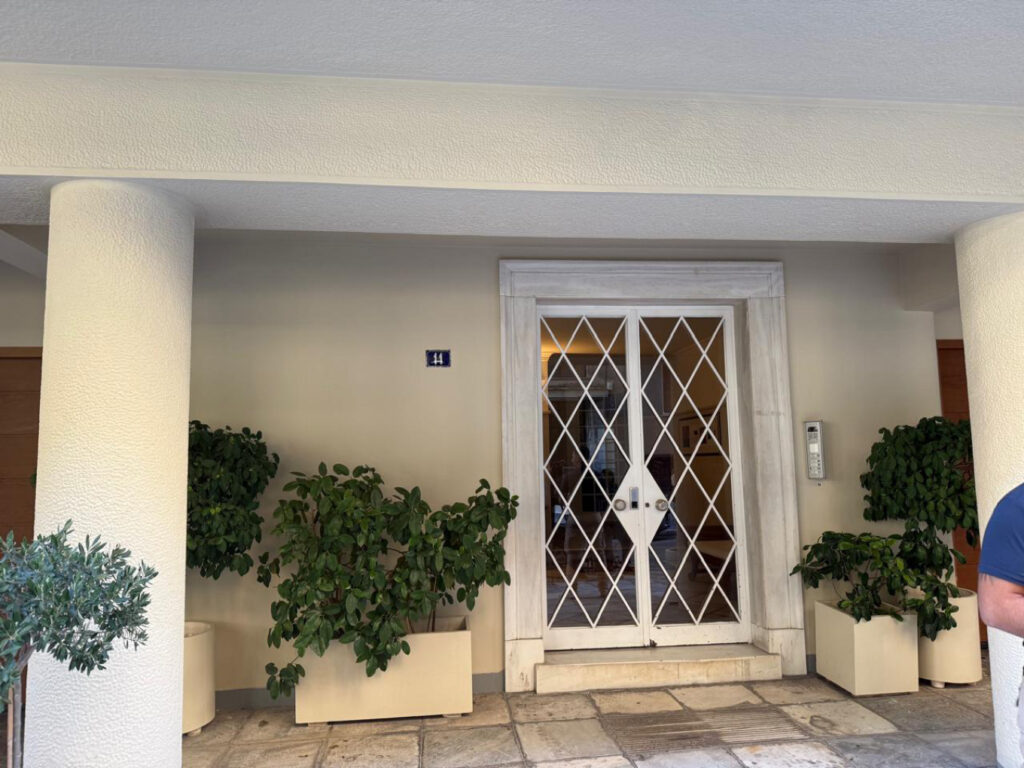
Athens Security Division takes over the investigation
The investigation and compilation of the case file over Mazonakis’s death have been assigned to the Athens Security Division, the branch of the Hellenic Police that handles serious crime. Greece’s Organised Crime Prosecution Unit, often described as the country’s equivalent of the FBI, is expected to assist in establishing whether any criminal offences were committed. The first person called in to give a statement was the doctor who owns the clinic where the singer suffered the cardiac arrest.
As part of the investigation, statements are expected from everyone who had contact with the singer, both before he went to the clinic and once he was there, as well as afterwards at Elpis Hospital. The case file will include records of the medical procedures carried out, along with the forensic report due once the post-mortem examination has been completed.
What exactly is plasmapheresis
Therapeutic plasmapheresis is a recognised medical procedure that has been used for specific conditions for years. It involves passing the patient’s blood through a specialised machine that separates the plasma from the other components of the blood.
Part of the plasma is then removed, and the blood cells are returned to the body along with a specialised replacement fluid. The aim of the procedure is to remove substances from the bloodstream that, in certain diseases, place a strain on the body or contribute to the progression of the disease.
Plasmapheresis is used mainly in selected haematological, neurological, nephrological and autoimmune conditions. In some cases, it can be applied when pathological antibodies or other circulating substances need to be reduced quickly. The treatment is legal and features in official therapeutic protocols.
That does not mean, however, that it can be carried out in any setting or at any medical practice.
Plasmapheresis is not a simple intravenous treatment. It requires specialised equipment, safe vascular access, continuous monitoring of the patient and staff trained specifically in the procedure.
Side effects or complications can occur during treatment, such as a drop in blood pressure, disturbances in calcium levels, allergic reactions or problems linked to vascular access.
For this reason, the capacity for immediate medical intervention is required in the event of an acute complication.
What academics from the National and Kapodistrian University of Athens say
Therapeutic plasma exchange (TPE) is a removal procedure, meaning a technique in which the patient’s blood passes through a specialised device that separates out and removes the plasma, while the cellular components (red cells, white cells, platelets) are returned to the body.
The plasma removed is replaced with a substitution fluid, usually 5% albumin and/or normal saline, and in specific cases, fresh frozen plasma.
Doctors at the Therapeutic Clinic at Alexandra Hospital, part of the Medical School of the National and Kapodistrian University of Athens, Konstantinos Giannakas, a haematologist, and Thanos Dimopoulos, professor of therapeutics, oncology and haematology, director of the Therapeutic Clinic at Alexandra Hospital and a former rector of the university, say the aim is twofold: removing pathogenic factors circulating in the plasma (such as autoantibodies, immune complexes, cryoglobulins, pathological proteins, toxins and lipids), and, in certain diseases, replenishing factors through the replacement fluid.
Key questions
The crucial question still to be answered is exactly what happened between the moment the singer walked through the clinic’s door and the onset of the cardiac arrest that led to the call to EKAV. At this stage, however, no medical or forensic evidence has been made public establishing a causal link between the cardiac arrest and the treatment that was due to take place, the insertion of the cannula, or any other medical procedure.
The sequence of events alone cannot be taken as proof of a causal connection. Answers are expected to come from medical records, a precise account of the incident, EKAV’s own data and the findings of the forensic investigation. It is also crucial to establish exactly why Mazonakis had gone to this particular clinic, what procedure had been scheduled, whether it had begun, and what his clinical condition was before the cardiac arrest.

Medical body renews warnings over “regenerative” treatments
Mazonakis’s death has reignited debate around so-called “regenerative” and “anti-ageing” treatments, a field that in recent years has generated high expectations alongside considerable scientific concern.
The Hellenic Society of Gene Therapy and Regenerative Medicine has issued a statement making clear that it is not prejudging the causes of death, nor linking the incident to any specific treatment. It has, however, again raised the need for rigorous scientific evidence, oversight and transparency in every new therapeutic approach.
Its statement read: “In light of the extremely sad event of Giorgos Mazonakis’s death, and regardless of the exact causes and whether or not they are related to any therapeutic procedure, a particularly serious issue resurfaces: the application and promotion of therapeutic approaches without sufficient scientific documentation for the specific indication.
“The Hellenic Society of Gene Therapy and Regenerative Medicine has repeatedly addressed this issue, both through the conference ‘Truths and Myths about Cell Therapies’, held on 27 April 2026 with the aim of giving the public reliable information, and through formal written submissions to the relevant authorities regarding similar practices.
“It is particularly regrettable that interventions described using terms such as ‘regenerative’ or ‘anti-ageing’ continue to be promoted to the public without it always being clear whether they are licensed, what the scientific evidence behind them is, what their approved indication is, and what the safety data show. “Protecting and informing patients and the public requires responsibility, transparency and evidence-based medicine.”
Ask me anything
Explore related questions




