





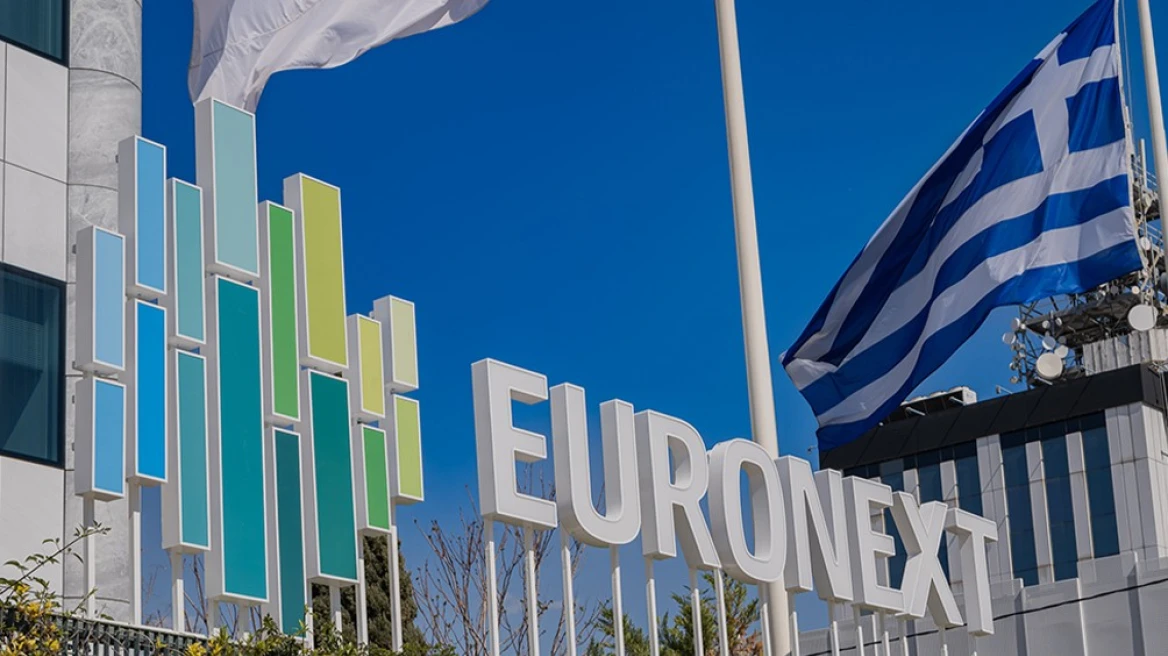
Friday, September 18 is expected to be one of the most important days in the history of the Athens Stock Exchange, as the major rebalancing of the FTSE Russell and Stoxx indices will take place at the close of trading, as part of the official transition to developed markets.
The index restructuring is the final major step before the beginning of a new era for the Athens Stock Exchange from September 21, when the Greek market will leave the advanced emerging-market category and join the developed-market indices of the international index providers.
The increased investor interest is expected to lead to an unprecedented increase in trading turnover at Friday’s close, as passive funds that track the indices will have to adjust their positions to the new weightings. For this reason, the Athens Stock Exchange decided to extend the trading process by 10 minutes, with the close taking place at 17:30 instead of 17:20.
JPMorgan Sees Flows of Up to $2.8 Billion
The market’s major bet is the new capital inflows that will follow the change in classification. According to JPMorgan estimates, total inflows associated with the rebalancing of European indices could reach as much as $2.8 billion, with the four systemic banks absorbing the largest share of the capital.
In particular, the banks are expected to be at the center of international portfolio allocations, as they have high weightings in the new indices. Significant flows are also expected into other large-cap stocks that meet the criteria for inclusion in the international indices.
The first estimates following the upgrade by FTSE Russell point to passive inflows of approximately $400 million, while the market expects additional capital from the transition to the Stoxx indices.
Which Stocks Are at the Center of Attention
The attention of foreign funds is focused mainly on companies with the largest market capitalizations and liquidity. The banks are the main pillar of the inflows, with National Bank of Greece, Eurobank, Alpha Bank and Piraeus at the forefront of the expected allocations.
At the same time, companies such as Coca-Cola HBC, OTE, PPC, Motor Oil, Metlen, GEK TERNA, Titan and Jumbo are also expected to play an important role, as they possess characteristics that make them attractive to international portfolios.
Entry into developed-market indices is not only about Friday’s immediate flows, but also creates a new investment environment for the Greek market, as it expands the “pool” of potential investors who can invest in the Athens Stock Exchange.
What the Transition to Developed Markets Means for Greece
The upgrade of the Athens Stock Exchange to developed markets by international index providers FTSE Russell and Stoxx is not merely a change of “label.” It represents a significant institutional change that affects Greece’s position on the global investment map, the market’s liquidity and Greek companies’ access to international capital.
The first and most immediate effect concerns capital inflows from international funds. Many large investment portfolios, particularly passive funds that track indices, have restrictions regarding the markets in which they can invest.
With Greece’s inclusion in developed-market indices, access to a larger investment base is “opened up,” as international portfolios that until now did not have the ability or mandate to invest in the Greek market can now increase their exposure.
The return to developed markets also carries strong symbolic significance. Greece was downgraded to the emerging-market category in 2013 and remained there for more than 13 years.
In summary, the upgrade transforms the Athens Stock Exchange from a regional market primarily monitored by specialized funds into a market that can seek a place in the portfolios of larger international investors. The major challenge now is for Greece to capitalize on this new access to capital through more investment, greater outward orientation and stronger listed companies.
The Beginning, Not the End, of the Upgrade
Analysts point out that the September 18 rebalancing represents more the beginning of a new period than the completion of the process. Greece will now have to maintain the characteristics required by the international indices, while the market is also awaiting the next steps, such as a possible future assessment by MSCI.
The upgrade by Stoxx brings changes to European indices, with JPMorgan estimating that the related rebalancings could lead to significant inflows into specific Greek stocks. Even larger inflows are expected ahead of MSCI’s transition to developed markets, which is expected by May 2027.
For Athens, Friday, September 18 is not simply a day of high turnover. It is the trading session that will mark the market’s final major encounter as an “emerging” market and open the way to the new era of the Greek stock market in the developed markets.
Ask me anything
Explore related questions




