





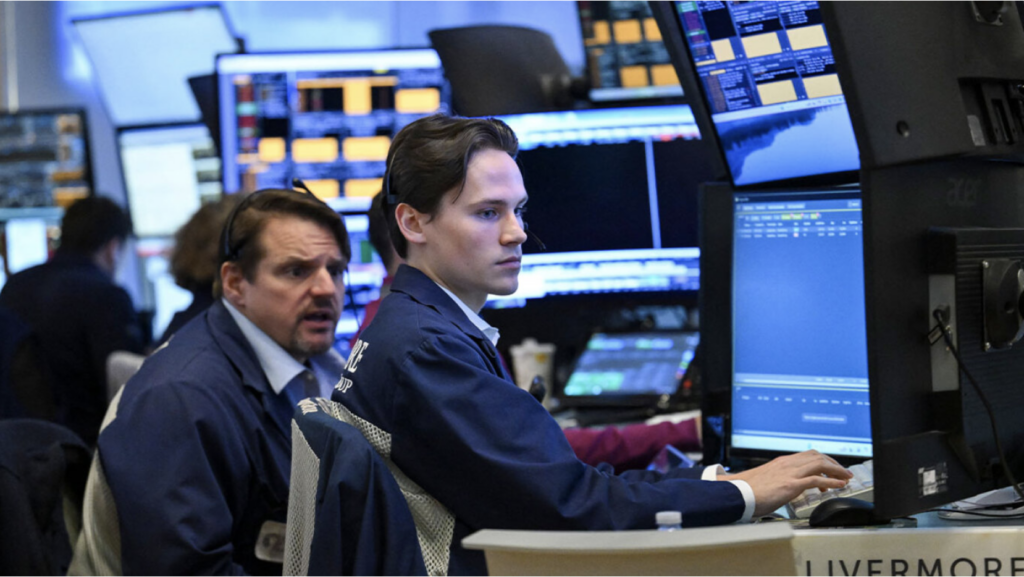
Wall Street suffered a broad sell-off on Thursday, following the strong gains recorded the previous day, although the heaviest selling was concentrated in the technology sector, semiconductor companies and businesses involved in data centres. The sharp reversal suggests markets are trying to adjust to the new political landscape following the Democrats’ sweeping victory in the US midterm elections.
On the trading floor, the Dow Jones was down 1,825 points, or 3.42%, at 51,530, wiping out the previous day’s gains, while the S&P 500 fell sharply by 4.15% to 7,370. The Nasdaq suffered even heavier losses, sliding into correction territory with a fall of 5.21% to 24,396, having earlier been down almost 6%. The Wall Street Journal reported that $2.5 trillion had been wiped off the technology index.
On Wednesday, the Dow Jones had surged by more than 1,500 points, recording its best daily performance since April 2025, while the S&P 500 and Nasdaq had both gained more than 1%. For the S&P 500, it was the biggest percentage daily rise in three months.
The Democrats’ victory in both the House of Representatives and the Senate limits President Donald Trump’s ability to push through major legislative initiatives, with investors expecting the new political balance to lead to more restrained fiscal policy.
The prospect of less fiscal expansion, combined with the possibility of lower energy prices, is strengthening expectations of easing borrowing costs and creating more favourable conditions for businesses directly affected by the performance of the economy.
The technology sector was among the worst performers, amid concerns about potential policy changes in Congress, given the views of many Democrats in favour of stronger consumer safeguards and tighter oversight of artificial intelligence development.
The Philadelphia Semiconductor Index, which tracks major chipmakers, fell by around 8.5%, extending its losses to 35% from the record high it reached in June. Shares in Qualcomm Inc. and Arm Holdings Plc came under heavy pressure after the two companies issued forecasts that disappointed investors.
Nvidia fell by around 6%, Broadcom lost almost 6%, while Marvell Technology dropped 11% and Intel 7%. Oracle was also under pressure, with its shares down more than 5%.
Qualcomm suffered an even steeper decline, falling by around 11%, despite reporting results that exceeded expectations.
Banks also gradually moved into negative territory, with Goldman Sachs, JPMorgan Chase and American Express giving up their initial gains.
The negative reaction was linked to weaker forecasts for smartphone processor sales in the fourth quarter, as demand remains subdued and revenue related to Apple is declining.
The sell-off spread to companies developing or operating artificial intelligence infrastructure, as the Democrats’ electoral gains in states with a significant data centre presence fuelled concerns about further restrictions on expansion. Data centre companies including REN, Hut 8, Applied Digital, CoreWeave and Nebius Group recorded significant losses.
Companies supplying energy and equipment to data centres, such as GE Vernova and Constellation Energy, also fell.
The developments reflect growing concern that the rapid expansion of AI infrastructure could face obstacles from local communities and regulators, affecting demand for semiconductors and related technology equipment.
The pressure was so intense that even the largest technology companies, which had started the session in positive territory, gradually slipped into the red. These included Amazon, Meta Platforms and Alphabet.
Particular attention should also be paid to Elon Musk’s stocks, which continued their sharp downward trajectory for a second consecutive day, amid the billionaire’s association with the defeated Republicans. Musk had spent almost $500 million supporting Republican candidates, including efforts to retain control in Texas, where his business empire is headquartered.
Tesla shares fell by more than 9%, while SpaceX dropped by around 8%.
Meanwhile, attention is also turning to US economic data, which are providing fresh indications of the economy’s resilience and the Federal Reserve’s next decisions. Labour productivity in the non-farm business sector rose by 3.6% in the third quarter, beating forecasts of 2.9%, while unit labour costs fell by 0.7%.
At the same time, the share of the value produced that goes to workers in the form of compensation fell to 53%, its lowest level since records began in 1947.
Weekly applications for unemployment benefits also painted a positive picture, falling to 189,000 in the week ending 31 October, against forecasts of 197,000. This represented a decline of 6,000 claims from the previous week, matching the lowest level recorded since September 1969. Continuing claims, by contrast, rose by 23,000 to 1.72 million.
Investors are now awaiting the official October employment report, due to be published on Friday, as they look for further indications of the direction of the US economy.
Money markets are pricing in an approximately 80% probability of a 25-basis-point Fed rate rise in December, with a further increase expected in 2027.
In commodities markets, gold has climbed above $4,100 an ounce, extending the rally that followed the US elections, after recording its biggest daily gain since August on Wednesday.
Falling bond yields are supporting the precious metal by reducing the opportunity cost of holding it, while a weaker dollar makes it cheaper for investors using other currencies.
Oil prices, meanwhile, are recovering after the sharp decline in the previous session. US West Texas Intermediate (WTI) crude is up more than 2%, trading above $90 a barrel, while Brent crude has gained around 3%, rising above $97.
On Wednesday, Brent fell by more than 8%, as investors judged that the new balance of power in Congress could increase pressure on Trump to end the war in Iran.
Oil price movements remain a critical factor for markets, as concerns about supply disruptions in the Middle East have triggered sharp price swings and added to inflationary pressures.
Among individual companies reporting results, Fair Isaac fell by 10% after its fourth-quarter earnings failed to meet analysts’ expectations. Snap dropped by 10.2%, following third-quarter revenue that came in below forecasts.
The overall picture on Wall Street reflects a clear shift in investment priorities. Banks and cyclical stocks are gaining ground, while semiconductor companies and data centres remain under pressure as the market seeks to assess the implications of the new political reality in the United States.
Ask me anything
Explore related questions