





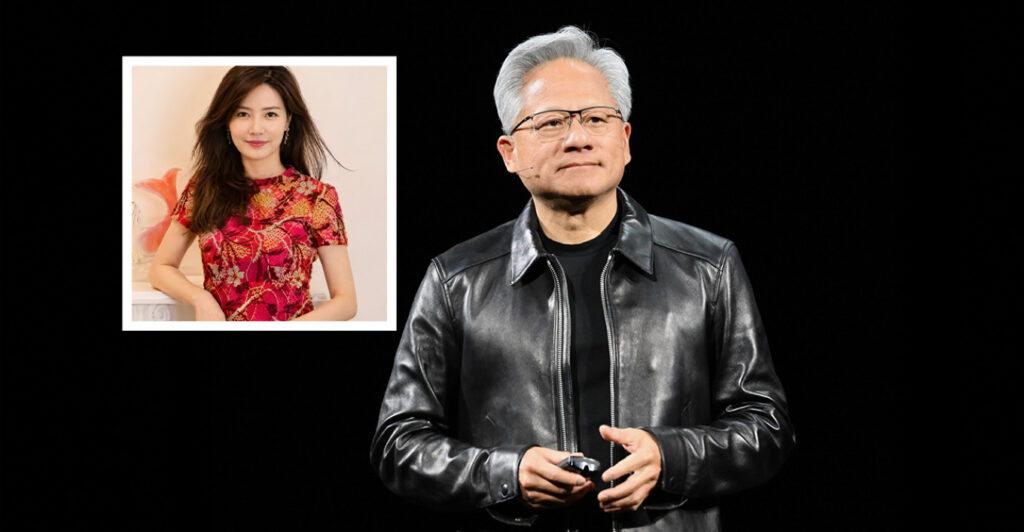
Nvidia CEO Jensen Huang has admitted to an extramarital affair amid allegations of Chinese espionage, prompting an independent investigation into whether foreign intelligence operatives targeted him or gained access to sensitive company information.
The 63-year-old technology billionaire has apologised to his wife and children, insisting there is “no excuse” for his infidelity, as questions mount over his relationship with a businesswoman suspected of working for Chinese intelligence.
Nvidia’s board of directors is launching an independent investigation into whether its chief executive, Jensen Huang, was targeted by a foreign intelligence operation following his admission of an extramarital affair and reports linking him to a Chinese businesswoman suspected of espionage.
The investigation follows revelations concerning Alice Huang, a former executive at Singapore-based Megaspeed International, whom US authorities reportedly suspect of having been recruited by a Chinese intelligence agency.
In a statement issued on Sunday, Nvidia’s board said it would establish a committee of independent directors, supported by external legal advisers, to oversee the investigation.
The inquiry will examine reports that the company’s chief executive had been the “target of a foreign intelligence effort”.
“While the Board has no reason to believe that either national security or NVIDIA secrets were compromised, the Board’s inquiry will examine all available information,” the company said.
“There is no excuse for what I did”
In a message to Nvidia employees, Huang acknowledged his infidelity and expressed deep regret over the pain he had caused his family.
“I was unfaithful to my wife. My actions hurt her and our children. There is no excuse for what I did. I am deeply sorry,” he wrote.
Huang, 63, has pledged to cooperate fully with the investigation and will remain chief executive of the semiconductor giant while the inquiry is under way.
The admission represents a remarkable development for one of the technology industry’s most influential executives.
According to Bloomberg, it follows a series of reports alleging that Huang had been targeted by Alice Huang, a former Megaspeed International executive whom US authorities suspect of having been recruited by a Chinese intelligence service.
Before acknowledging his infidelity, the Nvidia chief executive had described his dealings with Alice Huang as a “normal relationship”.
The investigation will seek to establish whether those interactions exposed Huang to foreign intelligence operations or placed sensitive corporate information at risk.
Nvidia faces a leadership dilemma with no obvious successor
The controversy comes at a particularly sensitive moment for Nvidia, whose extraordinary growth has made it one of the world’s most valuable companies and placed Huang at the centre of the global artificial intelligence boom.
The Santa Clara, California-based chipmaker has no publicly disclosed succession plan, and there is no obvious candidate ready to replace its founder and chief executive.
Huang has repeatedly expressed his desire to remain in charge for decades. During his tenure, he has built an unconventional management structure that largely dispenses with traditional corporate hierarchies.
Rather than relying on several layers of management, Huang expects his direct reports to implement decisions rapidly, allowing the company to respond to technological developments with exceptional speed.
He has argued that this approach gives Nvidia the flexibility needed to remain competitive in an industry defined by constant innovation.
However, the same structure has left the company heavily dependent on his personal leadership, raising questions about who could assume his demanding responsibilities if he were forced to step aside.
Nvidia reached a market capitalisation of approximately $5.8 trillion in October, an unprecedented valuation for a publicly traded company.
Its market value has since fallen below $5 trillion, partly amid growing investor concerns about the long-term sustainability of the artificial intelligence industry’s rapid expansion.
The mysterious past of Alice Huang
Much about Alice Huang, also known as Huang Le, remains unclear, with available accounts of her background containing significant gaps and, in some cases, contradictory information.
According to The New York Times, it is not known when she first met Nvidia’s chief executive, although she reportedly shared photographs of herself with him on social media.
Alice Huang has described herself as chief executive of Megaspeed, a company based in Singapore.
However, corporate records reportedly identified her as the company’s general manager during its first eight months of operation, before her name disappeared from its official filings.
Her earlier career is equally difficult to establish.
She is said to have worked as a television reporter in China, although The New York Times was unable to independently verify that claim.
She subsequently worked at major Chinese banks before joining Hexi Capital, a Shanghai-based investment fund with interests in several semiconductor and artificial intelligence companies.
Technology investors familiar with the business have said that Alice Huang and her associates frequently highlighted their connections to Nvidia’s chief executive.
According to those accounts, they used the relationship to attract investment and promote an expanding network of businesses.
That network has invested alongside the Chinese government in data centres across China, an industry increasingly important to Beijing’s ambitions in artificial intelligence and advanced computing.
The mystery of 136,000 Nvidia graphics processors
Megaspeed’s commercial activities have also attracted scrutiny over the possible diversion of advanced American technology to China.
The company reportedly purchased 136,000 graphics processing units, or GPUs, from Nvidia, although the chipmaker’s auditors were able to locate only some of them on Megaspeed’s servers.
What happened to the remaining processors remains unclear.
According to suspicions surrounding the company’s operations, some may have ultimately been transferred to China, despite US restrictions on the export of advanced semiconductor technology.
Those concerns have prompted speculation that Megaspeed could have served as a front through which Chinese interests gained access to technology that Washington has sought to prevent Beijing from acquiring.
The allegations have not been established as fact, and the precise destination of the unaccounted-for processors remains unknown.
The emerging espionage controversy has nevertheless placed Nvidia’s leadership under unprecedented scrutiny, bringing together questions about Huang’s personal conduct, the security of strategically important American technology and the company’s heavy reliance on the executive who built it into an artificial intelligence powerhouse.
For now, Huang remains in charge, while Nvidia’s independent directors investigate whether a relationship that has already damaged his personal reputation also created risks for the company and US national security.
Ask me anything
Explore related questions




