





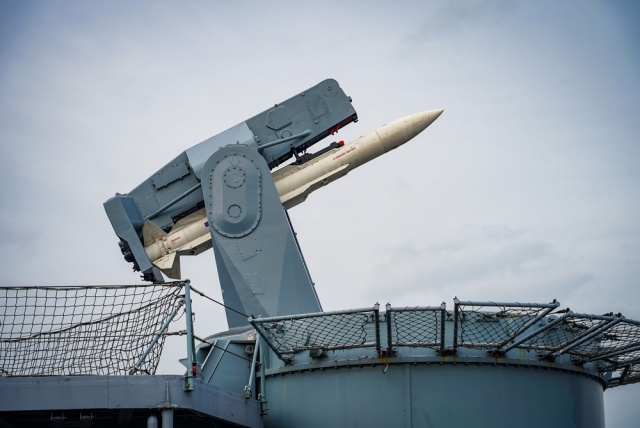
France has warned of the risk of nuclear escalation resulting from possible miscalculations over the use of long-range missiles in a potential military conflict with Russia, urging Germany to clarify how it plans to use these weapons systems.
According to the Financial Times, Paris is concerned that Moscow could misinterpret the use of long-range weapons by European allies, viewing conventional strikes as the beginning of a wider military offensive.
These concerns have intensified as Germany rapidly expands its long-range missile arsenal, including systems capable of striking targets deep inside Russian territory.
French officials have made clear that they want Berlin’s plans for developing and using these weapons to be aligned with French nuclear doctrine, in order to avoid actions that could lead to uncontrollable escalation.
Germany invests €12 billion in long-range missiles
France’s concerns come as Berlin significantly accelerates efforts to strengthen its military capabilities.
Germany plans to invest around €12 billion in developing a new arsenal of long-range missiles aimed at deterring Russia.
The procurement programme includes low-cost cruise missiles, US-made Tomahawk missiles and advanced weapons systems being developed jointly with the United Kingdom.
As part of the programme, Berlin plans to spend almost €3.4 billion on acquiring US-made Tomahawk cruise missiles and Typhon mobile launchers.
With a reported range of approximately 2,500 kilometres, these missiles would give Germany the ability to launch land-based strikes against targets deep behind enemy lines. Germany is also working with the United Kingdom on a classified missile development programme.
The joint Deep Precision Strike programme envisages the development of a weapons system capable of hitting targets at distances of up to 2,000 kilometres, including military logistics hubs and supply lines deep inside Russia.
The system could become operational by 2034.
‘We could cross the nuclear threshold without even realising it’
The possibility that Moscow could misinterpret European military movements is a major source of concern for France.
“If the Russians misinterpret the message, we could cross the nuclear threshold without even realising it,” a French official told the Financial Times.
Paris is also concerned that Moscow could hold France responsible for attacks carried out by other European allies, even if French military forces were not directly involved.
One of the sources cited by the newspaper noted that France had developed a specific nuclear “grammar and vocabulary” that Germany did not possess. The remark highlighted the differences between the two countries in their understanding of nuclear deterrence, the management of military signals sent to an adversary and the risk of conflict escalation.
Berlin agrees on the need for a common doctrine
Despite French concerns, Germany appears open to establishing a common framework for the use of long-range weapons and the management of escalation risks.
A senior German official told the Financial Times that Berlin “could not agree more” on the need for a common doctrine. “This is not something the French are asking for and we are resisting,” the official said.
According to the same source, discussions had previously reached a deadlock because of internal debates in France over the future of the country’s nuclear strategy. However, the official added that consultations between Paris and Berlin were now gaining fresh momentum.
Germany’s refusal to supply Taurus missiles to Ukraine
The rapid expansion of Germany’s long-range missile capabilities has also reignited debate over Berlin’s reluctance to supply Ukraine with similar weapons systems.
Volodymyr Zelensky revived Kyiv’s request for German-made Taurus cruise missiles in an interview with German broadcaster ZDF on 5 November, arguing that Ukraine wanted to buy the weapons and test them in real combat conditions.
Berlin, however, has repeatedly refused to deliver the missiles, citing concerns about the risk of escalating the war with Russia.
German Defence Minister Boris Pistorius, for his part, has argued that Ukraine already has the capability to strike Russian oil refineries and military logistics facilities using domestically produced drones.
Ask me anything
Explore related questions




