





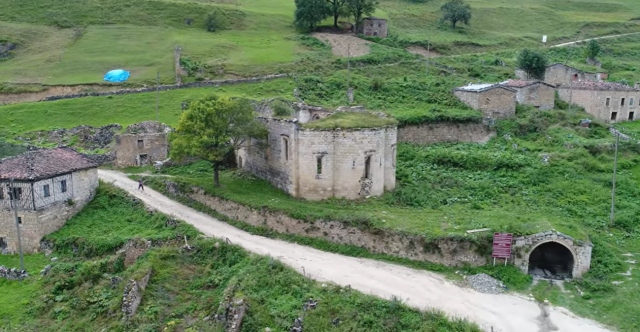
Turkey has created a new tourist trail following in the footsteps of the 10,000 Greek mercenaries who served under Xenophon, linking areas of eastern Anatolia with the Black Sea coast.
The initiative was unveiled by the Türkiye Tourism Promotion and Development Agency under the name “Anabasis Northern Route”, a reference to Anabasis (The March of the Ten Thousand) by the ancient Greek historian Xenophon.
The route is inspired by the historic retreat of around 10,000 Greek mercenaries in 401 BC, following the death of Cyrus the Younger at the Battle of Cunaxa.
Having lost their leader and commanders, the Greek soldiers embarked on an extremely difficult journey through Mesopotamia and Anatolia, eventually reaching the shores of the Black Sea.
Their ordeal was recorded by Xenophon in Anabasis, a work that also contains important descriptions of the region’s geography and peoples.
The new tourist trail links the provinces of Erzurum, Bayburt, Gümüşhane and Trabzon, passing through archaeological sites, historic settlements and mountain passes.
In Erzurum, the route includes the Narman Fairy Chimneys, Engüzek Castle and Öşvank Monastery. In Bayburt, visitors can explore the historic castle, the Ulu Mosque and the Aydıntepe Underground City.
Of particular interest is the Gümüşhane region, where the route passes through the ancient city of Satala, the ruins of Santa and the historic Süleymaniye district. The latter was once a mining centre along the Silk Road, where Greeks, Armenians and Turks lived side by side.
The route ends in Trabzon, where visitors can explore Çal Cave, the Monastery of the Maidens and Atatürk Mansion. They can also enjoy views of the Black Sea from the cable car connecting Beşikdüzü with Beşikdağı.
Ask me anything
Explore related questions




