





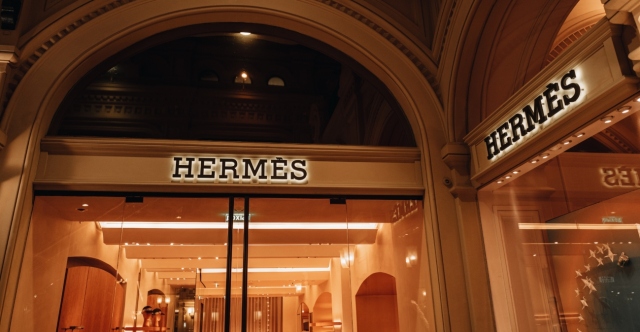
A Paris judge has ordered a psychiatric evaluation of 83-year-old Nicolas Puech, who claims to have lost his 6 per cent stake in Hermès – the legal dispute centres on LVMH and billionaire Bernard Arnault.
A new twist has emerged in the case involving the disappearance of Hermès shares worth approximately $9 billion, with a Paris judge ordering a psychiatric assessment of 83-year-old luxury fashion house heir Nicolas Puech, who claims to have lost his stake, equivalent to 6 per cent of the company.
According to Reuters, which cited two people with direct knowledge of the decision, a team of psychiatrists has been asked to assess whether Puech has a cognitive disorder that may have left him vulnerable to financial exploitation.
The development could affect the criminal investigation, as exploiting a person’s impaired mental capacity or other vulnerability for unlawful financial gain constitutes a specific criminal offence in France, known as “abuse of weakness”. The offence was also at the centre of the high-profile case involving L’Oréal heiress Liliane Bettencourt.
The case dates back to the early 2000s, when LVMH worked with Puech’s Swiss wealth manager, Eric Freymond, to secretly accumulate shares in rival company Hermès.
The €14bn lawsuit and LVMH’s involvement
Last year, Puech named LVMH and its billionaire chairman, Bernard Arnault, among the defendants in a civil lawsuit, seeking €14 billion in compensation from whoever is found responsible in the parallel criminal investigation.
Prosecutors have focused their attention on Freymond and Swiss lawyer Alexandre Montavon, who advised LVMH on its acquisition of Hermes shares.
In May, Montavon was placed under formal investigation on suspicion of involvement in the misappropriation of Puech’s shares for the benefit of LVMH. He denies any wrongdoing and has challenged in court the decision to subject the heir to a psychiatric assessment.
Neither LVMH nor Bernard Arnault has been formally named as a suspect. The group has categorically denied attempting to acquire Puech’s shares through schemes involving his wealth manager. Freymond, who died in 2025, also denied any wrongdoing.
According to an earlier Reuters report, LVMH had reached an agreement with Freymond in 2002, paying him at least $20 million in commissions and fees to accumulate Hermès shares.
LVMH acknowledges the business relationship but maintains that any acquisition of Puech’s shares would have been unintentional. The group eventually came to control up to 23 per cent of Hermès, before agreeing in 2014 to sell its stake, bringing the bitter corporate dispute to an end.
Nicolas Puech maintains that he only discovered his shares had disappeared in 2022, when he ended his relationship with Freymond, whom he had trusted implicitly for decades.
“He had all the signatures in my name and prepared all the documents,” he said in an interview with French magazine L’Express in 2025.
France’s financial prosecutor’s office, as well as representatives of Puech and LVMH, declined to comment on the latest legal development.
Ask me anything
Explore related questions




