×
GreekEnglish

×
  • Politics
  • Diaspora
  • World
  • Lifestyle
  • Travel
  • Culture
  • Sports
  • Cooking
Thursday
25
Dec 2025
weather symbol
Athens 12°C
  • Home
  • Politics
  • Economy
  • World
  • Diaspora
  • Lifestyle
  • Travel
  • Culture
  • Sports
  • Mediterranean Cooking
  • Weather
Contact follow Protothema:
Powered by Cloudevo
> World

30% of animal species face extinction, report suggests

Stanford Woods Institute for the Environment collaborate with National Autonomous University of Mexico

Newsroom July 13 07:03

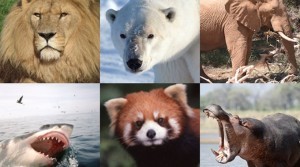
The world is experiencing a “biological annihilation” of its animal species because of humans’ effect on the Earth, a new study has found.
Researchers mapped 27,600 species of birds, amphibians, mammals and reptiles — nearly half of known terrestrial vertebrate species — and concluded the planet’s sixth mass extinction even was much worse than previously thought.
They found the number of individual animals that once lived alongside humans had now fallen by as much as 50 per cent, according to a paper in the journal Proceedings of the National Academy of Sciences.
The study’s authors, Rodolfo Dirzo and Paul Ehrlich from the Stanford Woods Institute for the Environment, and Gerardo Ceballos, of the National Autonomous University of Mexico, said this amounted to “a massive erosion of the greatest biological diversity in the history of the Earth”. The authors argued that the world cannot wait to address damage to biodiversity and that the window of time for effective action was very short, “probably two or three decades at most”.
Mr Dirzo said the study’s results showed “a biological annihilation occurring globally, even if the species these populations belong to are still present somewhere on Earth”.
The research also found more that 30 per cent of vertebrate species were declining in size or territorial range. Looking at 177 well-studied mammal species, the authors found that all had lost at least 30 per cent of the geographical area they used to inhabit between 1990 and 2015. And more than 40 per cent of these species had lost more than 80 per cent of their range.
The authors concluded that population extinction were more frequent than previously believed and a “prelude” to extinction.

source: independent.co.uk

Ask me anything

Explore related questions

#animal#extinction#species#study
> More World

Follow en.protothema.gr on Google News and be the first to know all the news

See all the latest News from Greece and the World, the moment they happen, at en.protothema.gr

> Latest Stories

Christmas around the world: How they celebrated from war-torn Ukraine to Bethlehem and from the favelas of São Paulo to Pakistan, see photos

December 25, 2025

Ukrainians hit Russian oil and gas units with Storm Shadow missiles – Video

December 25, 2025

Colpo grosso in Thessaloniki: Fake DEDDIE employees con 70-year-old woman out of gold coins and €100,000 in jewelry

December 25, 2025

Ecumenical Patriarch Bartholomew: Faith must heal wounds and not rekindle wars

December 25, 2025

Municipality of Athens: A Christmas lunch for 1,300 homeless and economically vulnerable people

December 25, 2025

The knitted Christmas village of Greece, where everything is embroidered

December 25, 2025

Christmas at the blockades for farmers: New nationwide meeting on Sunday to intensify their actions

December 25, 2025

The Hadid method: The mother’s strategy behind two million-dollar careers

December 25, 2025
All News

> Travel

Kimolos wins over International Media: “A hidden gem waiting to be discovered”

Despite its small size, Kimolos is full of character and charm — and now international media are urging travelers to put this Cycladic island on their bucket list

August 28, 2025

French Vogue discovers the exotic beauty of Skopelos

August 28, 2025

Naxos tops the list of Greek kitesurfing destinations for 2025

July 9, 2025

Holidays in Psara

June 20, 2025

Santorini filled with tourists again (photos)

April 12, 2025
Homepage
PERSONAL DATA PROTECTION POLICY COOKIES POLICY TERM OF USE
Powered by Cloudevo
Copyright © 2025 Πρώτο Θέμα