





The Siberian taiga is one of the most isolated places in the world. It is also one of the most difficult terrains to travel through and it’s nearly impossible to live there. The short summers and long winters of very cold weather discourage human habitation.
The Siberian taiga is the largest of Earth’s nearly uninhabited wilderness. The area of 5.1 million square miles covers around 10% of Earth’s land surface. The Siberian taiga is a home of bears and foxes during the day and there are also wolves that hunt during the night.
The average temperature is negative five degrees Celsius and summers do not last long. During the winter of 1933, it recorded a temperature of negative 67.7 degrees Celsius.
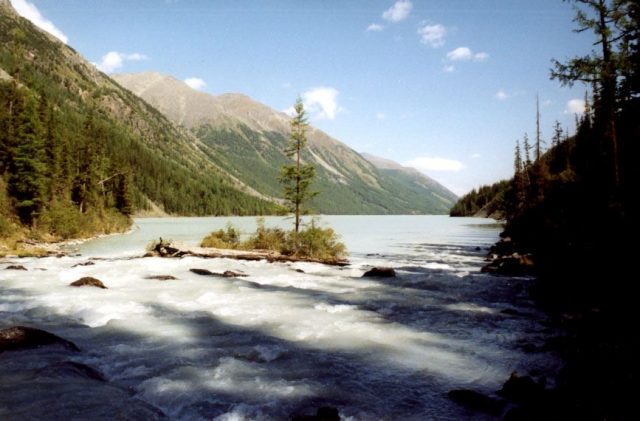
(Altai, Lake Kutsherla in the Altai Mountains)
You might have heard stories about Japanese soldiers that occasionally emerge from the jungles in the Pacific theater. One of those stories is about Shoichi Yokoi, the Japanese soldier who lived in the Jungle of Guam for 28 years after the end of World War II. You can read the story about Shoichi Yokoi here, but there is another incredible story of a family that spent over 40 years in the depths of the vast Siberian taiga.
In 1978 Russian geologists in Siberia stumbled upon a family of five that had been living in isolation for more than 40 years. It was the Lykov family. They were a family of Old Believers who lived as hermits in the deep taiga of the Sayan Mountains in Southern Siberia from 1936 until the geologists found them in 1978.
Lykov family lived about 150 miles from the nearest settlement, in a spot that had never been explored. Before 1936 they lived in a populated part of Russia but after Lykov’s brother was shot by a Soviet patrol, Lykov gathered his family and fled into the vast Siberian taiga. They were never seen after that day.
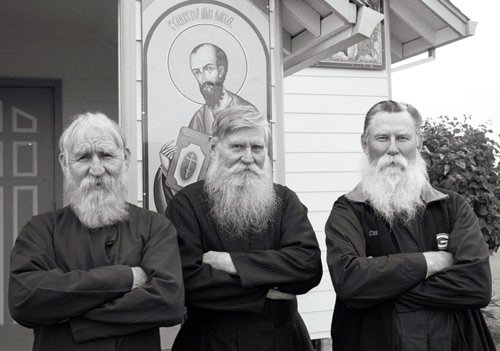
(Russian Old Believers)
For more than 40 years, Karp Lykov, along with his wife and children, lived in a wooden hut just a few miles from the border with Mongolia.
When they first decided to go to the Siberian taiga there were 4 of them: Karp Lykov; his wife, Akulina; their son Savin; and their daughter Natalia. Two more children were born in the wilderness: Dmitry in 1940, and Agafia in 1943. They had prayer books and an old family Bible, from which the children learned to read and write.
The Lykov family ate berries, grew their own vegetables and sewed their own clothes from the fabric they also made themselves. They learned how to hunt without guns or bows. When Dmitry grew up he became an expert on hunting animals. Eventually, Dmitry became so tough he could hunt barefoot in winter.
In the late 1950s they faced starvation and Akulina died and left her husband with their children.
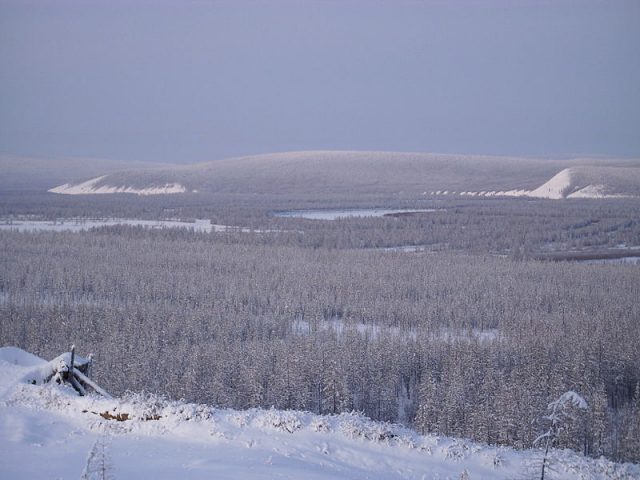
(The taiga in the river valley near Verkhoyansk, Russia)
When the geologists found them in 1978 they were astonished to find the surviving family living in medieval conditions. However, Karp Lykov welcomed the strangers. At first, they refused everything that they were offered by the geologists and the only thing they would accept was salt. Karp hadn’t tasted salt for over 40 years.
The Lykov family were completely unaware of World War II or to the fact that humans landed on the moon. When geologists gained their trust they were able to show them the “miracles” of modern life. Old Karp was fascinated by the innovations they had brought with them.
Reporter Vasily Peskov said: “What amazed Karp most of all was a transparent cellophane package. He said, Lord, what have they thought up – it is glass but it crumples!”
In the fall of 1981, three of the four children (Dmitry, Natalia, and Savin) passed away within several days of another, two from kidney failure and one from pneumonia.
The geologists tried on several occasions to convince Karp and his daughter Agafia to move in with relatives in a village 150 miles away. They refused each time they were offered.
Karp died on February 16th, 1988 and his daughter Agafia remained living alone in the mountains of the Siberian taiga.
Ask me anything
Explore related questions




