

×
GreekEnglish

×
  • Politics
  • Diaspora
  • World
  • Lifestyle
  • Travel
  • Culture
  • Sports
  • Cooking
Saturday
07
Feb 2026
weather symbol
Athens 19°C
  • Home
  • Politics
  • Economy
  • World
  • Diaspora
  • Lifestyle
  • Travel
  • Culture
  • Sports
  • Mediterranean Cooking
  • Weather
Contact follow Protothema:
Powered by Cloudevo
> technology

When you die you actually know you’re dead and here is why!

Cardiac arrest survivors were aware of what was going on around them while they were "dead" before being "brought back to life"

Newsroom November 22 04:16

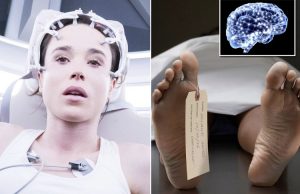
Driven by ambition and curiosity to learn what lies on the other side of death, five medical students deliberately stop their hearts in order to experience “the afterlife” in the new thriller “Flatliners” (Sony Pictures), which opened in U.S. theaters on Sept. 29.

They quickly discover that there are unexpected and terrible consequences of dallying with death — but not everything they experience after “dying” is in the realm of science fiction. A growing body of research is charting the processes that occur after death, suggesting that human consciousness doesn’t immediately wink out after the heart stops, experts say.

But what really happens in the body and brain in the moments after cardiac arrest?

The terms “cardiac arrest” and “heart attack” are frequently used interchangeably, but they are not identical conditions, according to the American Heart Association (AHA). During a heart attack, a blocked artery prevents blood from reaching a portion of the heart, which can cause that section to die — though the heart continues to beat, the AHA explained.

See Also:

“They Buried Him Barefoot”: The tragic death of Chernobyl firefighter Vasily Ignatenko

The World’s Fastest High-Speed Trains (infographic)

During cardiac arrest, the electrical signals driving the heart’s pumping action are disrupted, the heart ceases beating and death shortly follows, the AHA said.

In the vast majority of terminal cases, physicians medically define death based on when the heart no longer beats, said Dr. Sam Parnia, director of critical care and resuscitation research at NYU Langone School of Medicine in New York City.

>Related articles

What qualities does a good astronaut have for the mission to the Moon? The requirements of NASA

Espionage in space too: Russian vehicles have allegedly intercepted communications from critical European satellites

Research reveals that the inhabitants of Messa Mani constitute a unique genetic “island” in Europe

“Technically speaking, that’s how you get the time of death — it’s all based on the moment when the heart stops,” he told Live Science.

Once that happens, blood no longer circulates to the brain, which means brain function halts “almost instantaneously,” Parnia said. “You lose all your brain stem reflexes — your gag reflex, your pupil reflex, all that is gone.”

Read more Live Science

Ask me anything

Explore related questions

#body#brain#dead#death#health#science#technology
> More technology

Follow en.protothema.gr on Google News and be the first to know all the news

See all the latest News from Greece and the World, the moment they happen, at en.protothema.gr

> Latest Stories

Thessaloniki’s Flyover: Greece’s largest bridge project nears completion, set to revolutionize urban mobility

February 7, 2026

What kind of tourism do we want – Experts from around the world speak out: “Stop issuing permits that will turn Greece into Costa del Sol

February 7, 2026

Vinyl records make a comeback: Record stores return as an aesthetic choice, not just nostalgia

February 7, 2026

Winter Olympics: As a tribute to Giorgio Armani, Mariah Carey rocked San Siro

February 7, 2026

Weather: Spring in winter with temperatures up to 22 degrees at the weekend

February 7, 2026

Boos for Israel and JD Vance at Winter Olympics Opening Ceremony

February 7, 2026

Ministry of Finance: Six privatisations and five tax cuts in focus for 2026

February 7, 2026

US Ambassador begins tours across Greece: From Zappeion to Washington, the vertical corridor

February 7, 2026
All News

> Environment

EnEarth welcomes the European Commission’s positive Opinion on the CO2 Storage Permit in Prinos

The European Commission's assessment acknowledges the quality and completeness of the technical studies prepared by EnEarth Greece for the geological evaluation of the storage site

February 3, 2026

Wales: Volunteers wanted to live on a remote island for 3 months counting Puffins

February 3, 2026

Natural disasters: When early prevention offers protection

January 30, 2026

The planet is entering an era of “global water bankruptcy,” according to the UN

January 25, 2026

Rains and snow fill Lake Yliki with water (video)

January 23, 2026
Homepage
PERSONAL DATA PROTECTION POLICY COOKIES POLICY TERM OF USE
Powered by Cloudevo
Copyright © 2026 Πρώτο Θέμα



