





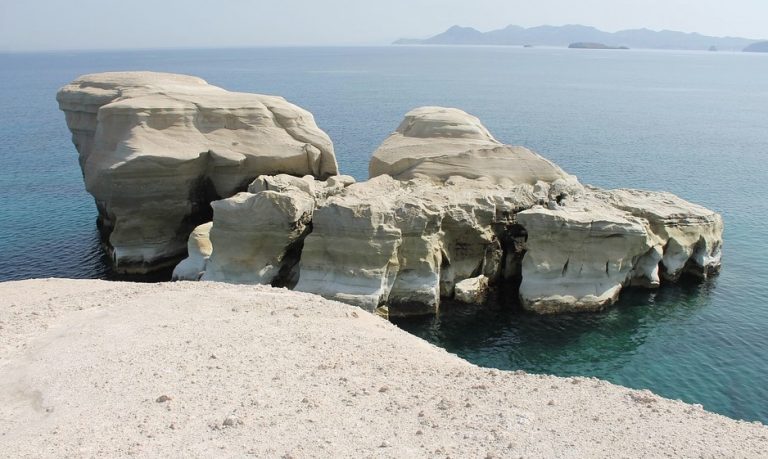
The term “Saracen” was used by the low Middle Age Greeks/Romans, to describe the Arabs, a term widely adopted by Christian writers across the whole of later.
During the 6th and 7th centuries, Greece, as part of the eastern Roman Empire (later dubbed Byzantium by German historians) was one of the main target of these pirates in the Aegean Sea.
They gradually expanded their attacks to Sicily, southern Italy, North Africa and Sardinia plundering and taking many female and male slaves from these Roman Empire provinces.
Twitter refused to remove child porn because it “didn’t violate its policies”, lawsuit says
Monolithi Beach the safest in Europe: European Best Destinations
They were the scourge of the seas, setting up strongholds in many small coves and protected bays along the shores of the Hellenic peninsula. This is how these 5 of Greece’s most exotic beaches got their names (Sarakino – Saracen).
The beaches, with truly rare beauty, are scattered across various parts of Greece, from Milos to Parga and Elafonissos.
Sarakiniko Milou
video courtesy Life is a Beach TV
Perhaps the most famous Sarakiniko beach in the country is the one located on northeastern part of Milos, about 5 km away from Chora. It is a small beach surrounded by volcanic all-white rocks, making the landscape outlandish and quite unique. The place got its name from the Saracen pirates who used it as refuge. It is said that the Saracens tied their ships to the caves around the sea, to be protected from the waves and the wind, while they slept in the recesses of the rocks next to the shore.
Sarakiniko Parga
video courtesy of Jelena Zivanovic
Another enchanting beach that adopted the name of the Arab and north African pirates is that near the town of Parga on the coast of western Greece. According to some historical accounts and traditions, the Saracens were stranded there after summer storm destroyed their ship. Then, as the story goes, they asked for help from the locals, pretending to be the unfortunate merchant sailors. Feeling sorry for them, the residents agreed and even invited them to a wedding that would take place two days later.
Sarakiniko Elafonissos
video courtesy of Vic Stefanu – Amazing World Videos
In Laconia, on the shores of the southern Peloponnese, at a distance of 4 km from the settlement of Elafonissos, on the south side of the island are the twin beaches of Simos (small beach) and Sarakinikos (large beach or Ceratsiniko for locals). The cove of Sarakiniko was used as a base by the Saracens. Sarakiniko (or Tseratsinikou) or Porto di Cervi for the cartographers, was a refuge for wild Cilicians, Saracens, Turks, Berbers, Maltese, Knights, English, French, Maniates, etc. pirates and marauders.
Sarakiniko Euboea
video courtesy of Άγγελος Αρναουτέλης
On the southeastern side of North Euboea and at an altitude of 93 metres above sea level, there lies a small settlement called “Sarakiniko”. The name, again comes from the Saracen pirates who used the area as a hideout. The place where the small church of Agios Georgios is located today, is believed to have been their fortress and where they hid their treasures and loot. According to local tradition, the small rocky islet below the settlement was named “Xerokaravos” (meaning ‘ship reef’) , because the prayers of the inhabitants resulted in the pirate ship hitting a reef as it sailed to raid.
source exploringgreece.tv
Ask me anything
Explore related questions




