





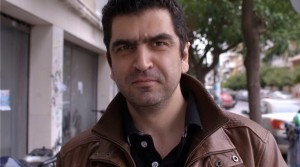
The winners of the 2014 European Union Prize for Literature were announced on October 8 at the Frankfurt Book Fair. The award recognizes the best new and emerging authors in Europe. This year’s winners are: Ben Blushi (Albania), Milen Ruskov (Bulgaria), Jan Němec (Czech Republic), Makis Tsitas (Greece), Oddný Eir (Iceland), Janis Jonevs (Latvia), Armin Öhri (Liechtenstein), Pierre J. Mejlak (Malta), Ognjen Spahić (Montenegro), Marente de Moor (The Netherlands), Uglješa Šajtinac (Serbia), Birgül Oğuz (Turkey) and Evie Wyld (United Kingdom).
The European Union Prize for Literature (EUPL) is open to countries participating in Creative Europe, the EU funding program for the cultural and creative sectors. Each year, national juries in a third of the countries -13 this time – nominate the winning authors.
Each winner receives € 5 000. More importantly, they benefit from extra promotion and international visibility. This year’s Prize winners will be presented with their awards during a gala ceremony at the Concert Noble in Brussels on 18 November, in the presence of the European Commissioner for Education and Culture, members of the European Parliament and representatives of the Italian Presidency of the EU.
“My warmest congratulations to the winners of the European Union Prize for Literature,” said Androulla Vassiliou, European Commissioner for Education, Culture, Multilingualism and Youth. “The Prize is dedicated to the best new and emerging authors in Europe, regardless of their country of origin or language. The aim is to showcase Europe’s best contemporary literature, encourage cross-border sales and promote the translation, publishing and reading of literature from other countries. The EU’s new Creative Europe program offers grants for translation, helping authors to attract readers beyond national and linguistic borders.”
Writer’s bio
Makis Tsitas, who won the prize for his book “God is my witness,” was born in 1971 in Giannitsa, Greece.
He studied journalism in Thessaloniki, where he worked in radio. Since 1994 he has lived in Athens and works in publishing. He is the director of diastixo.gr, a literary and cultural internet journal.
In this humorous, moving and perceptive novel, an anti-hero of our time, who wants nothing more than to live with dignity – having reached his fifties with no job and uncertain health – narrates the trials and betrayals he has suffered from employers, from the women he meets, and from his own family. Through his torrential monologue, replete with everyday occurrences and ebullient fantasies, we follow a simple man’s struggle to remain upstanding.
Ask me anything
Explore related questions




