





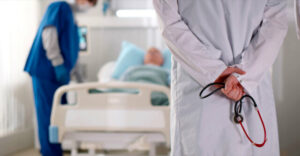
The Ministry of Health is attempting to fill significant gaps in medical staff in areas of mainland Greece and the islands, with the establishment of financial incentives for 169 points on the Greek map starting from 200 euros per month and reaching up to 600 euros, even exceeding 20% of doctors’ monthly salaries, depending on their grade, specialty and region of work.
The removal of doctors from the National Health System (NHS) is a phenomenon that has been growing in recent times. The main reason is low pay. To attract doctors to public hospitals, the government has made a regulation – a Joint Ministerial Decision (JMD) signed yesterday by the Ministers of Health and Finance – that triples the allowance of arid areas for doctors serving in them and increases it sixfold for 18 medical specialties that are now difficult to “attract” doctors. The increases in allowances are not just for new doctors who will be posted to the barren areas, but also for those currently serving, with the government recognising their contribution.
“I have said many times – and I will not tire of saying it – that supporting the NHS is our top priority. We have years of pathologies to address. But we will not stop striving for a better NHS, worthy of the expectations of all citizens,” Prime Minister Kyriakos Mitsotakis said, after the announcement of the signing of the EIS by Health Minister Adonis Georgiadis.
.
.
In two days I will be on the podium of the TIF, where I will have the opportunity to present specific measures and policies that will…
Posted by Kyriakos Mitsotakis on Thursday, September 5, 2024</blockquote
The financial incentives for barren areas were known to be expected these days, as part of the overall effort by the Ministry of Health to keep doctors in the public health system. It will be recalled that NHS doctors have already been allowed to work in the private sector in parallel, as well as to perform evening surgeries in public hospitals, in order to earn extra income.
In fact, while the initial proposal of the Ministry of Health included generous increases in six medical specialties, in the end it is possible to financially support three times that number, a total of 18, which means that for a number of specialties that are experiencing shortages, monthly salaries are significantly increased.
The new financial incentives apply to the following medical specialties: Internal medicine, general/family medicine, pediatrics, anesthesiology, nephrology, pathological anatomy, radiology, medical biopathology/laboratory medicine, child and adolescent psychiatry, and cytology, pathological oncology, as well as the specialties of pulmonology-physiology, neurosurgery, neurology, neurology, surgery, paediatric surgery, thoracic surgery and cardiology serving in adult/pediatric ICUs.
What’s changing
.
– NHS doctors/dentists serving in health structures located in problematic and arid areas of category A shall be paid a monthly financial incentive for recruitment and retention of €300 and in problematic and arid areas of category B a monthly financial incentive for recruitment and retention of €200.
– For the 18 medical specialities above, a) in addition to the above, a monthly financial incentive of €300 (i.e. a total of €600) is paid if they are serving in a problematic and arid area of category A and b) in addition to the above, a financial incentive of €200 (i.e. a total of €400) is paid if they are serving in a problematic and arid area of category B.
It is worth noting that currently doctors serving in an arid category A’ region receive an annual financial incentive of €800-1000 (i.e. approximately €100 per month) while in a category B’ region they receive an annual financial incentive of €500.
Based on the above data, physicians/dentists of the NHS branch serving in health structures located in problematic and arid areas of category A’ will receive, in addition to their basic salary, €3,600 gross per year and, if the physician holds one of the 18 specialties, €7,200. At the same time, doctors/dentists working in health structures located in problematic and arid areas of category B will receive, in addition to their basic salary, €2 400 gross per year and, if the doctor has one of the 18 specialities, €4 800.
How the new regulation is reflected in doctors’ salaries
The financial incentives introduced by the government in many cases constitute a fairly high “bonus” that can even exceed 20% of their salary.
As shown in previous hospital doctors’ communications, a Director of the NHS receives €2,358 gross, a Supervisor A receives €2,213 gross, and a Supervisor B receives €1958 gross. Resident doctors have monthly salaries of around 1550 gross.
If one takes the example of Occupant A‘, the percentages of the new incentives on their salary are as follows: For any specialty other than 18, and for a barren area in Schedule A, the “bonus” is 12% of their salary. The same doctor for a Table B area will receive a bonus equivalent to 8.3% of his salary. Similarly, for an A’ attending physician belonging to one of the 18 medical specialties, the amount of the incentive is 21% of his/her monthly salary for a Type A arid area and 15% of his/her salary for a Type B arid area. For a B’ attending, the new financial incentives can even amount to 23.4% of his monthly salary if it is one of the 18 medical specialties in A’ arid regions.
The “hardship” areas
The map of problem areas was already defined by Presidential Decree and was further elaborated by the Ministry of Health in both areas with hospitals and Primary Health Care (PHC) structures. The table of Type A barren areas includes 113 municipalities and villages, while the Type B table includes 56 points.
These are not only hard-to-reach areas, but also areas where, due to social, geographical, transport and housing conditions, hospitals or health centres face problems of staffing and filling medical posts. Kos, Drama, Xanthi, Xanthi, Kilkis, Rethymno, Pyrgos, Sparta, Didymoteicho, Ptolemaida, Andros, Tinos, Mykonos, Milos, Paros, Naxos, Kea are some examples. Some of these regions have even been in the spotlight due to shortages of doctors.
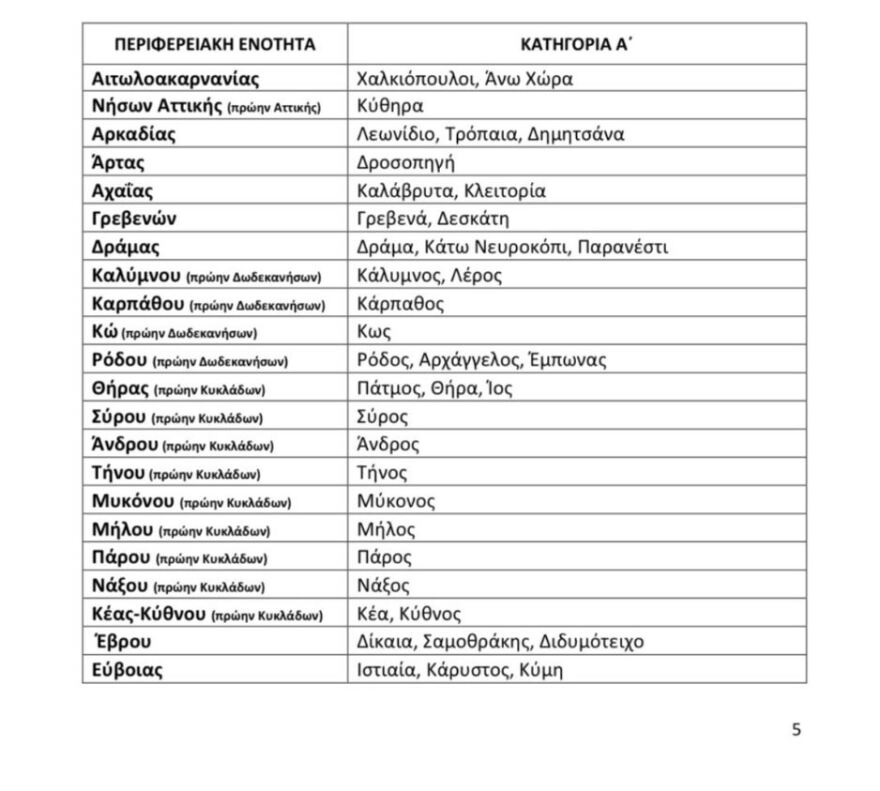
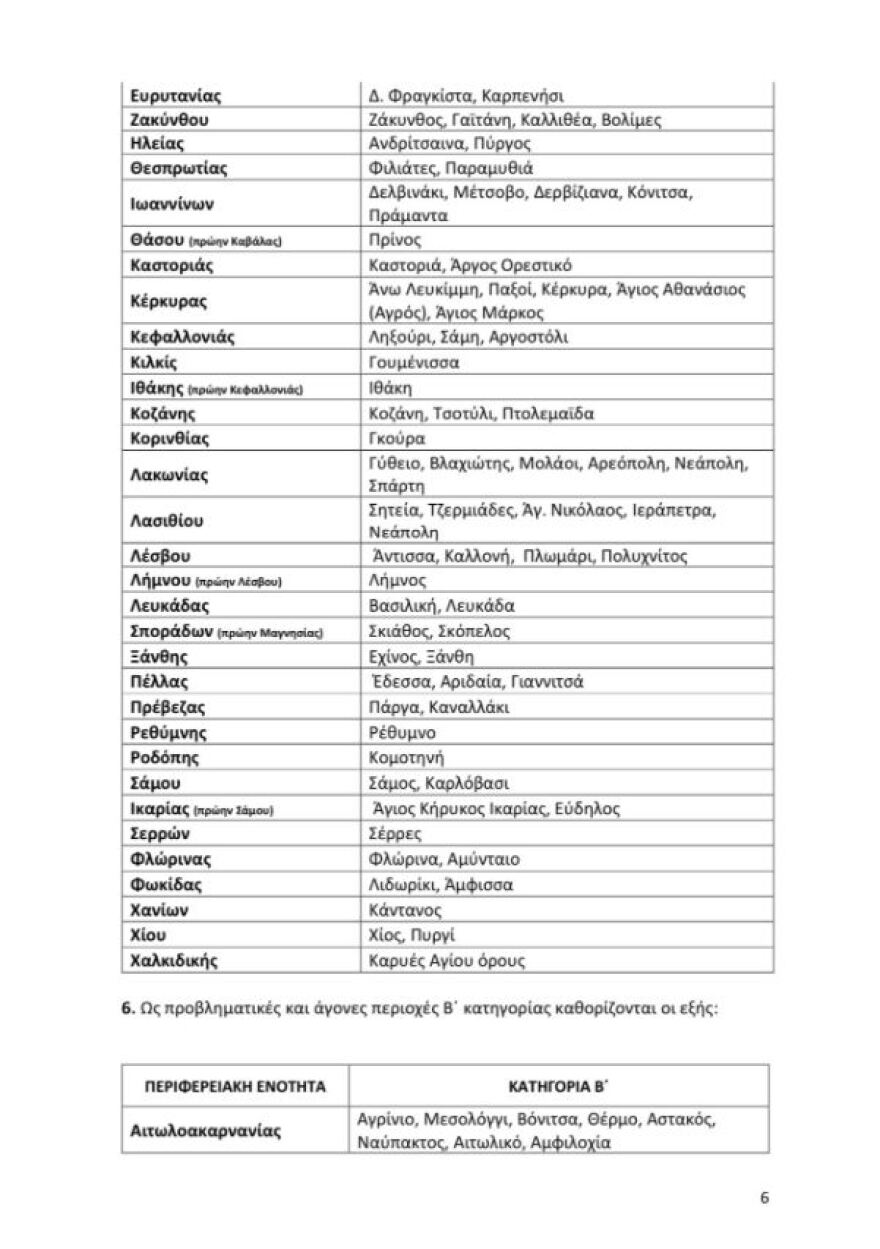
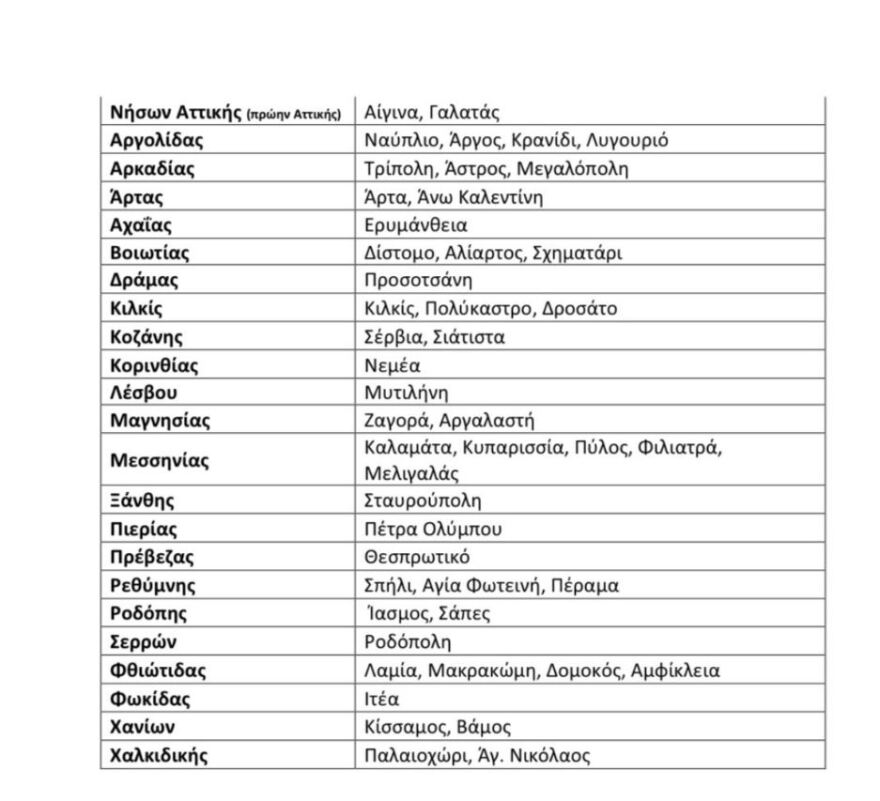
A prime example is Kos, which registers a significant shortage of GPs. Kos hospital was one of the health facilities for which the Health Ministry was seeking private doctors to help with on-call duties last month, leading to a fierce confrontation between representatives of the private doctors and the Health Minister.
The… crash test of the effectiveness of the new initiative will be carried out with a call for ward managers and directors in the NHS to be made in September. In many areas, of course, the private practitioners who operate have particularly large incomes from, among other things, caring for tourists, so the private sector is attracting the medical world.
.
Ask me anything
Explore related questions




