





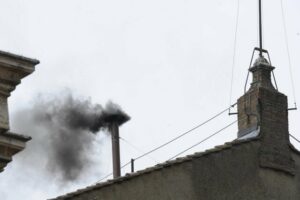
Black smoke emerged from the chimney in the Sistine Chapel at 22:00 and the Conclave will remain isolated until we reach the Habemus Papam for the election of the 267th Pontiff of the Roman Catholic Church.
The entire process lasted over three hours, much longer than anticipated yesterday in the Vatican press room itself. This may be due – to some extent – to the record number of cardinal electors and the fact that they come from seventy-one different countries.
On Thursday (8/5), four votes are expected to take place, two in the morning (at 10:30 and 12:00) and two in the afternoon (at 17:30 and 19:00). If white smoke does not emerge again, the same process will continue daily.
According to analysts, the chances of electing the new Holy Father of the Roman Catholic Church will increase tomorrow, given that in 2005 Pope Benedict was elected in the fourth vote and Pope Francis, in 2013, in the fifth.
Today in St. Peter’s Square, more than 50,000 faithful, residents of the Eternal City, and citizens from dozens of different countries gathered and awaited the result of the vote, with their eyes fixed on the chimney of the Sistine Chapel.
The Cardinal Electors and the Three Who Count Votes
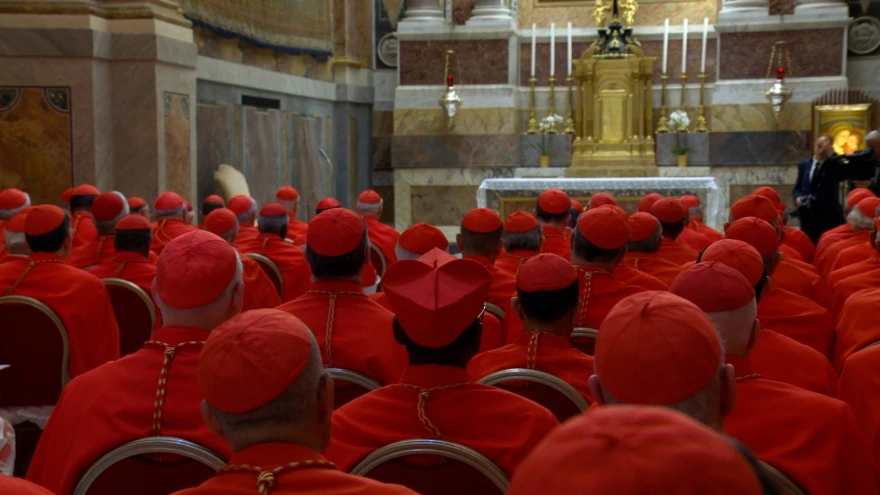
There are 252 cardinals worldwide and as a body, they are responsible for the affairs of the Holy See, albeit with restrictions. Of these, 135 are cardinal electors, who gather in the Vatican to choose the new Pope. 133 are participating in this Conclave, as two are ill. Also, the overwhelming majority of electors – 108 – were appointed cardinals by Pope Francis, according to Vatican statistics.
The Conclave chooses by lot three Cardinals who are tasked with examining each ballot and announcing it to those participating. They then count the votes and burn the ballots.
The big day has arrived. The gates of the Sistine Chapel closed and the 133 cardinals began voting for the election of the 267th Pontiff of the Roman Catholic Church. Shortly before 7 in the evening, the “extra omnes” – everyone out – was heard and the voting process began.
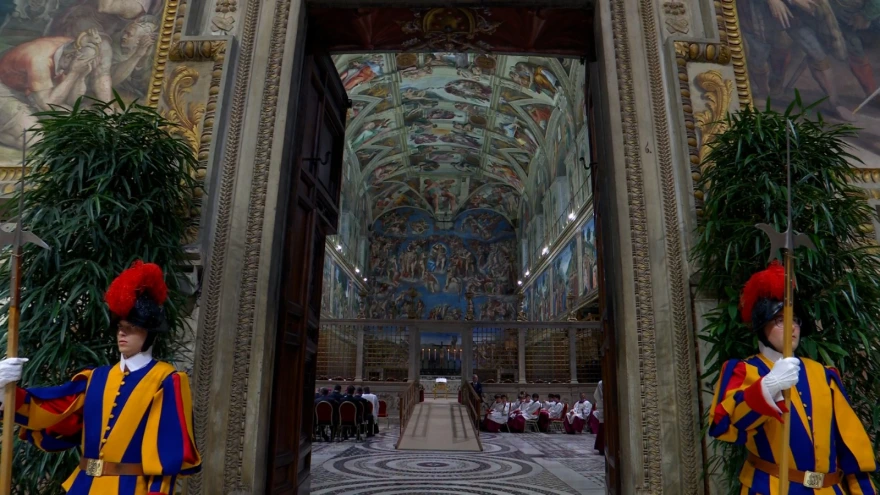
The cardinals entered the Sistine Chapel chanting. Each cardinal read the oath of the Conclave, in which they promised to keep secret any matter related to the election. They also swear that whichever of them is elected Pope will faithfully carry out the highest office of pastor of the Catholic Church.
The 133 cardinals who will elect the new Pope are convening in the Sistine Chapel. The “favorite” is widely considered to be Italian cardinal Pietro Parolin, who served as Vatican Prime Minister for 12 years. The result of today’s initial vote is anticipated around 8 PM Greek time.
Live from the Vatican: Cardinals in St. Peter’s Basilica – The Conclave Begins
The momentous day has arrived. The doors of the Sistine Chapel are closing, and the 133 cardinal electors will commence voting to choose the 267th Pontiff of the Roman Catholic Church.
The cardinals entered the Sistine Chapel in procession, chanting. Once seated, the well-known Latin phrase “extra omnes,” meaning “everyone out,” will be declared, and the doors will be sealed. This ensures the cardinals are completely isolated, unable to use electronic devices to communicate with the outside world. Mobile phone signals have already been deactivated within the Vatican. The outcome of today’s voting is expected to be announced around 8 PM.
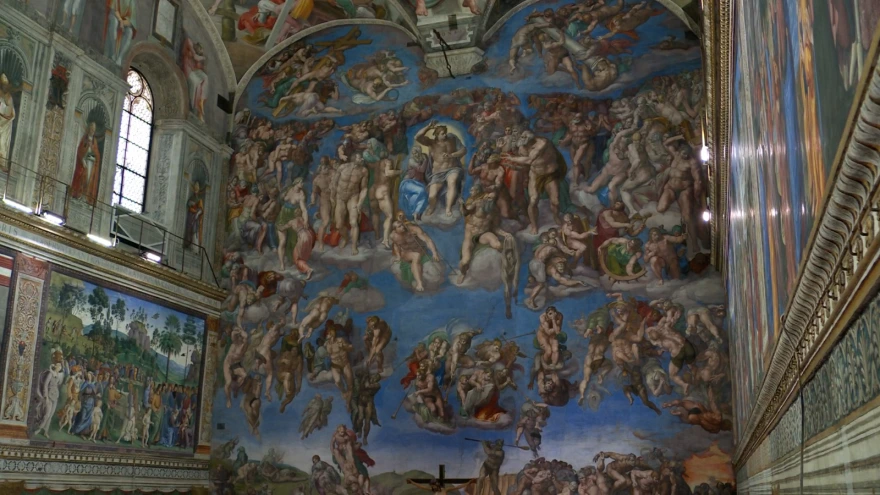
Earlier this morning, all the cardinals participated in the Mass “Pro eligendo romano pontifice” (For the election of the Roman Pontiff) in St. Peter’s Basilica.
The Most Likely Candidates for the Succession
According to leaks in recent days, as reported by Deutsche Welle, Italian cardinal Pietro Parolin, who served as Vatican Prime Minister for twelve years, remains the “favorite.” He was a close collaborator of Pope Francis but is seen as someone who could include clerics with less purely progressive viewpoints in the governance of the Catholic Church.
Additionally, among others, the Latin Patriarch of Jerusalem Pierbattista Pizzaballa and Filipino cardinal Luis Tagle are considered to have strong chances of being elected. The former is more moderate and has extensive experience in interreligious dialogue, while the latter is seen as more aligned with the direction of the late Argentinian Pontiff.
However, all these predictions could be overturned during the Conclave, as a well-known Italian saying reminds us that “whoever enters the Sistine as the favorite to be elected Pope, ultimately leaves the hall as a simple cardinal.”
Many are wondering how long the process of electing the next Holy Father of the Catholics will take. A reasonable prediction, based on previous conclaves, would be two to three days. But even in this case, everything will depend on how quickly the necessary consensus is reached.
The European cardinals are the most numerous, totaling 53, but they appear to be quite divided. The Asian cardinals are more unified but number no more than 23. The conservatives, around 20, are not in a position to elect a Pontiff on their own but could lend their support to one of the “favorites.”
Ask me anything
Explore related questions




