





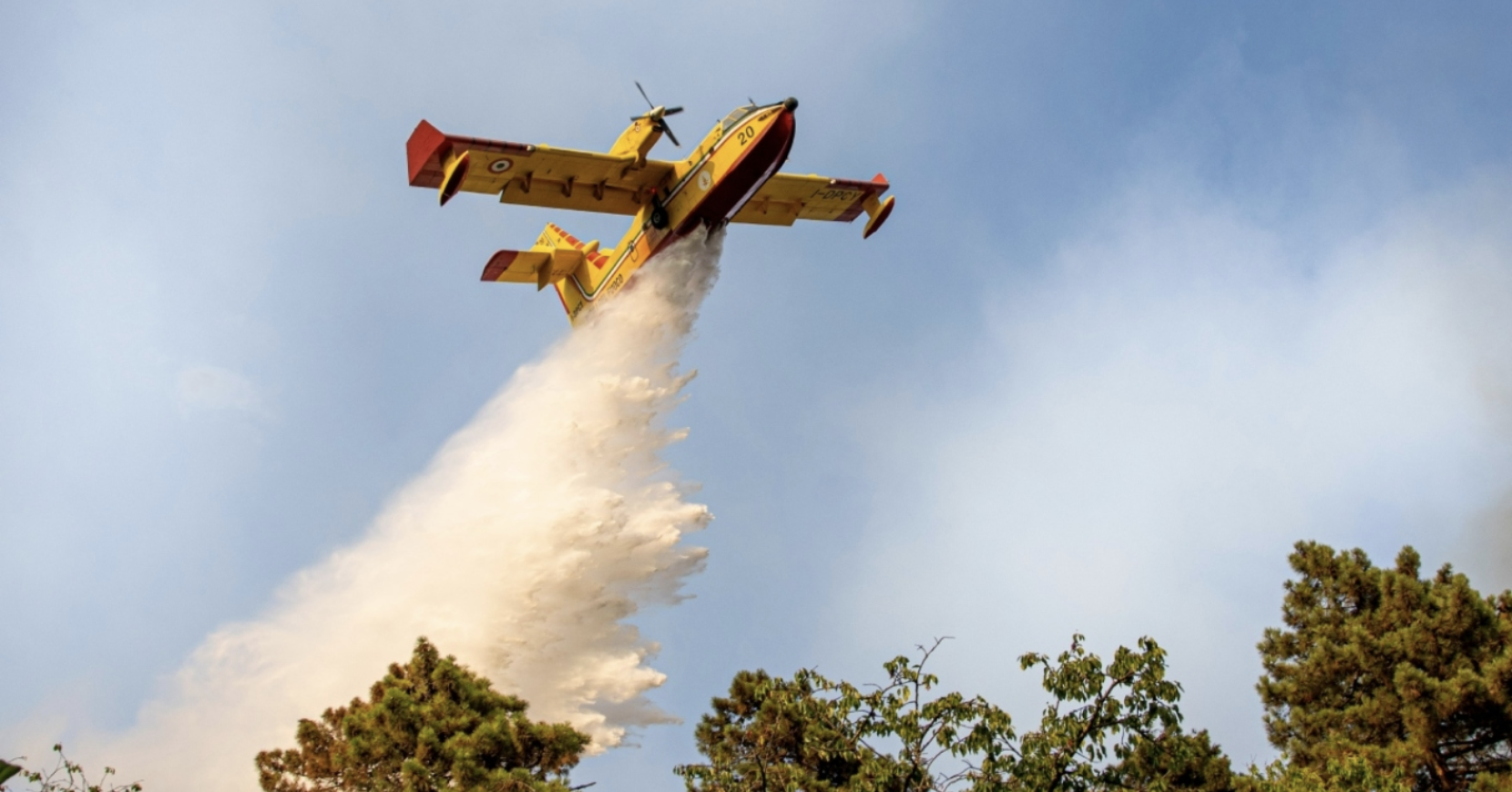
The European Union is preparing for the increased risk of wildfires in the upcoming summer months. As announced today by the European Commission, the EU has already assembled firefighting teams and aircraft to assist European countries likely to be affected by fires again this year.
Specifically, during July and August, nearly 650 firefighters from 14 European countries will be strategically stationed in high-risk areas in France, Greece, Portugal, and Spain.
In addition, 22 firefighting aircraft and 4 helicopters will be stationed across 10 member states to respond when needed. Coordinated and co-financed through the EU Civil Protection Mechanism, these resources aim to mitigate risks and ensure faster, stronger crisis response. These assets are in addition to national capabilities.
In detail:
- Greece will receive four medium amphibious aircraft
- Cyprus will receive two light aircraft
- France will receive four medium amphibious aircraft and one helicopter
- Croatia, Italy, and Spain will each receive two medium amphibious aircraft
- Sweden will receive four light aircraft
- Portugal will receive two light aircraft
- Czechia will receive two helicopters
- Slovakia will receive one helicopter
Furthermore, 19 ground firefighting teams, each consisting of around 30 firefighters, and one expert team are ready to be deployed by the EU in close cooperation with member states and participating countries through the Mechanism.
A special wildfire support team will be established at the EU Emergency Response Coordination Centre, operating 24/7 to monitor risks and analyze scientific data.
“This proactive approach confirms the EU’s commitment to stay one step ahead of disasters — including those worsened by climate change — and to join forces in protecting lives, homes, and the environment,” the Commission emphasized.
It is also noted that any country in the world affected by wildfires can request assistance through the EU Civil Protection Mechanism (UCPM). Once activated, the EU Emergency Response Coordination Centre, which operates 24/7, coordinates and co-finances the aid, which is voluntarily provided by EU member states and ten additional participating countries: Iceland, Norway, Serbia, North Macedonia, Montenegro, Turkey, Bosnia and Herzegovina, Albania, Moldova, and Ukraine.
In emergencies requiring additional rescue assistance, the EU’s strategic reserve, rescEU, can be mobilized to provide extra resources to tackle disasters affecting Europe.
Ask me anything
Explore related questions




